History
The house was built in the late 15th or early 16th century, at a time when Tenby was a large, thriving port town. Its owner was likely a wealthy merchant who traded goods brought from the port to the town. In the early modern period, as Tenby’s importance as a trading port declined, the house was remodeled and adapted to changing tastes, but due to economic downturns, no significant changes were made. In 1938, the town corporation transferred the historic building to the care of the National Trust, which undertook a comprehensive renovation.
Architecture
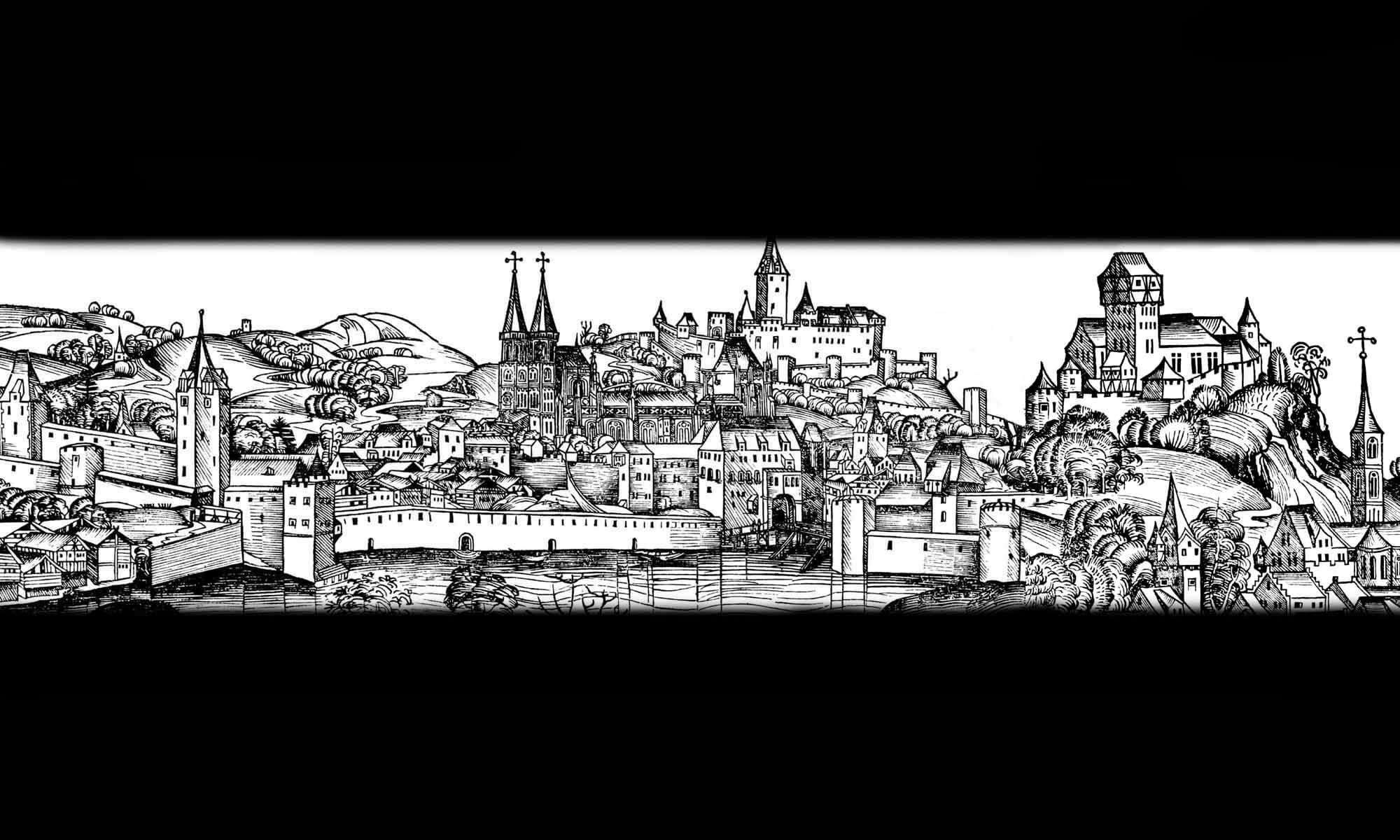
The house was situated in the central part of the late medieval town, with façade facing east, towards one of the narrow, short streets connecting the northern street by the waterfront with the main street to the south, leading from the northwestern town gate to the castle and widening in the middle to form a marketplace. It was built on a slightly sloping site, descending towards the waterfront. Originally, it was part of a row of similar buildings, behind which there were small gardens and, most likely, additional timber outbuildings. The house itself was built of rubble, using ashlar to reinforce the corners and create architectural details.
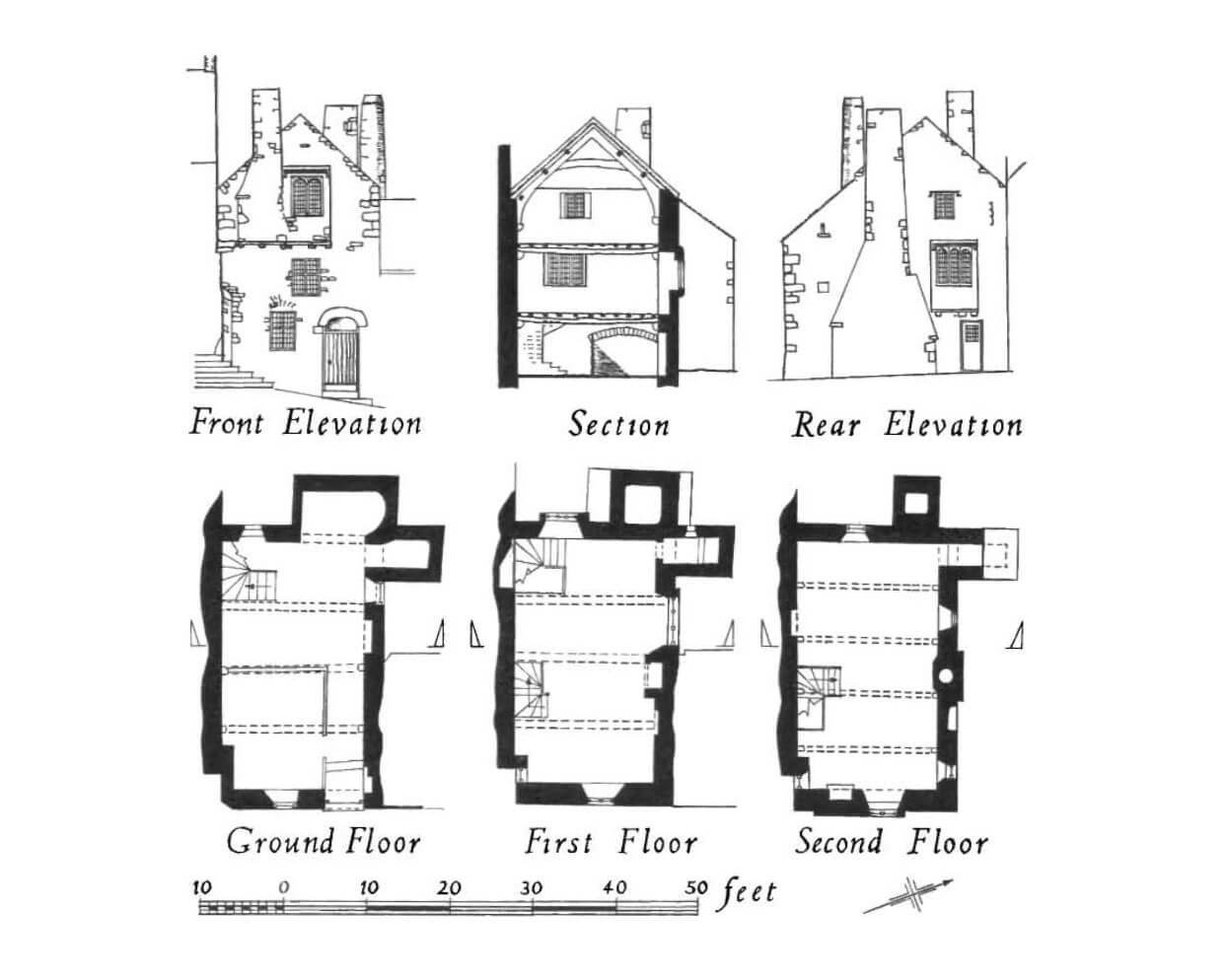
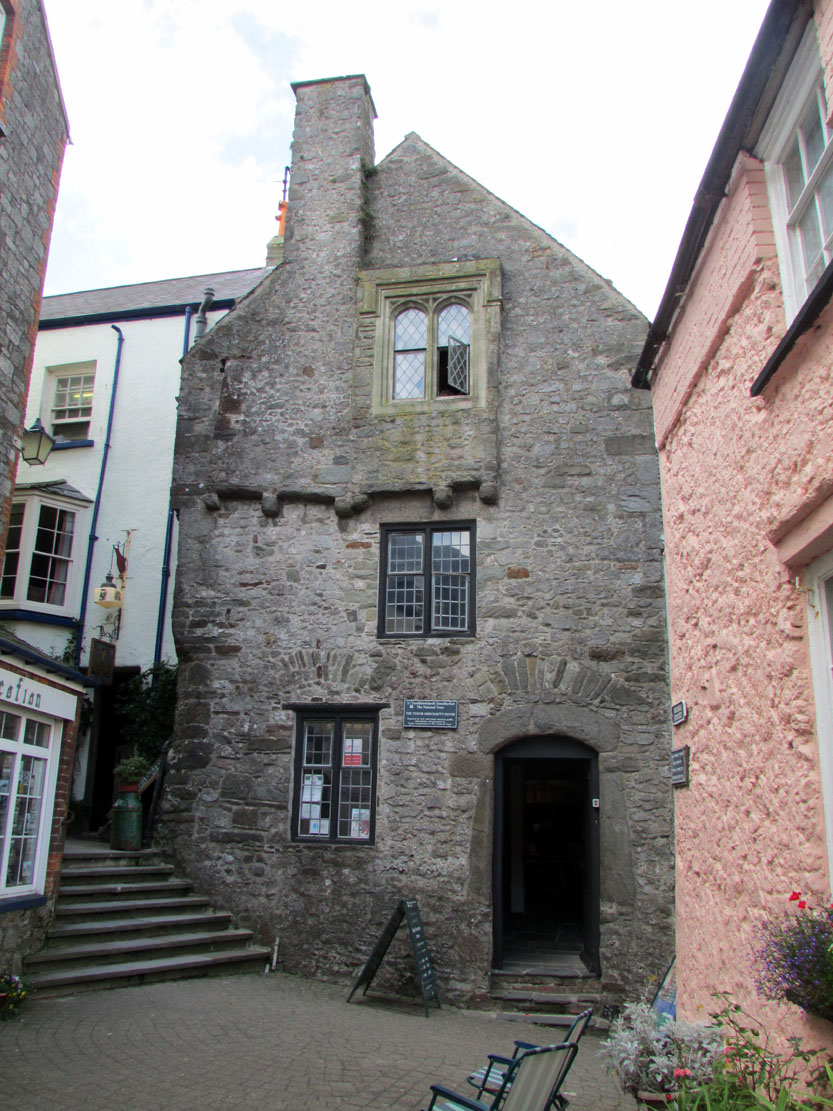
The building was constructed on a roughly rectangular plan with two projections: in the northern section of the shorter western wall and in the western section of the longer northern wall. The larger western projection formed the chimney of a large fireplace, while the smaller northern projection housed latrines on all floors, set in a 1.4 x 1.2-meter, 1.4-meter-deep cesspit carved into the rock. The house was topped with a gable roof, likely originally thatched, supported by triangular gables on the shorter walls. The eastern front elevation was enhanced on the top floor by a bay window connected to the chimney and set on five stone corbels. The rear elevation featured a bay window on the second floor, also set on several stone corbels.
The main entrance to the ground floor led from the street on the eastern side, through a portal with segmental head located at the northern corner. Additionally, in the opposite western part of the house, in the chimney projection, a second entrance led from the rear courtyard with a garden. The first floor was accessed by an external, probably narrow stone staircase, set against the south wall and connected to a pointed portal. Side stone staircases were a popular feature in Tenby townhouses, allowing to save space of the interior and separate the utility and economic part from the residential part of the house.
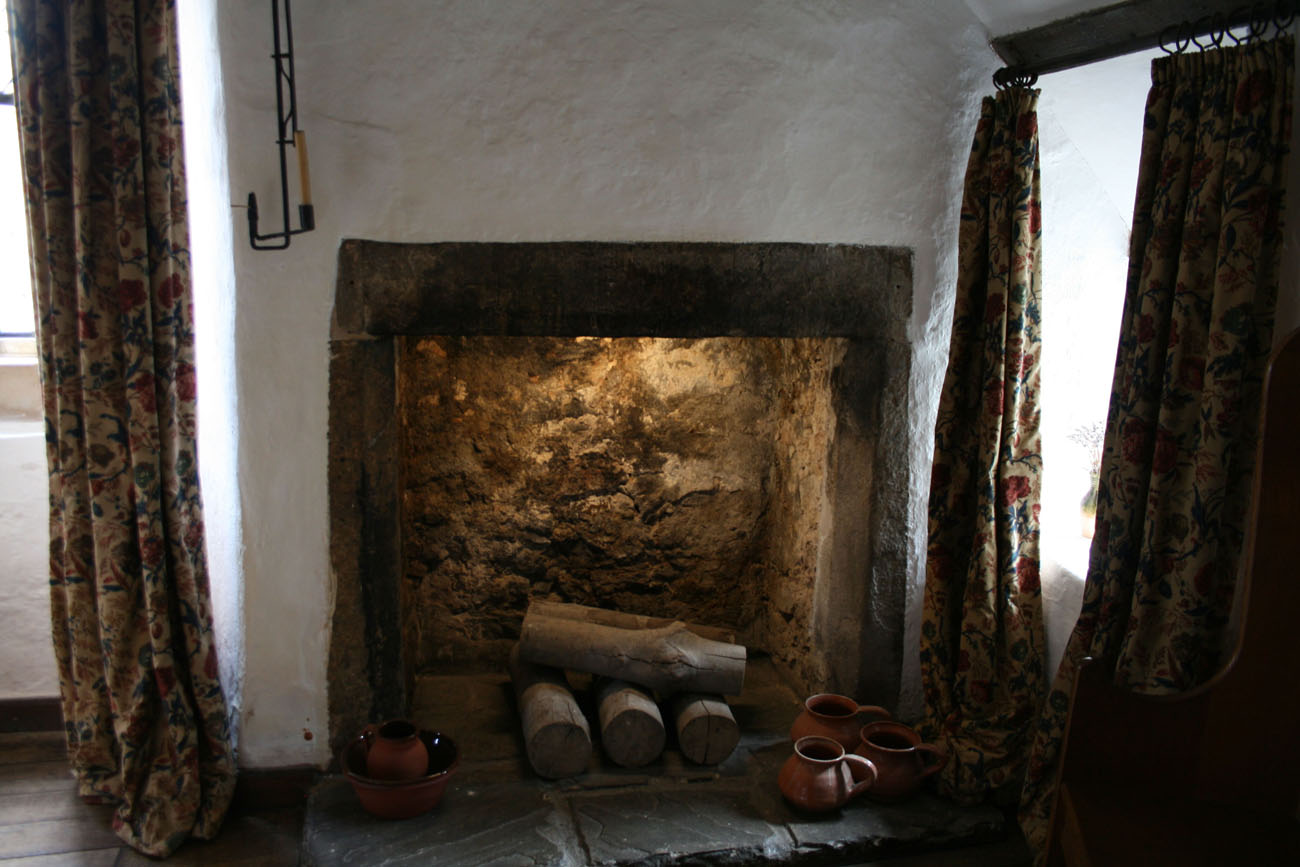
The interior was divided into three storeys, all separated by wooden ceilings, while the uppermost was covered by an open roof truss with four collar beams supported by massive stone corbels. Vertical communication was provided by an internal wooden staircase, probably located in the southwest corner, although initially there may have been no connection between the ground floor and the first floor. The ground floor was originally used in the eastern part as a merchant’s shop for trading, while the rear western part was occupied by a kitchen separated by a wooden screen. The first floor served as a dwelling, and the second floor served as a bedroom. All three storeys were heated by fireplaces and all had access to latrines in the aforementioned turret at the northwest corner. The walls of the residential floor were originally covered with paintings.
Current state
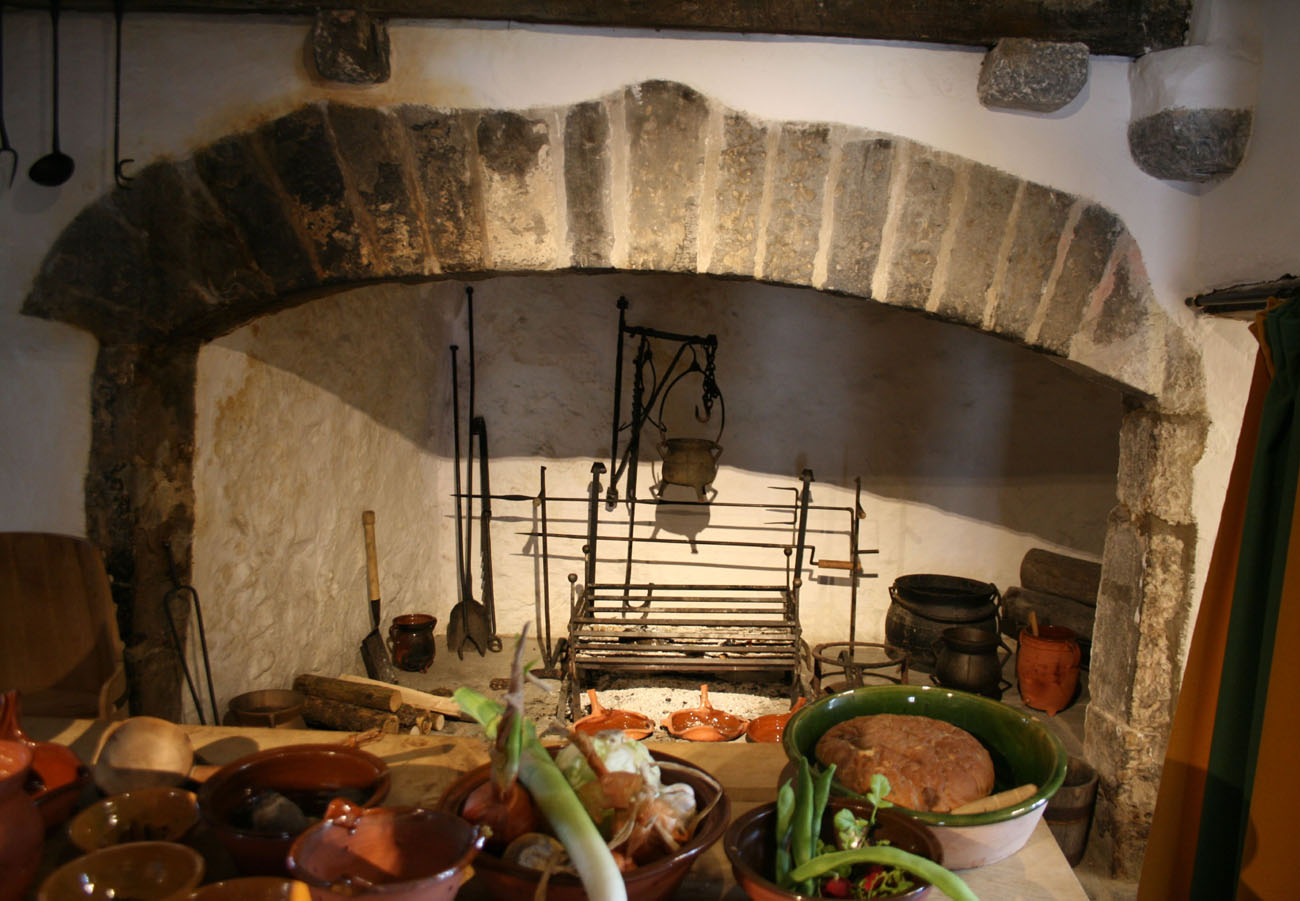
The building is now the oldest house in Tenby and the only well-preserved medieval dwelling in the town, designated a Grade I listed building, indicating its exceptional value. It now houses a historical museum, showcasing the decor and lifestyle of the townspeople around 1500.

bibliography:
Gwyn T.W., Report of the Summer Meeting of the Royal Archaeological Institute at Tenby in 1962, “The Archaeological Journal”, 119/1962.
Murphy K., Tudor Merchant’s House, Tenby, unpublished typescript, 1984.
Soulsby I., The towns of medieval Wales. A study of their history, archaeology, and early topography, Southampton 1983.