
History
The church of St. Bleddian in St Lythans was probably erected in the 12th century. In the Gothic period it was rebuilt and enlarged with a tower, and in the sixteenth century, right next to the chancel, a chantry chapel of the Buttos family was built. In 1861, the church was thoroughly renovated, and then the southern porch was erected.
Architecture
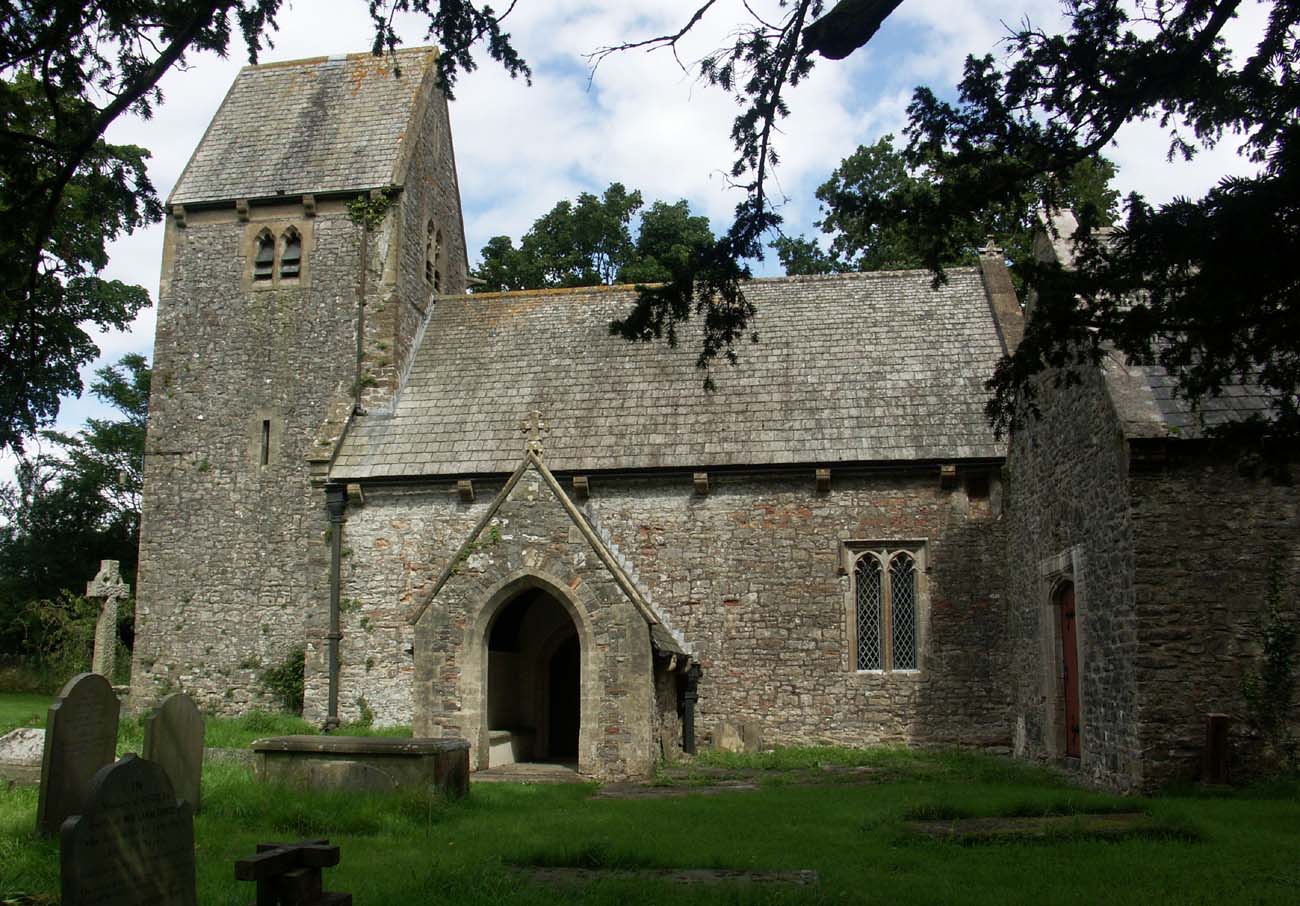
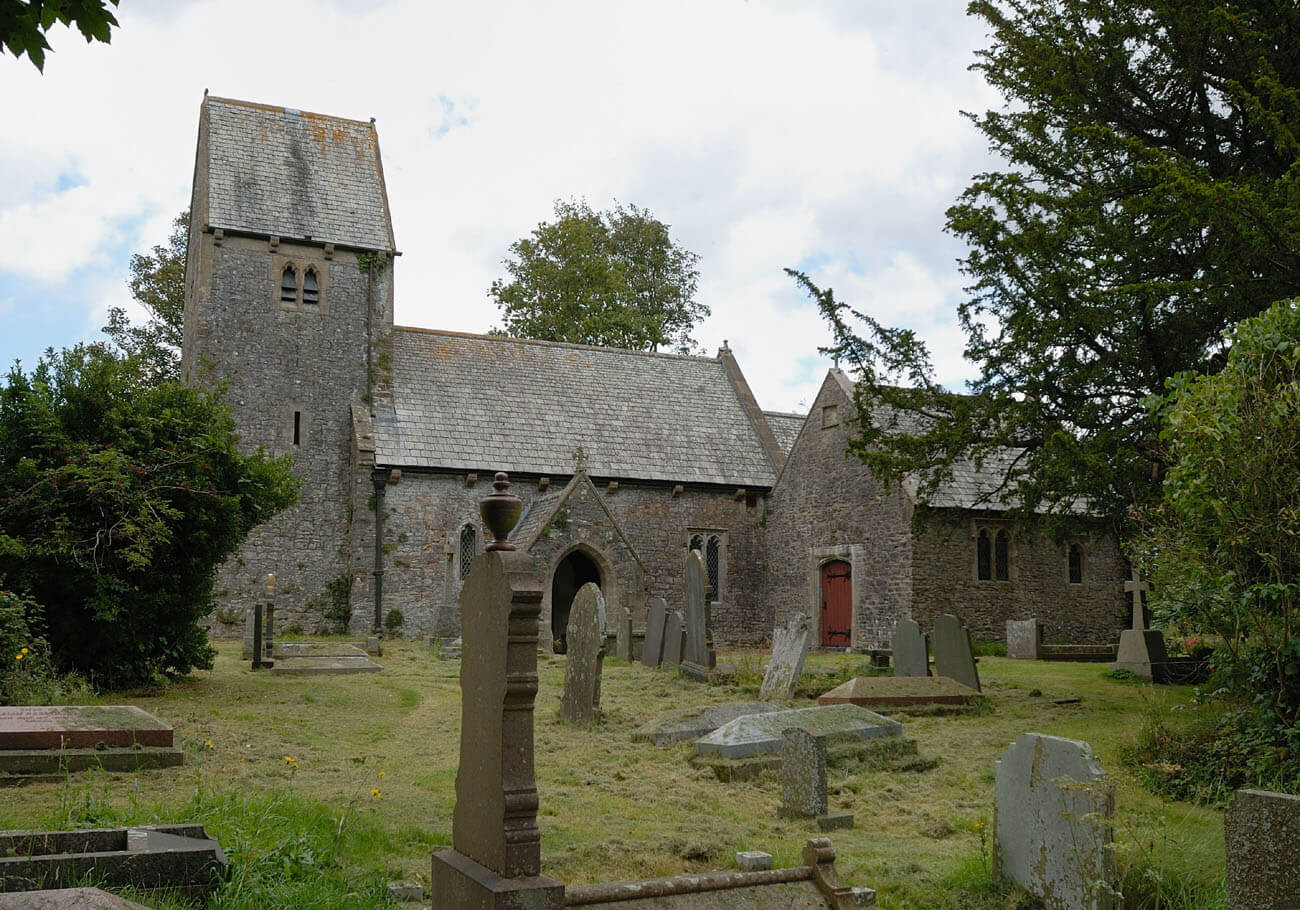
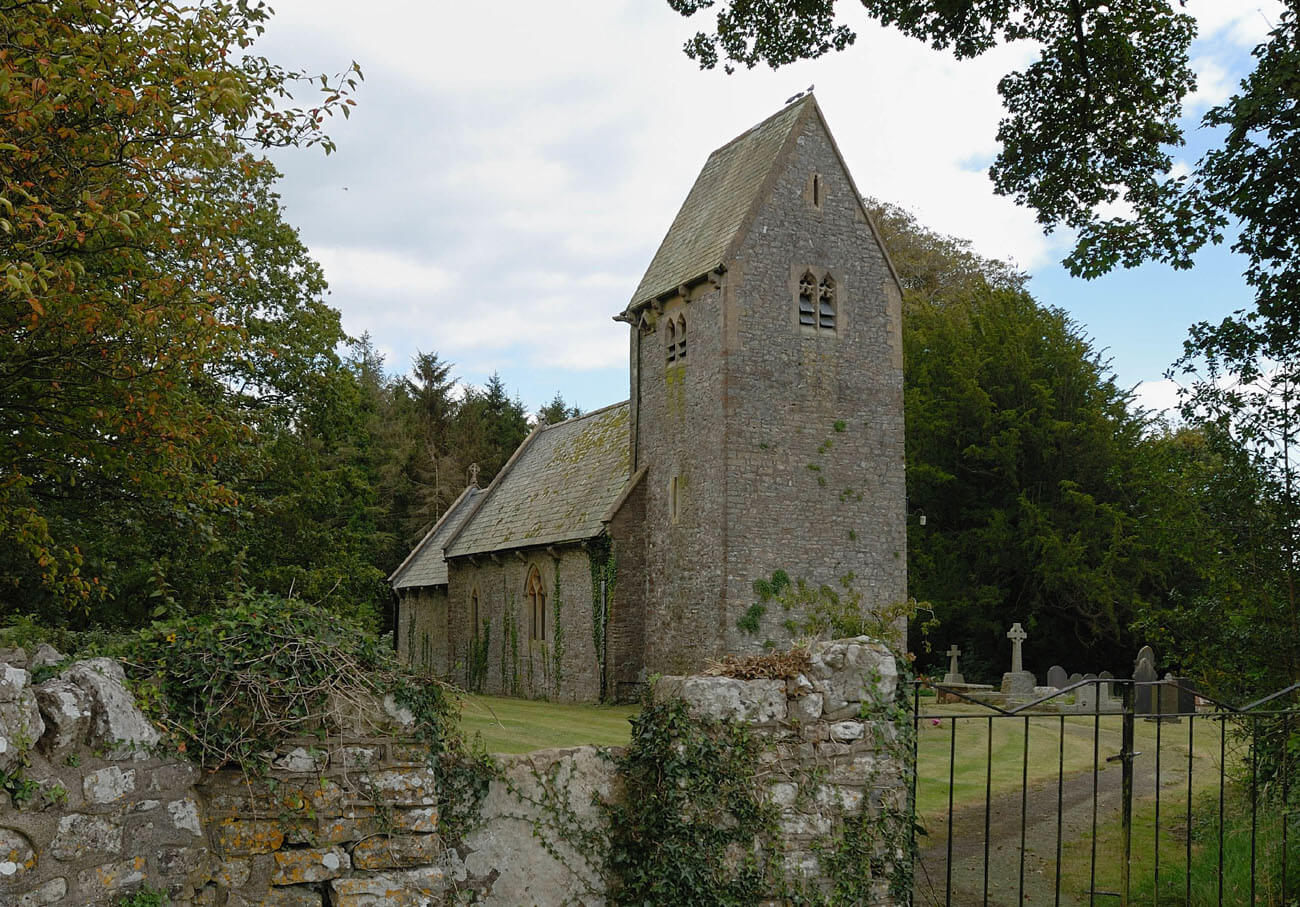
St. Bleddian’s church was built as a typical rural parish church in southeastern Wales, consisting of a rectangular nave and a slightly narrower, lower, and shorter chancel on the eastern side, ended by a straight wall to the east. In the 14th or 15th century, a tower with a quadrangular base and slender proportions was slightly incorporated into the nave on the west side. In the 16th century, a chapel was built on the south side of the chancel. It was a simple rectangular building, slightly shorter in length than the chancel.
The church’s oldest windows, like those of other Romanesque religious buildings in Wales, must have been narrow, splayed inward, and perhaps with semicircular arches. All of these were replaced in the later Middle Ages with larger and more ornate Gothic jambs. The nave windows were equipped with pointed arches filled with trefoil and cinquefoil tracery. The largest window with multi-light tracery likely was located in the eastern wall of the chancel, while the northern façade of the church may originally have been completely windowless. The chapel façades were pierced by single-light and double-light, relatively narrow windows with trefoil heads topped by hood moulds.
The main entrance to the church was located since the beginning in the southern wall of the nave. During the Gothic period, a jamb with a pointed arch and wide concave moulding was installed in place of the original portal. If the church had a separate entrance for the priest in the southern wall of the chancel, it was removed after the addition of a chapel in the 16th century, which was connected to the church by two arcades resting on an exceptionally massive, oval-shaped pier carved from the old masonry. An entrance to the chapel was also created from the outside in the western wall, placed in a moulded portal with an arch, that was so significantly lowered so that it almost had a segmental form.
Current state
The porch, visible today on the south side of the nave, is the only early modern annex, but the tower’s upper windows date from the 19th-century renovation, as do the north windows in the nave and the openings in the chancel. The tower’s steeply pitched gable roof, typical of churches in Glamorgan and Gower, is also a result of Victorian work. The least transformed medieval window and portal jambs are in the south wall of the nave and in the chapel. Inside the church, a Romanesque font decorated with six rows of herringbone patterns remains. Of note are the very austere 16th-century arcades between the chapel and chancel, supported by a massive central pillar.
bibliography:
Newman J., The buildings of Wales, Glamorgan, London 1995.
Salter M., The old parish churches of Gwent, Glamorgan & Gower, Malvern 2002.