History
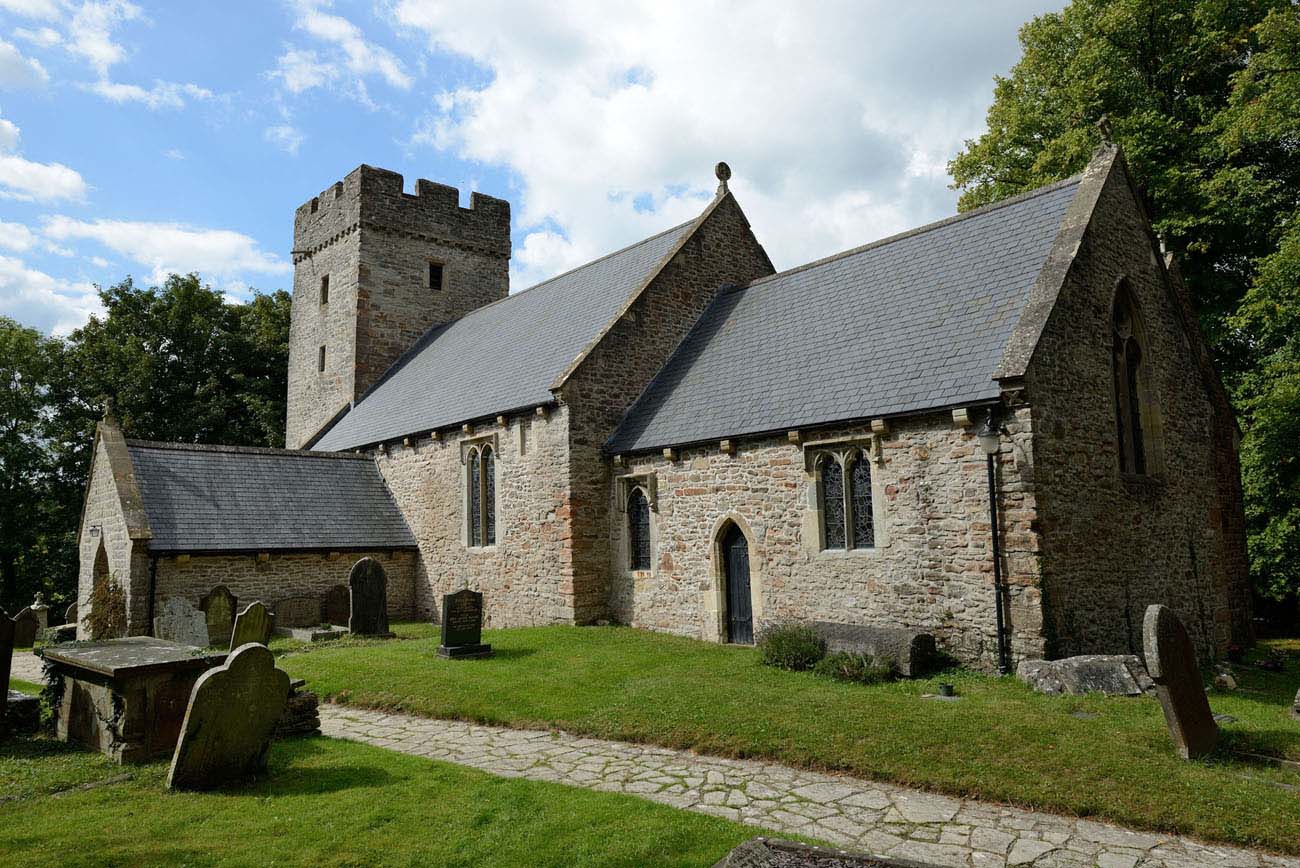
The church at St Andrews Major was built in the 13th century, when the nave and chancel were erected. In the 15th and 16th centuries, it was significantly enlarged with a north aisle, a porch, and a tower added to the west. In the early modern period, a family chapel was built at the eastern part of the north aisle, belonging to the Rowel and Bouville families, who owned much of the parish. In the 19th century, the building underwent a thorough Victorian renovation, and in 1921, the early modern chapel was rebuilt.
Architecture
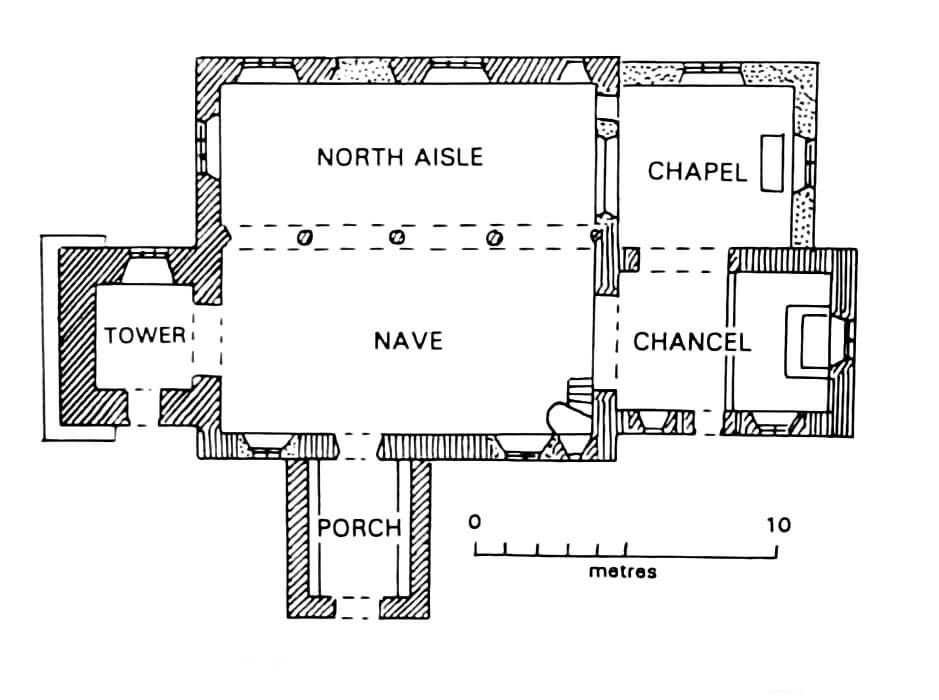
The original church consisted of a rectangular nave and a narrower, lower, rectangular chancel on the eastern side. It thus presented a spatial layout typical of early Gothic rural religious buildings, common not only in the British Isles but also in continental Europe. The church’s windows were likely small at the time, splayed inward, with lancet or possibly rounded heads, although the northern façade may have been entirely devoid of them. The entrance opening, with a pointed arch and a wide chamfer, was located in the western part of the southern wall of the nave.
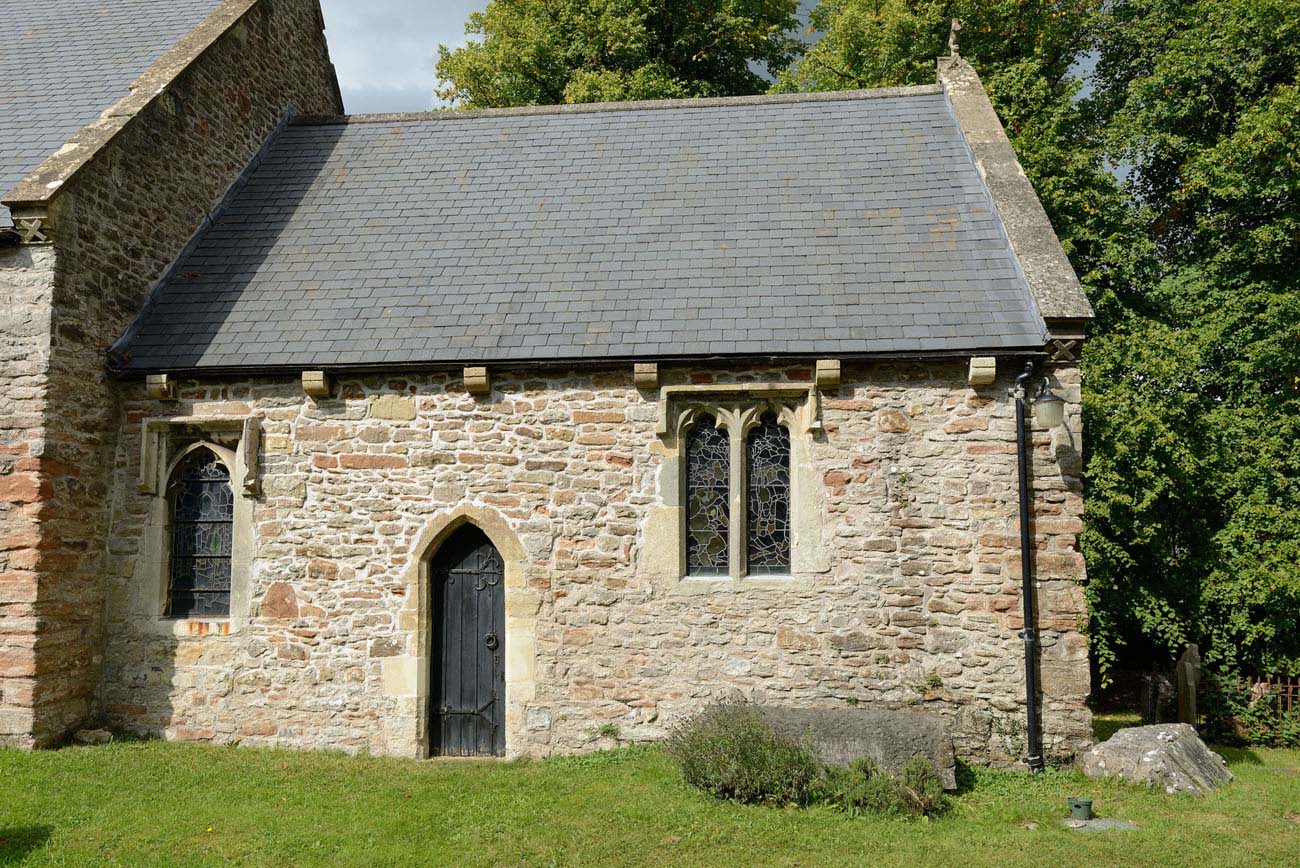
In the late 15th or early 16th century, the northern wall of the nave was transformed into four arcades supported by octagonal pillars, which opened onto the new northern aisle. This was equal in length to the nave but slightly narrower in width. The pointed arcades were decorated with a wide, continuous chamfer, descending onto the pillars without the capitals. The northern aisle was lit by three-light windows in quadrangular jambs, framed by hood mould, and a single window in the eastern part of the northern wall, which likely illuminated the rood screen running the full width of the nave and aisle. Similar windows with late Gothic tracery were also installed in the older parts of the church at that time.
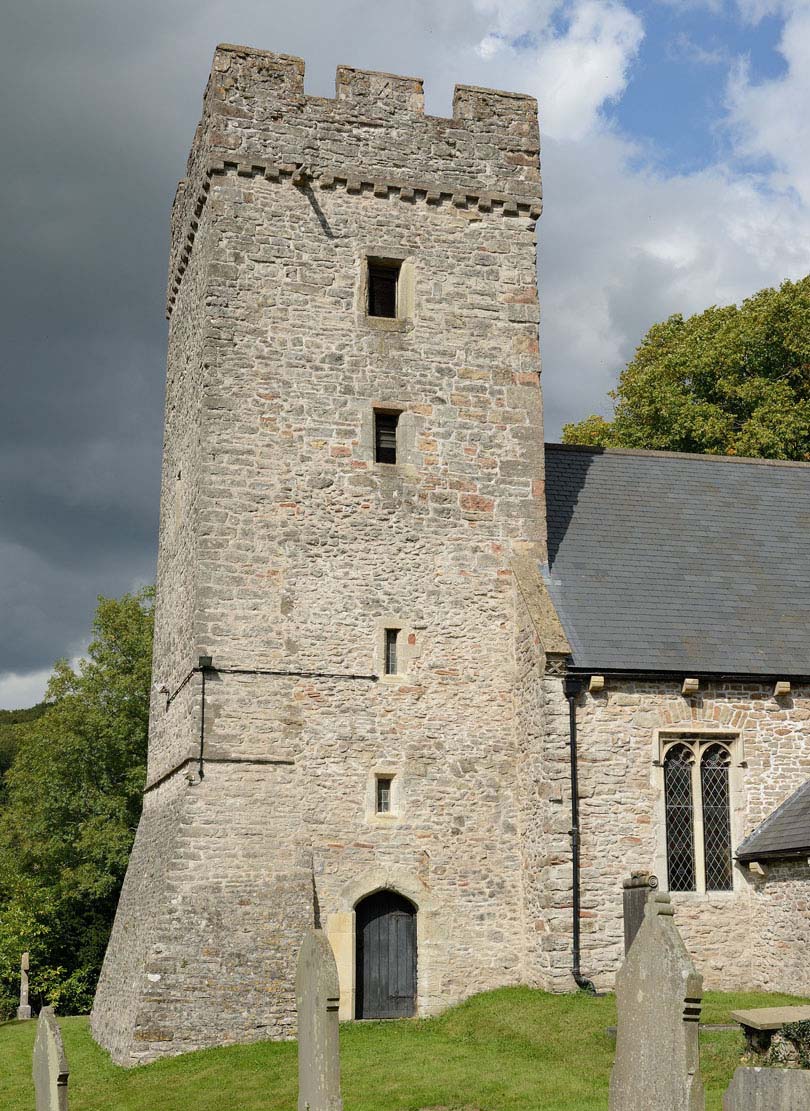
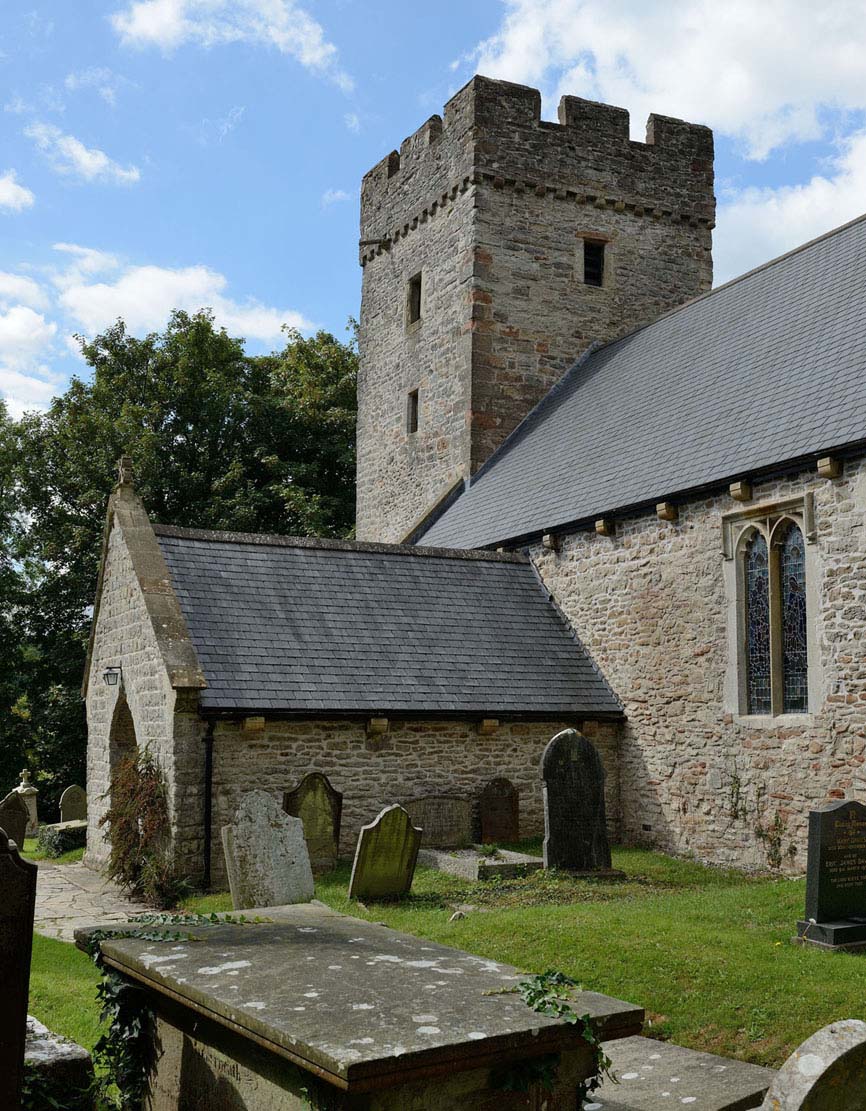
On the western side, a quadrangular tower was built towards the end of the Middle Ages, with a massive western buttress or a batter at the ground floor and a crown in the form of a crenellated parapet, supported by corbels projecting from the wall face. Because of the batter, the tower entrance was unconventionally placed in the southern wall, in a chamfered portal with a flattened pointed arch. The windows were very simple and small, framed by rectangular, chamfered jambs. The entire tower was characterized by austerity and a lack of decorative architectural detail, quite unusual in the Late Gothic period.
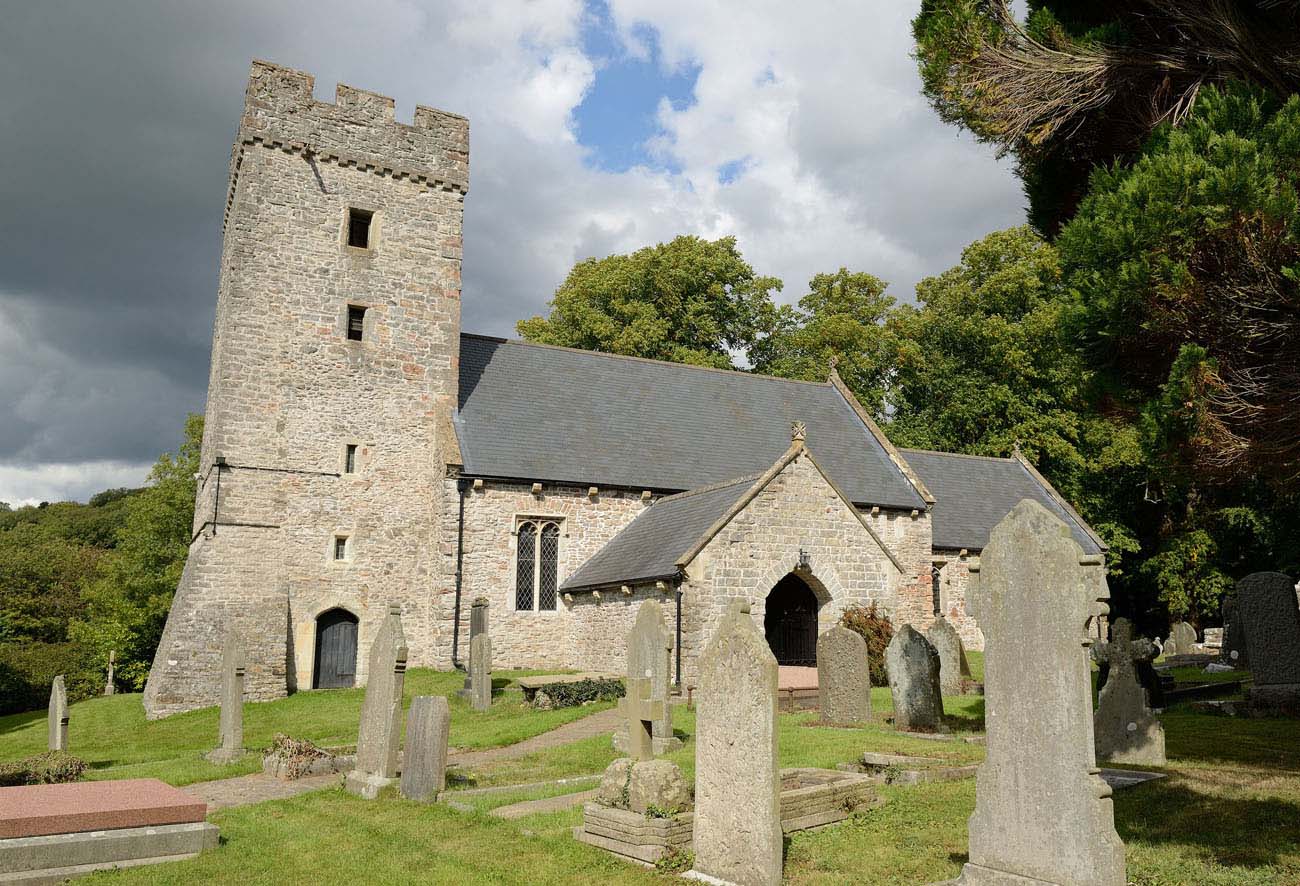
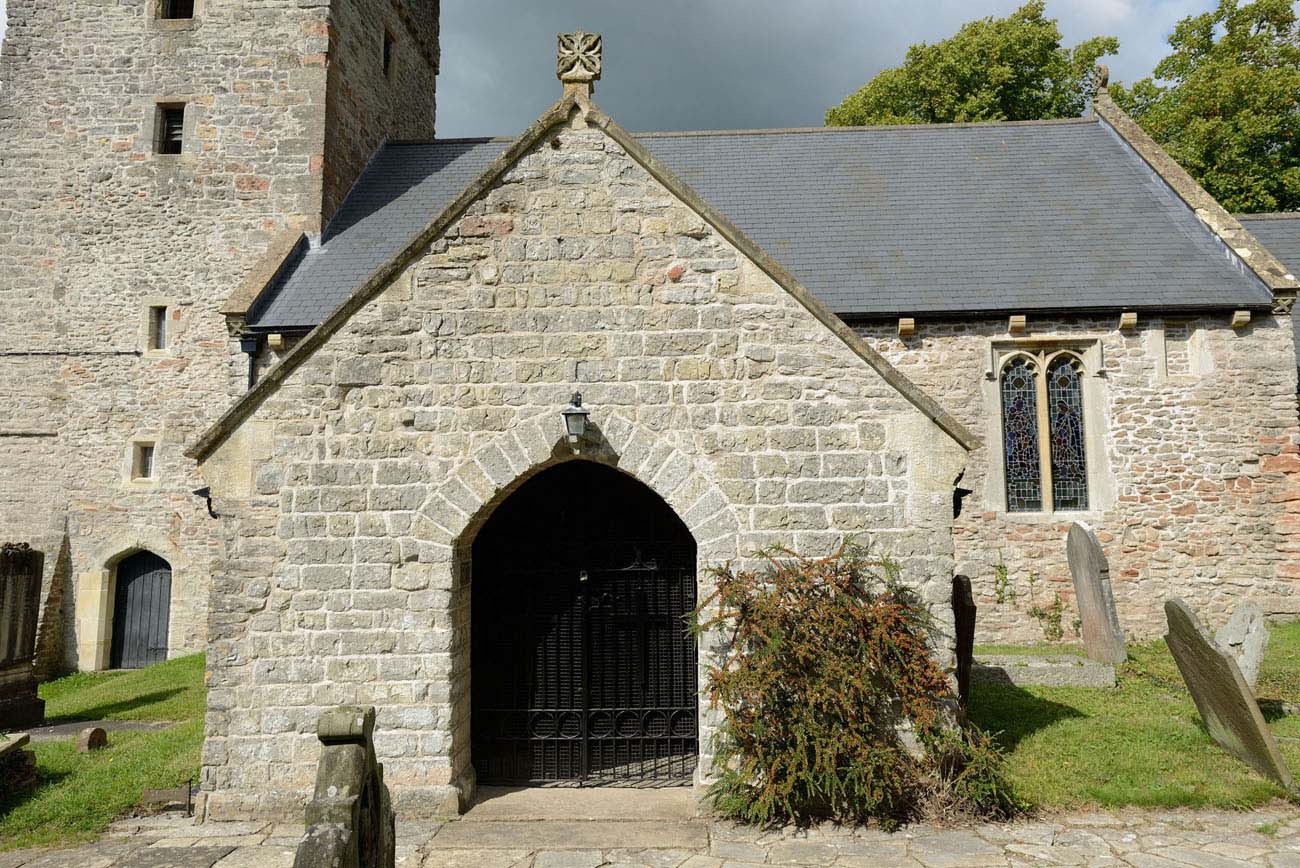
The final element to be built at the end of the Middle Ages was an exceptionally long porch, situated on the south side, in front of the main entrance to the nave. It was covered by a gable roof resting on a triangular, unadorned gable, followed by an entrance arcade constructed of precisely cut voussoirs. Long stone benches were placed on the sides of the interior. The porch was intended for the congregation, while the priest used a pointed, chamfered portal in the south wall of the chancel.
Current state
Today, St. Andrew’s Church is a well-maintained historic building, largely in the Late Gothic style, with only minor modifications in the modern period. The chancel arcade and both eastern windows date from the 19th century. The northern chapel is a result of construction works from the first half of the 20th century. The windows of the northern aisle were probably modernized in the late 16th century. The southern portal of the nave may date from the 13th or 14th century. Late Gothic architectural details include the portals in the tower and chancel, the southern windows of the chancel and the arcades between the nave and aisle. The church’s distinctive features include an exceptionally long porch and the tower’s massive western batter.
bibliography:
Newman J., The buildings of Wales, Glamorgan, London 1995.
Salter M., The old parish churches of Gwent, Glamorgan & Gower, Malvern 2002.