History
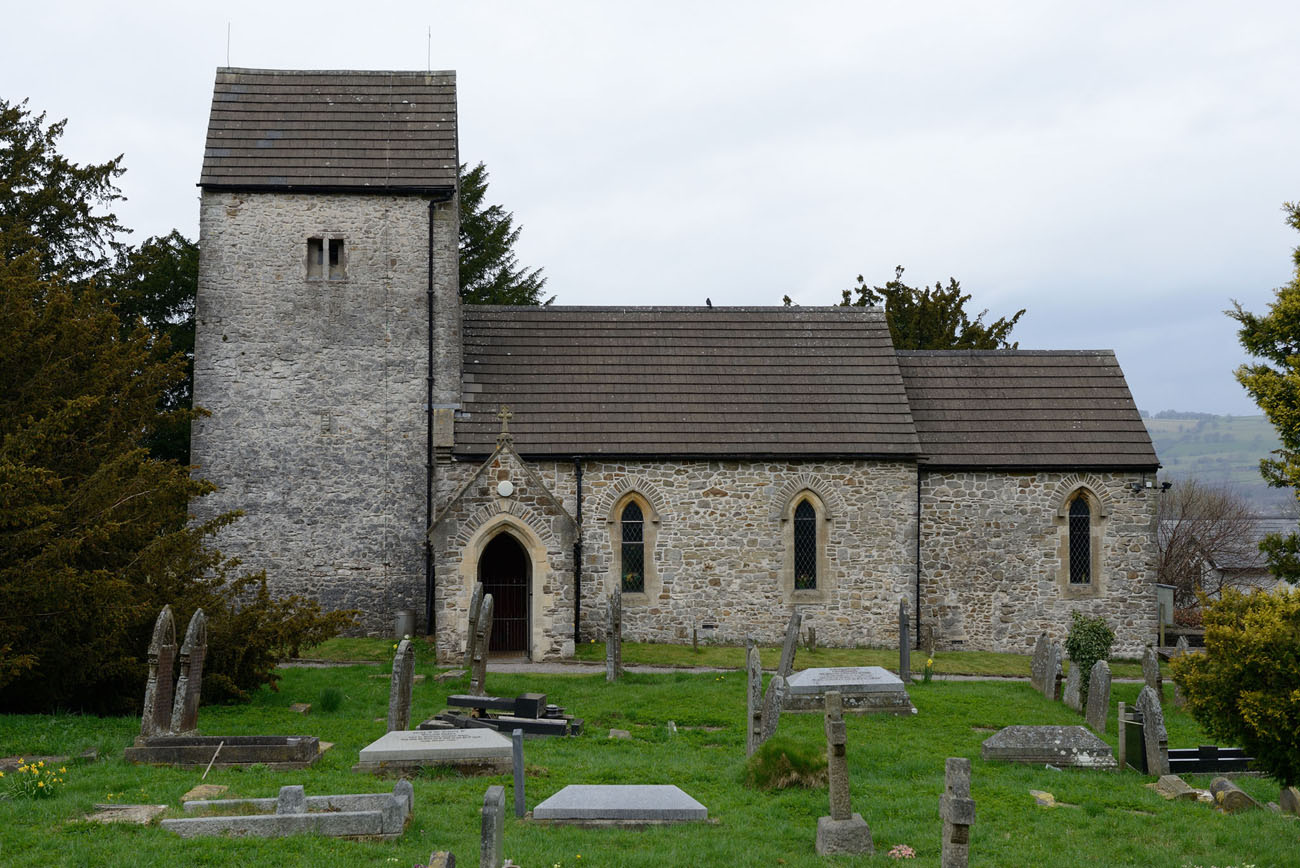
The church of St. James in Rudry was built around the mid-13th century. The first record of it was in 1295. For most of its history, it was a chapel of ease of St. Barwg’s Church in Bedwas, gaining independence only in the early 20th century. A thorough renovation was carried out in 1885. Then, in 1961, the walls of the nave and tower were reinforced and the roof tiles were replaced. During the 19th-century renovation, a porch was added in front of the southern entrance to the nave.
Architecture
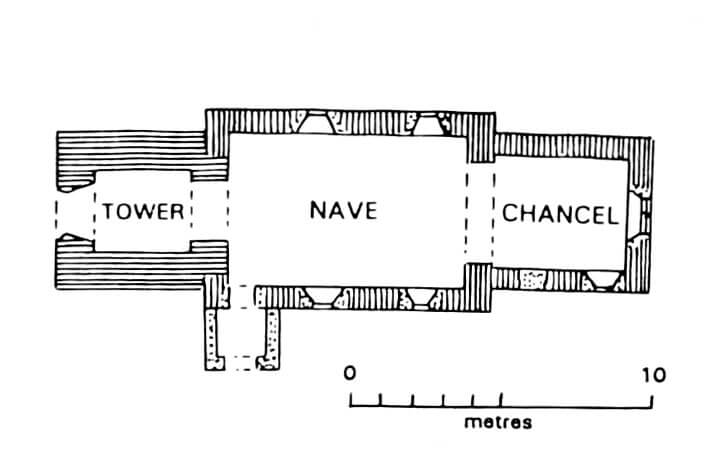
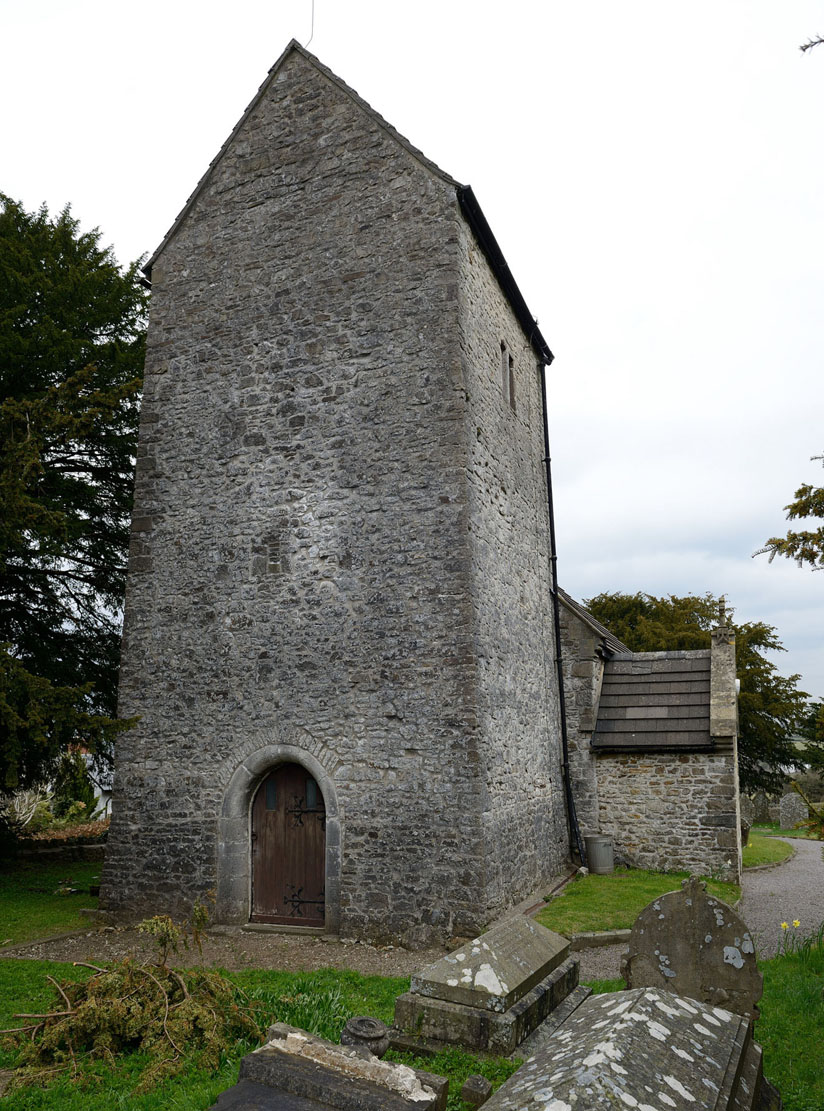
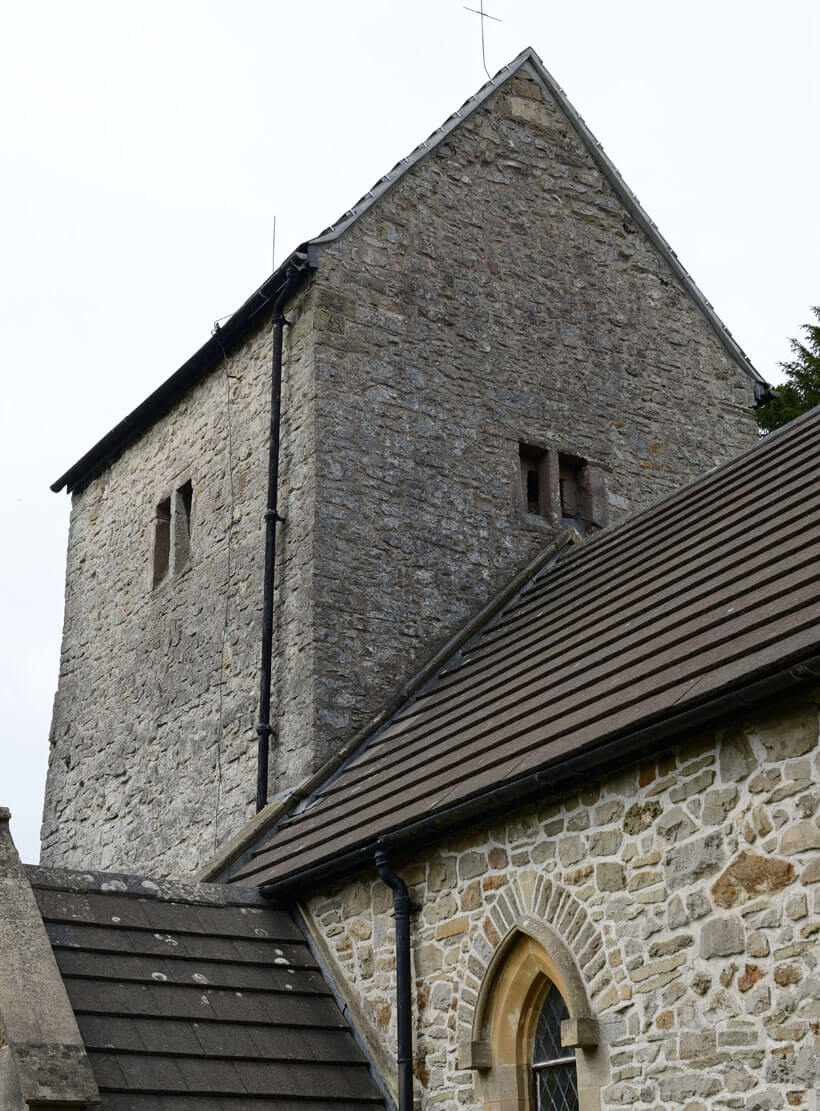
The medieval church consisted of a rectangular nave, a narrower, lower and shorter chancel on the eastern side, and a quadrangular tower on the western side. Tower was covered by a saddle roof, characteristic of southeastern Glamorgan. Separate gable roofs covered the nave and chancel, supported by triangular gables on the eastern side. The entire structure was situated in a valley, on a slope gently descending towards the stream on the northern side.
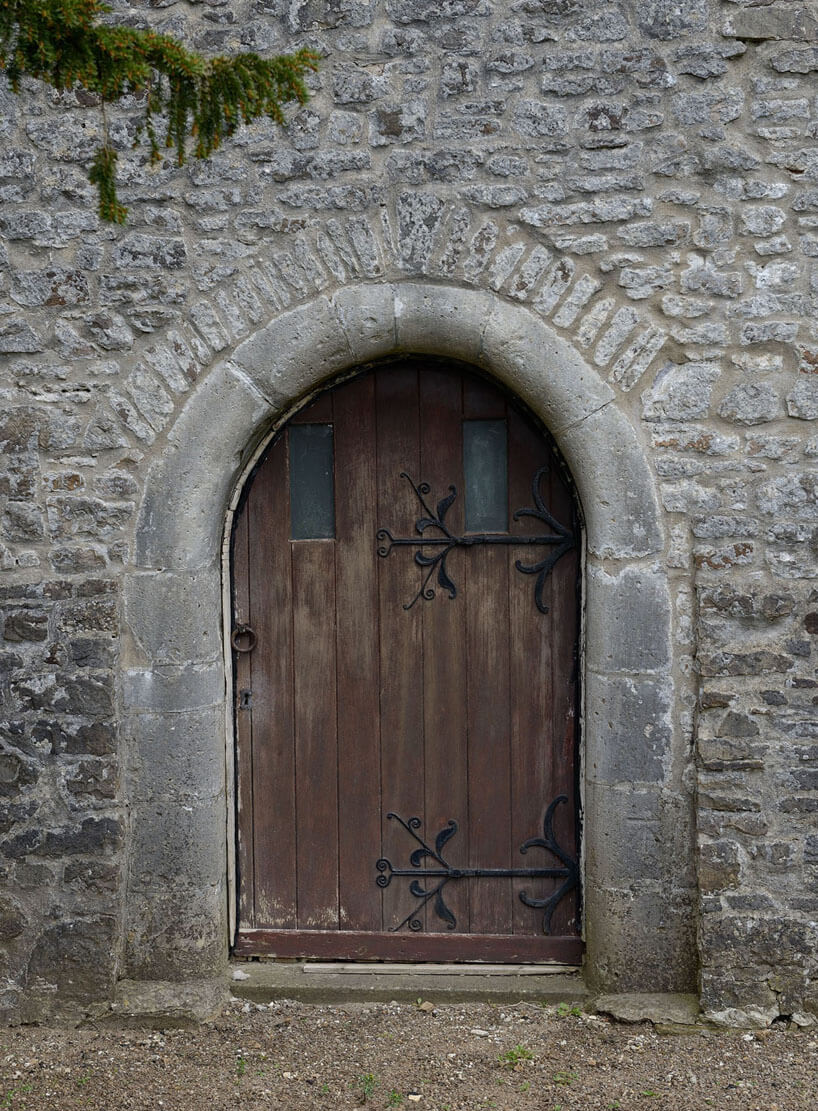
Originally, the main entrance to the nave was located in the western part of the southern wall, and later a simple western portal was also created in the ground floor of the added tower. There was also a separate entrance for the priests in the southern wall of the chancel. The church’s original windows were likely small, narrow, splayed inward, and may have been topped with trefoils. In the Late Gothic period, at least some of these received ogee-shaped arches.
The nave’s interior was opened to the tower and chancel by arcades. In the late Middle Ages, a timber rood screen, equipped with a very popular loft or upper gallery, may have stood in front of the chancel arcade. Access to this gallery was likely via a staircase built into the thickness of the nave’s northern wall. No vaults were used in any part of the church, limiting the structure to an open roof truss or wooden wagon roofs.
Current state
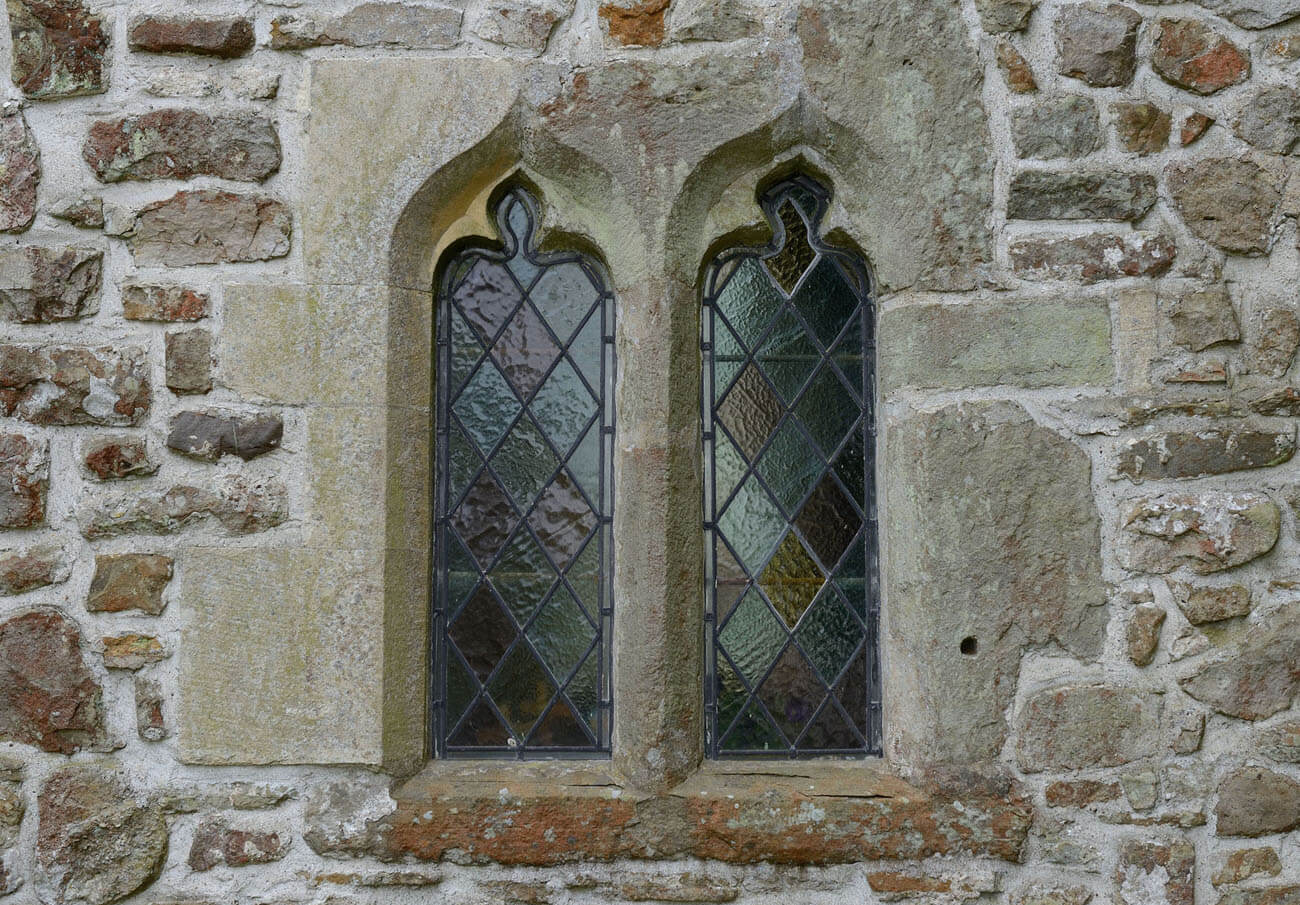
The church has the original perimeter walls of the nave and chancel, as well as the west tower, but most of its windows have been modernized or renewed in the early modern period. An exception is the 16th-century two-light opening in the north wall of the nave, topped with ogee arches with inscribed trefoils (likely transferred from another part of the church). The bricked-up south portal in the chancel and the west portal in the tower’s ground floor are also original. Traces of a bricked-up portal that once led to the rood screen loft are visible in the nave. The chancel arcade was modified in the 19th century, but the arcade under the tower may be original.

bibliography:
Green C.H., Notes on churches in the Diocese of Llandaff, Aberdare 1906.
Newman J., The buildings of Wales, Glamorgan, London 1995.
Salter M., The old parish churches of Gwent, Glamorgan & Gower, Malvern 2002.