
History
Church of St. Curig was probably erected in the 13th century, and the first written mention about it appeared in 1254. Porthkerry was then a large port in which every monk, cleric, missionary or pilgrim, before leaving, stopped to pray for safe passage of the Bristol Channel waters. At the end of the 15th or at the beginning of the 16th century, a tower and porch were added to the church. In 1867, a thorough renovation of the building was carried out, during which the chancel arch was rebuilt in the chancel and the roof was replaced. In 1929, a sacristy was to be added, in 1958 the top of the tower was rebuilt.
Architecture
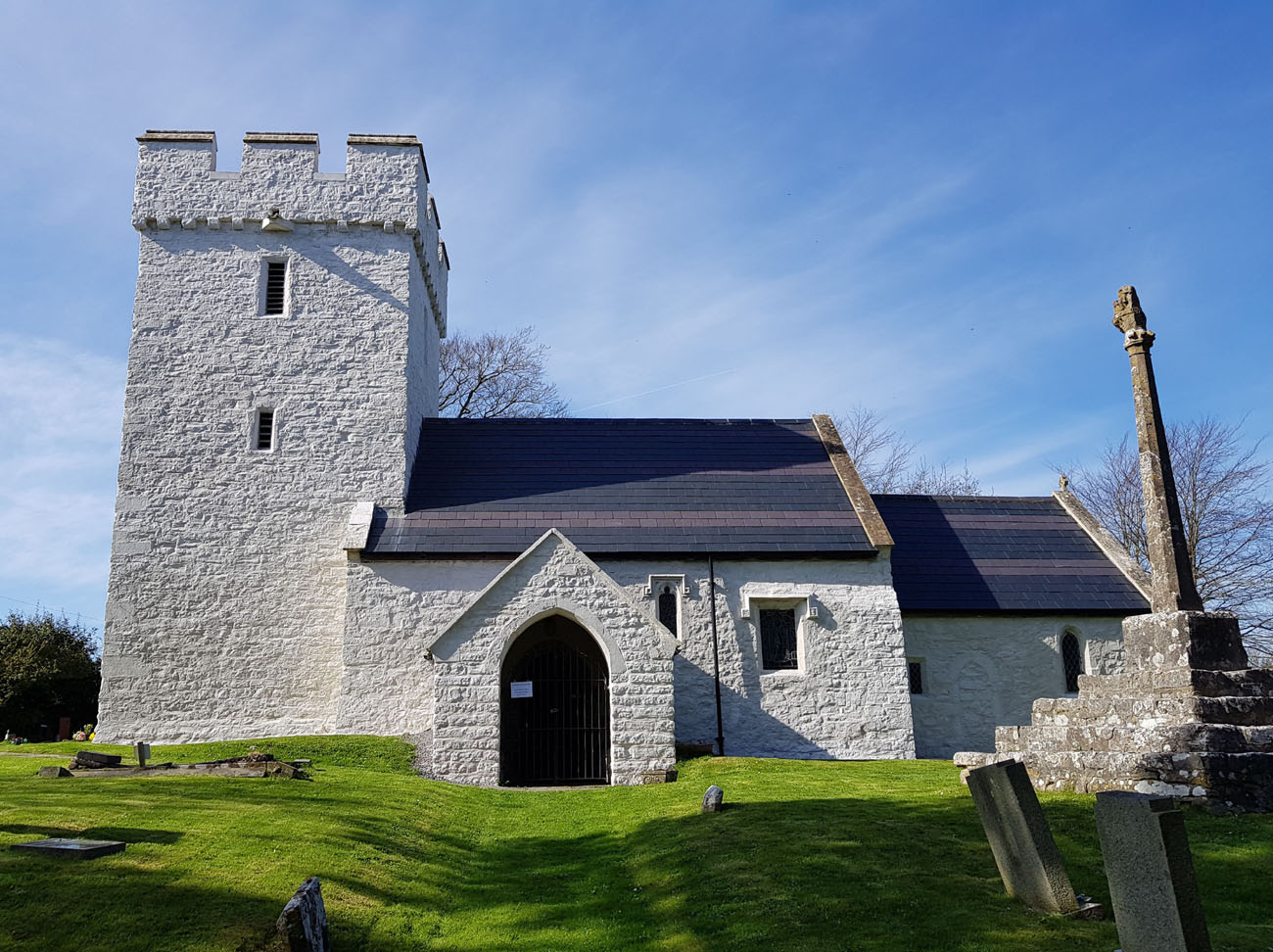
The church was built near the high seashore on the south side. It was designed on the plan of a typical early Gothic small village sacral building, with a rectangular nave and a narrower chancel on the eastern side, ended by a straight wall. A quadrangular tower was added on the western side at the turn of the 15th and 16th centuries. A porch may have been built at the southern entrance to the nave during the same period. The entire structure was orientated towards the cardinal sides of the world, slightly off-axis.
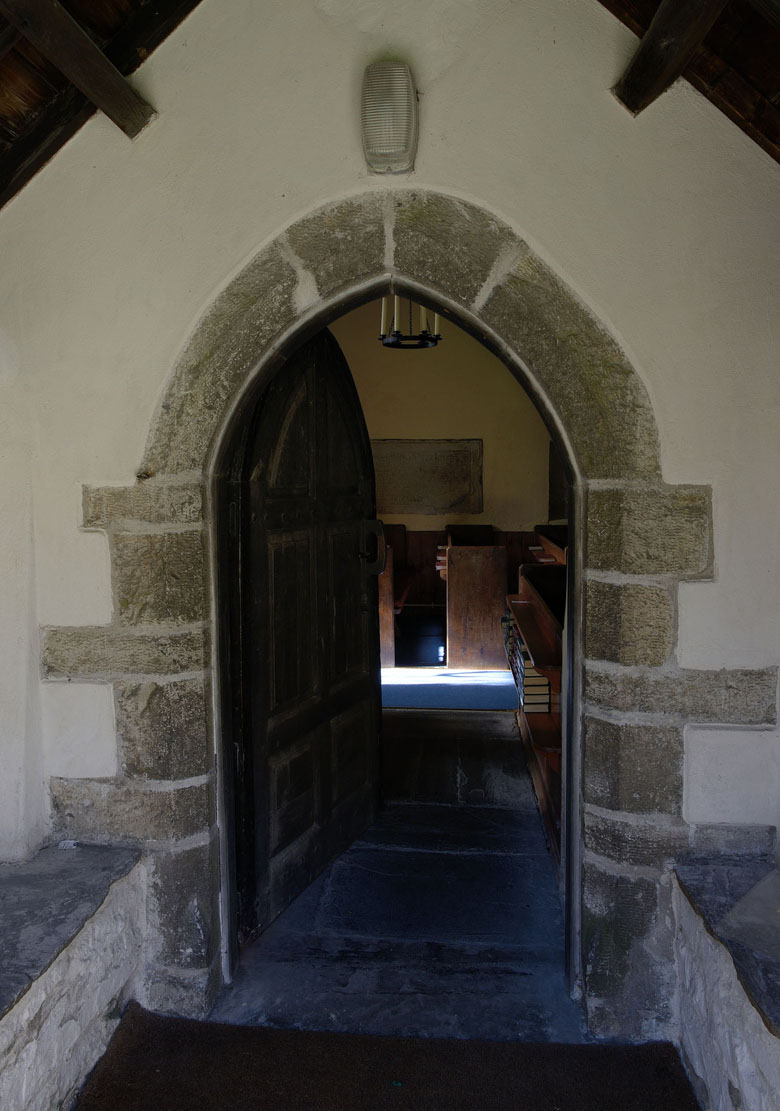
The original windows of the church were small, relatively narrow, and topped with trefoils inscribed in pointed arches. In the Late Gothic period, larger openings with trefoil heads were grouped in pairs, placed under pointed or triangular drip hoods supported by stone consoles. The church originally had two entrances: the southern one into the nave, intended for the congregation, and the southern one into the chancel, used by the parish priests. Both were set within simple portals with pointed arches and chamfered jambs.
The tower was quite typical of late medieval rural parish churches in south Wales. Its walls were not supported by buttresses, but the eastern wall rested on the western wall of the nave, partially integrating the tower into the body of the church. The crown of the walls was topped by a prominent battlemented parapet mounted on corbels. The upper window openings were simple, with rectangular, chamfered jambs. A more ornate two-light window with cinquefoil tracery was set on the upper floor in the western wall. Just below it was a moulded, pointed-arch entrance portal to the ground-floor vestibule.
Current state
Currently, the church has medieval perimeter walls of the nave, chancel and tower. The sacristy on the northern side, roof trusses and part of the rebuilt northern wall of the chancel are modern. Today’s porch is also early modern, although stylistically it refers to the older part of the building. The tower’s parapet is the result of the modern reconstruction from 1958, while the chancel arcade has the form obtained today as a result of works from the 19th century. A number of medieval windows from the 15th and 16th centuries have been preserved in the church, including a two-light, pointed window in the eastern wall of the chancel, or a two-light window in a rectangular frame in the western wall of the tower. The original portal from the 13th century is located in the porch.


bibliography:
Kinross J., Discovering the smallest churches in Wales, Stroud 2007.
Newman J., The buildings of Wales, Glamorgan, London 1995.
Salter M., The old parish churches of Gwent, Glamorgan & Gower, Malvern 2002.