History
Church of St. Mary in Penmark dates from the thirteenth century. It was mentioned for the first time in 1254 in a document assessing its income for 20 pounds a year. In the fifteenth or sixteenth century, a tower was added to the temple. In the nineteenth century, the church underwent a thorough Victorian renovation, during which, among other things, most of the windows were replaced.
Architecture
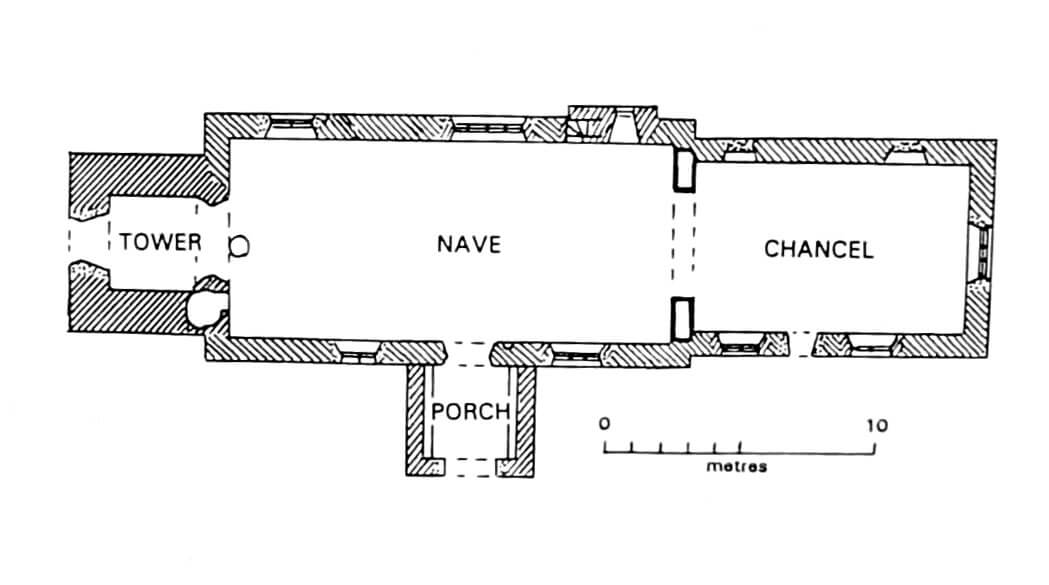
The church was built in a transitional style between Romanesque and early Gothic. Originally, it consisted of a rectangular nave and a slightly narrower, rectangular chancel on the eastern side. A quadrangular tower was added to the west toward the end of the Middle Ages. At the same time, the entrance to the nave on the south side was protected by a late medieval porch. The significantly elongated building was orientated towards the cardinal directions and aligned parallel to the village road running through the south and the Kenson River to the north. A small castle also stood close to the church at the riverside promontory.
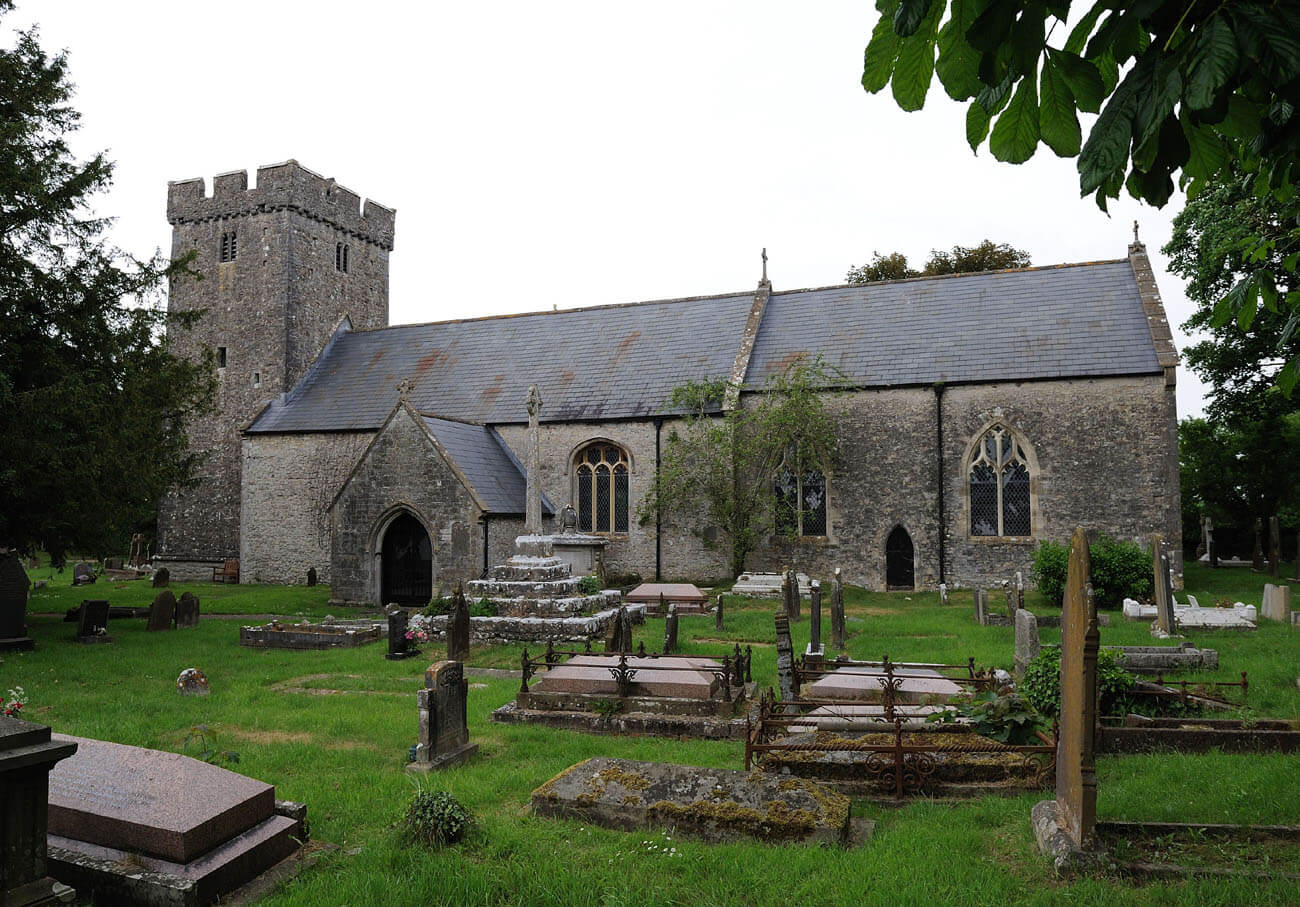
The church’s windows were originally small, quite narrow, and topped with trefoils, some grouped in pairs with a small cross or quatrefoil opening between the main openings. In the late Middle Ages, some were replaced by much larger pointed windows filled with tracery. The main entrance was located in the center of the southern wall of the nave. In the 14th century, the portal was replaced with a double-chamfered one, and above it was placed a niche for a figure with a trefoil head flanked by bas-relief pinnacles.
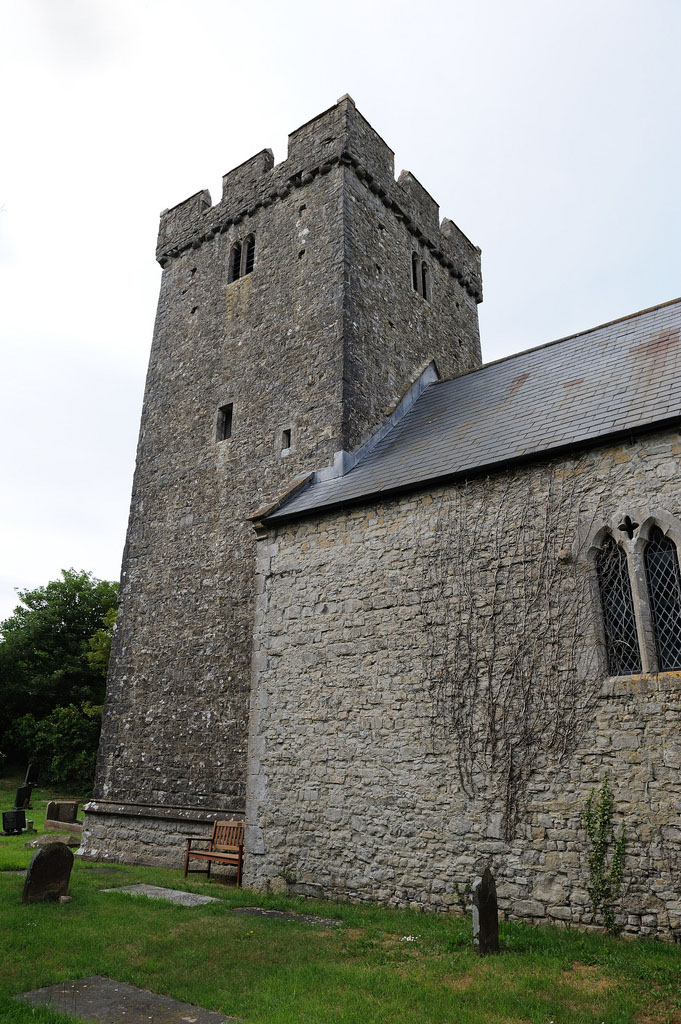
The west tower acquired a form typical of late medieval rural parish churches in south Wales. Its base was framed by a plinth with a moulded cornice, while at the crown of the walls it was topped with a parapet mounted on corbels projecting from the faces and decorated with battlements. The spiral staircase in the southeast corner was not projected to form a turret, nor was the tower supported by any buttresses. On the ground floor on the west side, a moulded portal with a pointed arch was placed, and above it a large pointed three-light window. The bell floor was lit on each side by much smaller pairs of openings with trefoil heads.
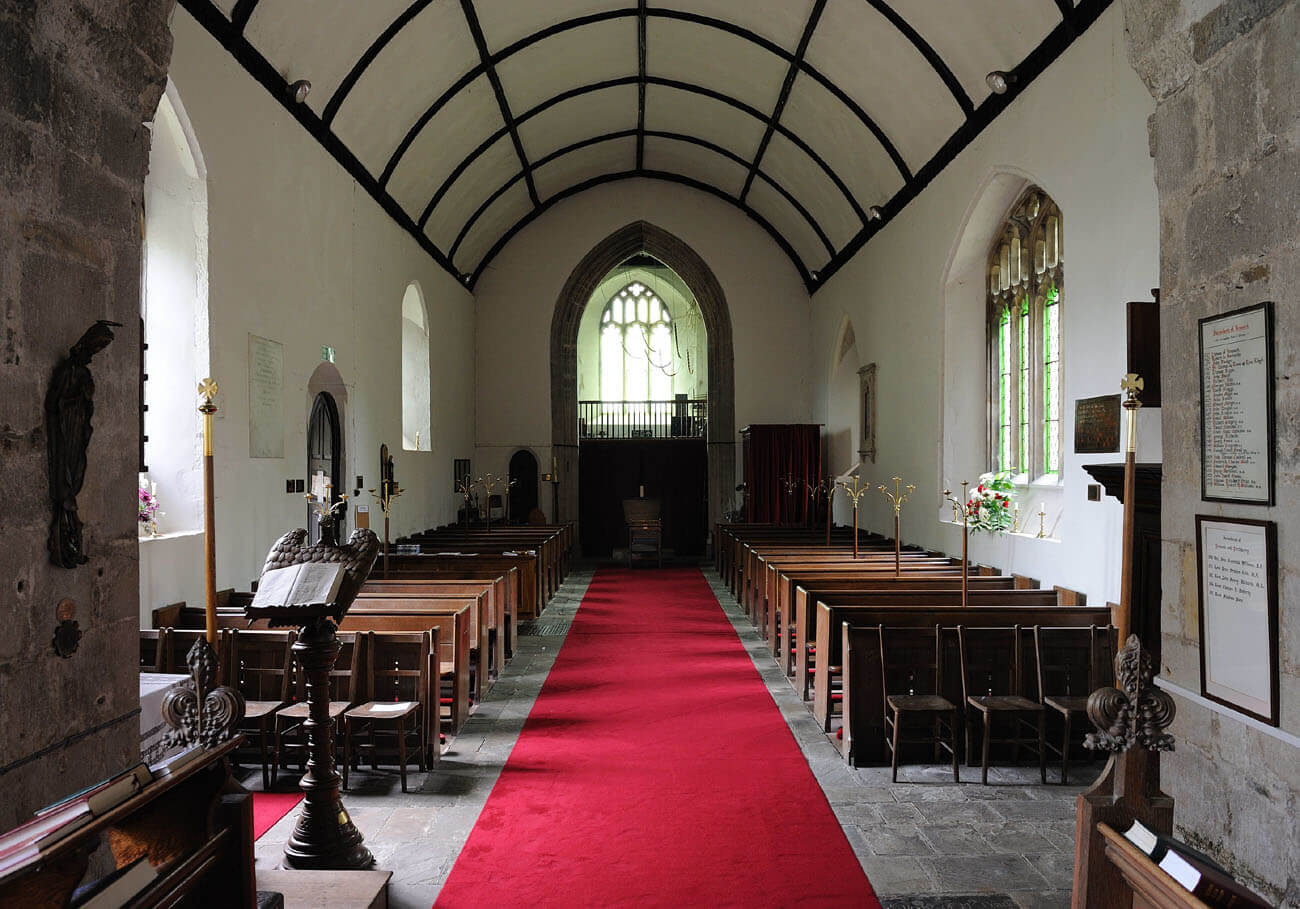
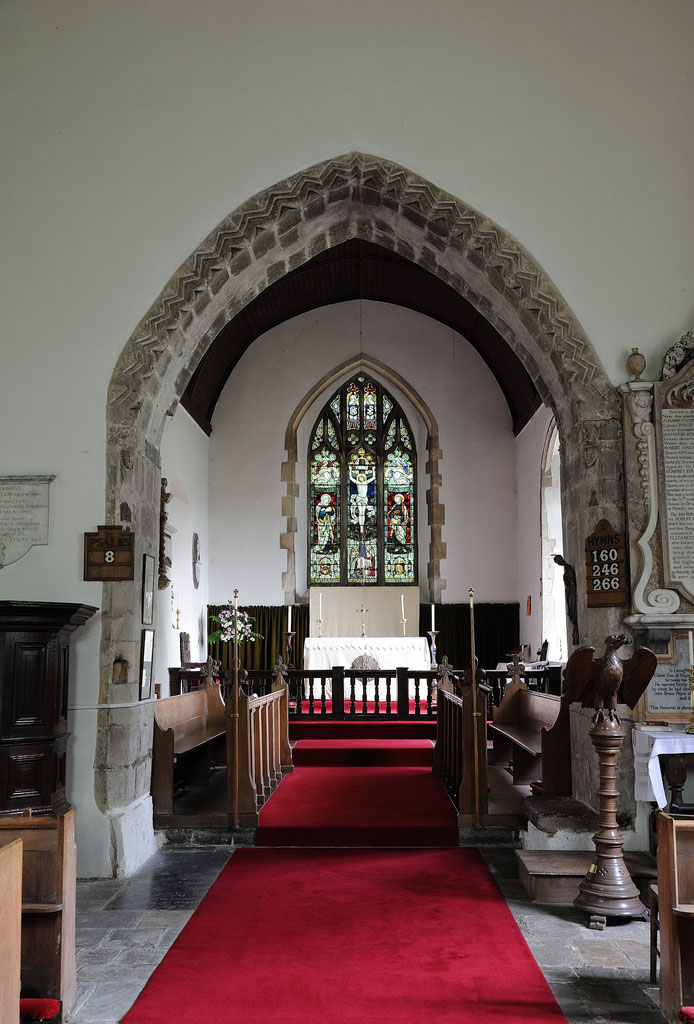
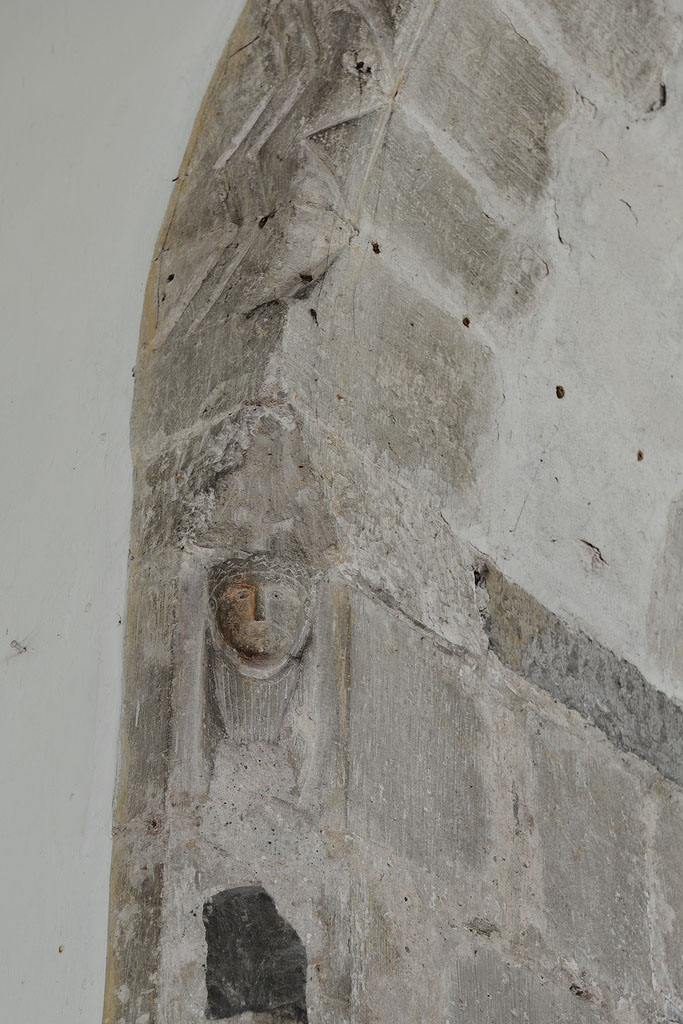
Inside the church, the nave on the tower side was opened by a very high, pointed, moulded arcade, more typical of eastern England than Wales. The nave was separated from the chancel by an arcade with Romanesque herringbone or zigzag decoration on the archivolt and masks at the ends of the chamfered imposts, but with a Gothic pointed arch. From the late Middle Ages, the nave was also separated from the chancel by a rood screen with a loft, accessible by stairs in the north wall of the nave. These stairs were set in a specially thickened section of the wall, projecting northward with a shallow avant-corps.
Current state
The present church has walls and architectural elements both late Romanesque, early Gothic, and late Gothic. Particularly noteworthy are the two arcades opening the nave from the east and west, the original 13th-century two-light window in the south wall of the nave, and the renewed late Gothic windows. The 19th-century work resulted in the neo-Gothic windows in the chancel. Inside, there is no trace of the rood screen, but the stairs in the north wall of the nave are visible. The 13th-century font also have survived.

bibliography:
Newman J., The buildings of Wales, Glamorgan, London 1995.
Salter M., The old parish churches of Gwent, Glamorgan & Gower, Malvern 2002.