History
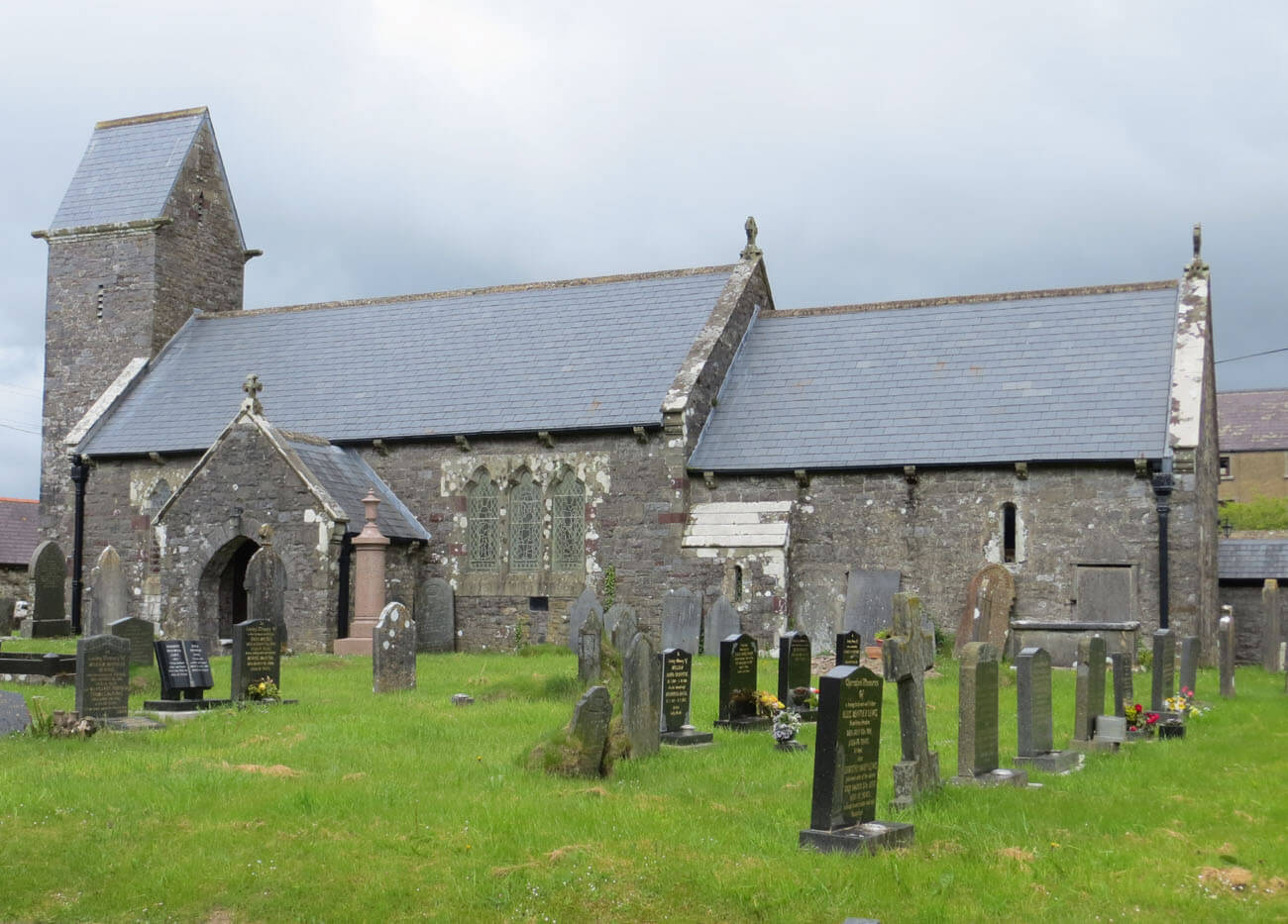
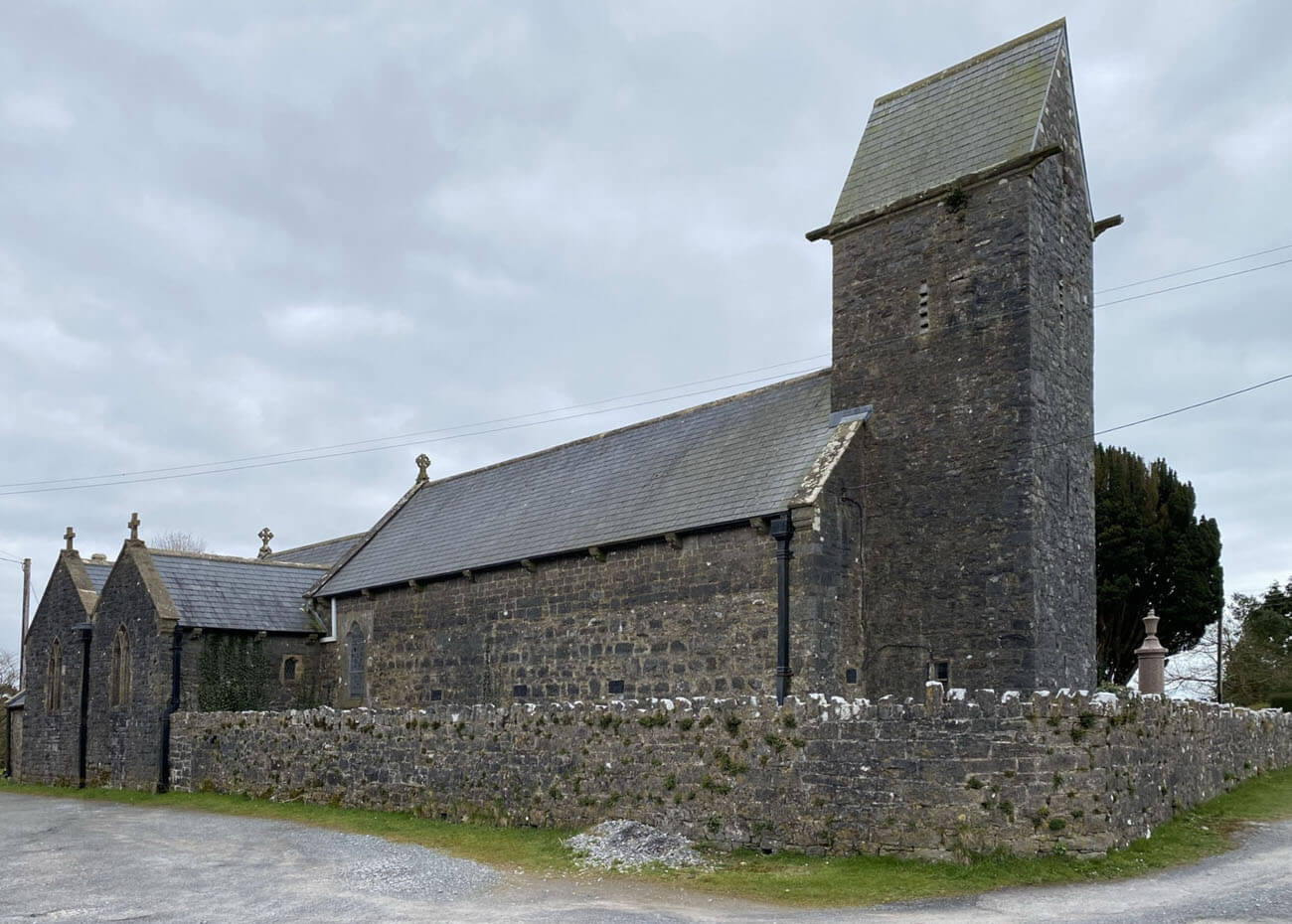
St. Margaret’s church was probably built in the 13th century, when the nave was erected, which had no parish function in the Middle Ages. A chancel was added in the 14th century, and perhaps a porch in the 15th. The west tower was built in the late 16th or early 17th century. In the second half of the 17th century, the church was described, perhaps exaggeratedly, as being in a very poor state. By 1720, repairs must have been carried out, as reports of the building’s good condition then emerged. In 1869, a thorough Victorian renovation was carried out under the supervision of architect John Prichard, during which, among other things, a sacristy was built and the nave windows and chancel arch were replaced.
Architecture
The church originally consisted of a three-bay rectangular nave, to which a narrower two-bay chancel, also rectangular, was added in the 14th century. A distinctive feature of the chancel were two small projections, built in the 15th century to the western sections of the north and south walls, similar to those used in many Pembrokeshire churches. The porch in front of the south entrance to the nave was probably also built at that time. Irregular limestone fragments were used in the construction of the church walls, and reddish sandstone blocks to create architectural details.
Originally, the building was lit by very narrow and relatively tall windows, splayed inward, some of which were replaced by larger ones in the 14th and 15th centuries. A distinctive feature was the two-light east chancel window, illuminating the main altar. It was formed by two tall openings closed by trefoils inscribed in ogee arches, above which a moulded quatrefoil was placed. The southern and northern walls of the chancel featured simpler single-light windows, unusually for the 14th and 15th centuries, capped by rounded archivolts.
The church’s interior in the Middle Ages was likely covered by an open roof truss. The modest furnishings included a stone stoup, set at the entrance to the nave, consisting of a pointed-arch recess and a simple square bowl. In the northern part of the eastern wall of the chancel was an equally simple recess with a pointed arch, serving as an aumbry for church valuables. In an unknown location, a heptagonal baptismal font stood, composed of a scalloped limestone bowl and a cylindrical shaft.
Current state
The present-day church is larger than the medieval structure, with a western tower and a sacristy adjacent to the chancel, which replaced a 15th-century projection. The south-facing porch is either 19th-century or a thoroughly restored late-medieval vestibule. The windows in the nave were exaggerated during the Victorian renovation, and the entrance portal was also replaced at that time. Simple, original openings are found in the north and south walls of the chancel, while a more impressive window from the late 14th or early 15th century is visible in the eastern wall. The chancel arcade was to be enlarged, and the roof truss replaced. Of the medieval furnishings and interior details, only the 14th-century font, the stoup, and the wall aumbry in the chancel have survived.
bibliography:
Lloyd T., Orbach J., Scourfield R., The buildings of Wales. Carmarthenshire and Ceredigion, London 2006.
Ludlow N., Carmarthenshire Churches, Church Reports, Llandeilo 2000.
Ludlow N., Carmarthenshire Churches, An Overview of the Churches in Carmarthenshire, Llandeilo 2000.
Salter M., The old parish churches of South-West Wales, Malvern 2003.
The Royal Commission on The Ancient and Historical Monuments and Constructions in Wales and Monmouthshire. An Inventory of the Ancient and Historical Monuments in Wales and Monmouthshire, V County of Carmarthen, London 1917.