History
The church at Old St. Mellons was built before 1254, when it is first recorded in documents. It may have been built by the Anglo-Normans after their conquest of south Wales, who would have named it after Saint Mellon, an early 4th-century Bishop of Rouen who was supposedly born in the region. The original church was significantly rebuilt and enlarged in the 14th century (a porch, a south chapel, and a raised tower). Subsequent construction works, introducing late Gothic architectural detail, took place towards the end of the Middle Ages. Victorian renovations in 1858-1859 and 1868-1869, among others carried out by renowned architect George Gilbert Scott, did not affect the church’s historic form.
Architecture
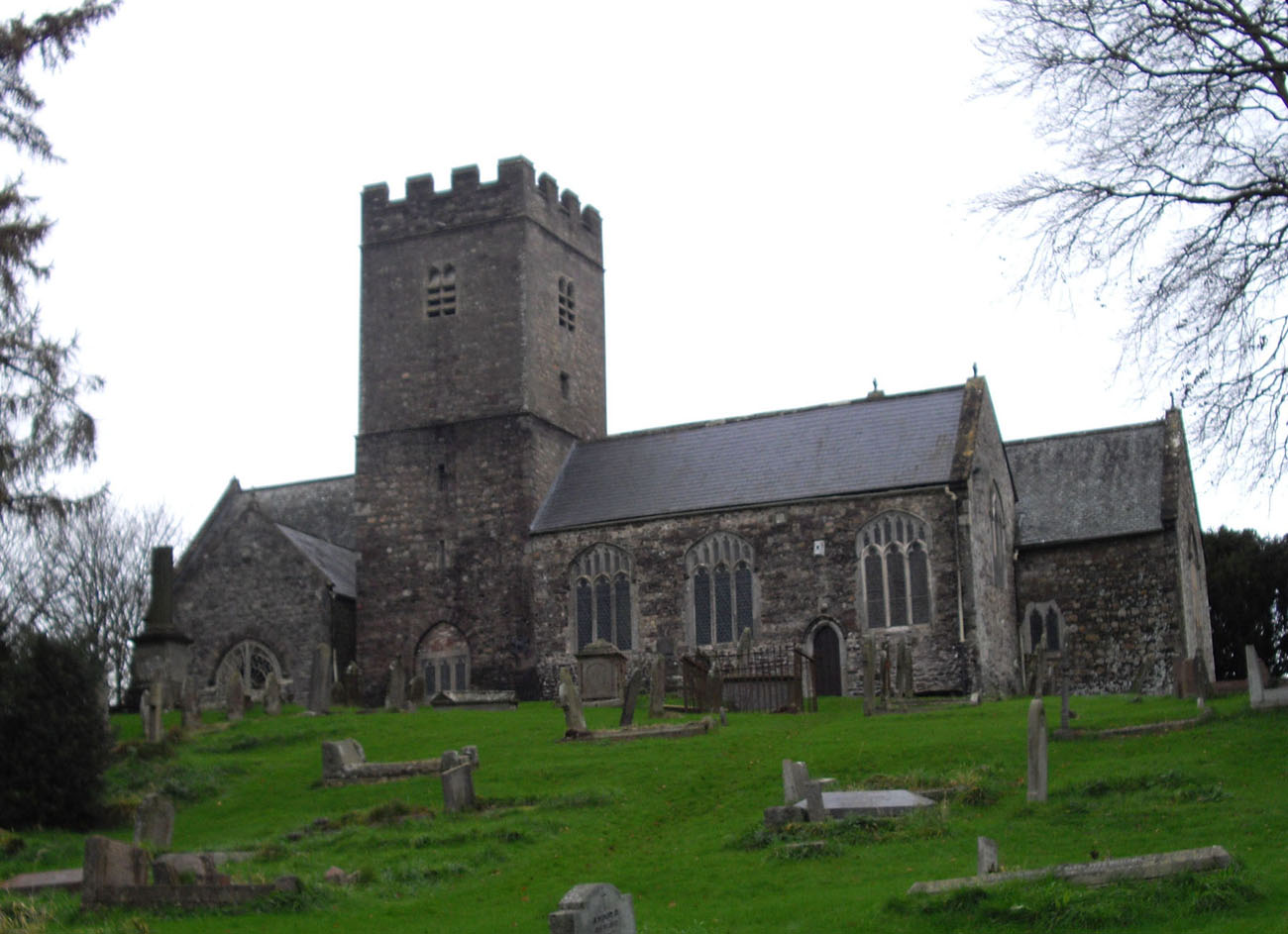
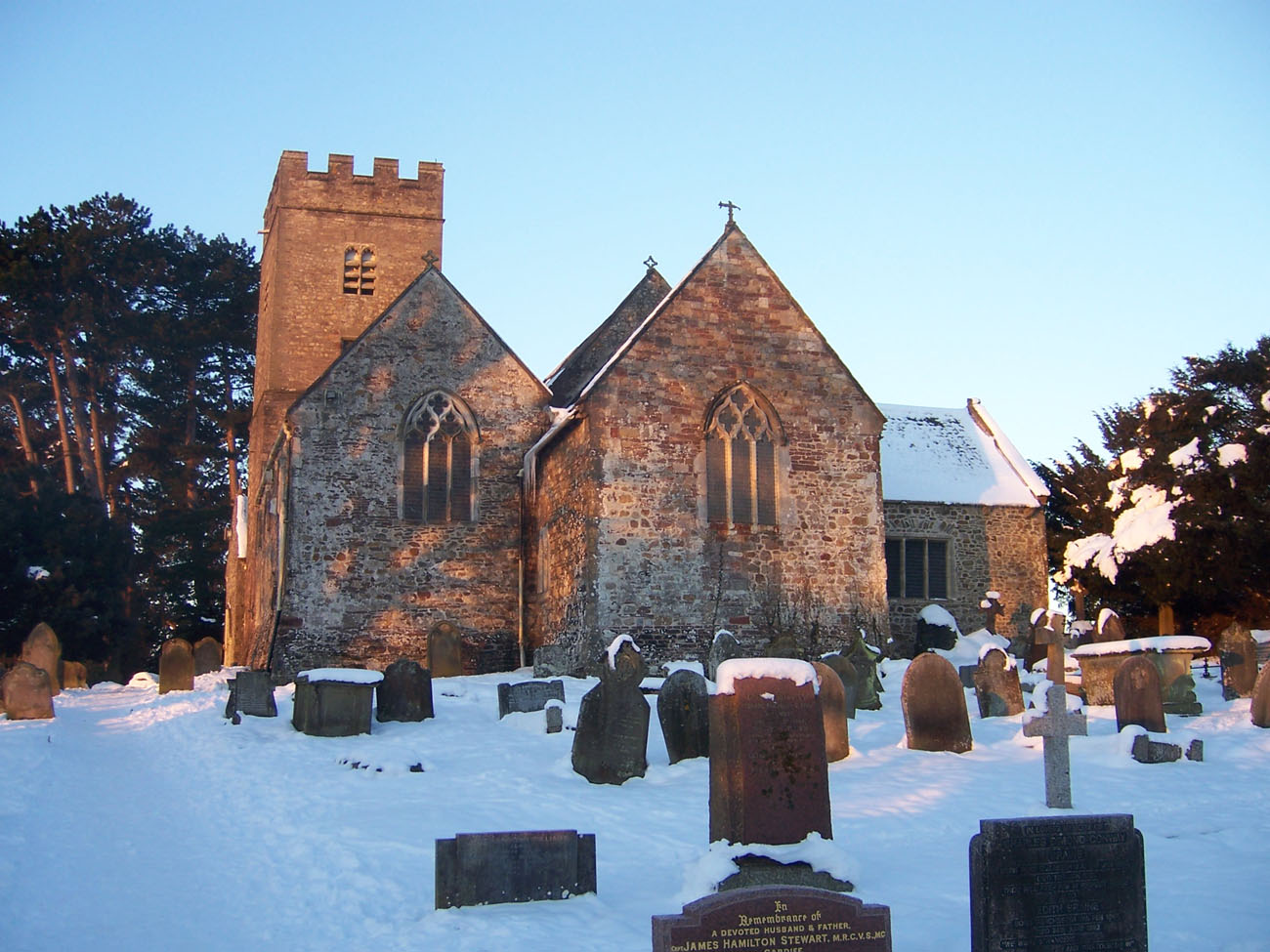
Church was built on the crest of a vast hill. During the late Middle Ages, it acquired a very complex and elaborate spatial layout, not typical of rural parish churches. It consisted of a rectangular, highly elongated nave, also rectangular, but lower and very short chancel, a quadrangular tower positioned in the center of the southern elevation of the nave, and a southern aisle or chapel, located east of the tower and extending approximately halfway along the chancel. Another chapel was added to the north side of the chancel, and a large porch was built to the south wall of the nave.
The tower was the most unusually situated of all the church’s parts. It may have been built just above the southern slopes to dominate the coastal plain and the waters of the Bristol Channel. It was neither supported by buttresses nor bonded to the nave or to the southern chapel, which was later adapted to the shape of the older building. The tower’s base was reinforced by a prominent batter. Approximately halfway up, the facades were divided by a cornice, while another cornice ran under the battlemented parapet, crowning the walls.
The church’s lighting in the 14th century was provided by pointed windows with multi-light tracery employing trefoil and ogee motifs. Among these, the three-light windows in the eastern wall of the chancel and in the western wall of the nave were notable for their size, decorated above two mullions with quatrefoil tracery forming a reticulated pattern. In the 15th century, very large windows were introduced, designed in the English Perpendicular Gothic style, inserted into the nave on the north and south sides and into the southern wall of the chapel. It had three-light tracery, significantly lowered pointed arches of the archivolts and matching mould hoods, set on small quadrangular corbels.
Inside the church, the nave was separated from the chancel by a pointed arcade. Its archivolt was moulded with two double waves separated by a step and set on short moulded imposts. The later arcade of the south chapel was connected to the chancel arcade, opening onto the nave with two further moulded arcades. In the Middle Ages, the interiors of the individual sections of the church were covered with wagon roofs or opened onto the roof truss.
Current state
Most of the surviving elements of the church were built in the English Decorated and Perpendicular Gothic style. The few early modern alterations that have been made, have significantly affected only the windows of the north chapel (it’s possible that the entire north chapel was built in the 17th century). Furthermore, the window jambs of the south chapel have been renewed. Inside, a 15th-century font with a base likely dating from the 13th century and late medieval seats in the nave remain. The south chapel features a statue recess in the eastern wall, unfortunately devoid of its decorative canopy due to the lengthened adjacent window.
bibliography:
Newman J., The buildings of Wales, Glamorgan, London 1995.
Salter M., The old parish churches of Gwent, Glamorgan & Gower, Malvern 2002.