History
The church at Merthyr Cynog was built in the 12th or 13th century, and likely enlarged and remodeled in the Gothic style in the 14th century. According to tradition, it was the burial place of St. Cynog, son of Brychan, who founded the settlement around 500 AD and was killed nearby by Saxons. Because of this, the church became an important pilgrimage site in the Middle Ages. In the taxation list of 1291, it was named “Ecclesia de Merthir” with a total income of £30, making it a building of exceptional status. Between 1860 and 1862, the building underwent a thorough Victorian renovation.
Architecture
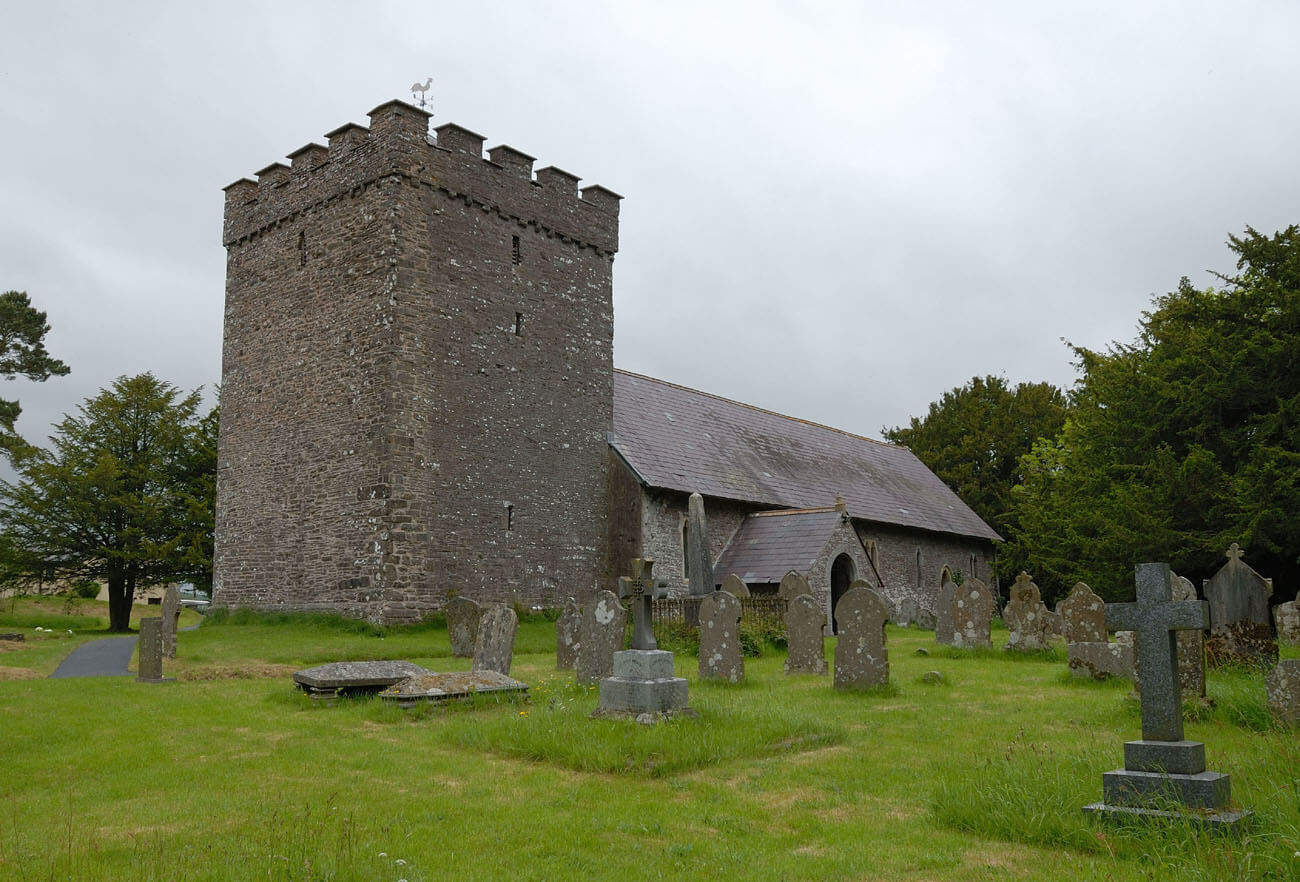
The church was built on an oval-shaped cemetery, on a large but not very high hill, perhaps originally surrounded by a ditch and rampart. It had a very long, rectangular nave, without an externally separated chancel (the priestly section was separated only internally by a rood screen), likely resulting from the 14th-century extension of the original 12th- or 13th-century structure. Reddish-brown and gray sandstone blocks were used as the building material.
On the west side, a massive, wide, and relatively low tower with a quadrangular plan was placed. Its form, including very thick walls, no external entrance, and small windows, suggests a defensive structure. It was likely built during the church’s initial period, but its parapet and battlement mounted on corbels were rebuilt in the 15th or 16th century. On the northeastern side of the tower a projection in the wall extending to the penultimate floor was built, housing a staircase. The base of the tower was framed by a chamfered plinth.
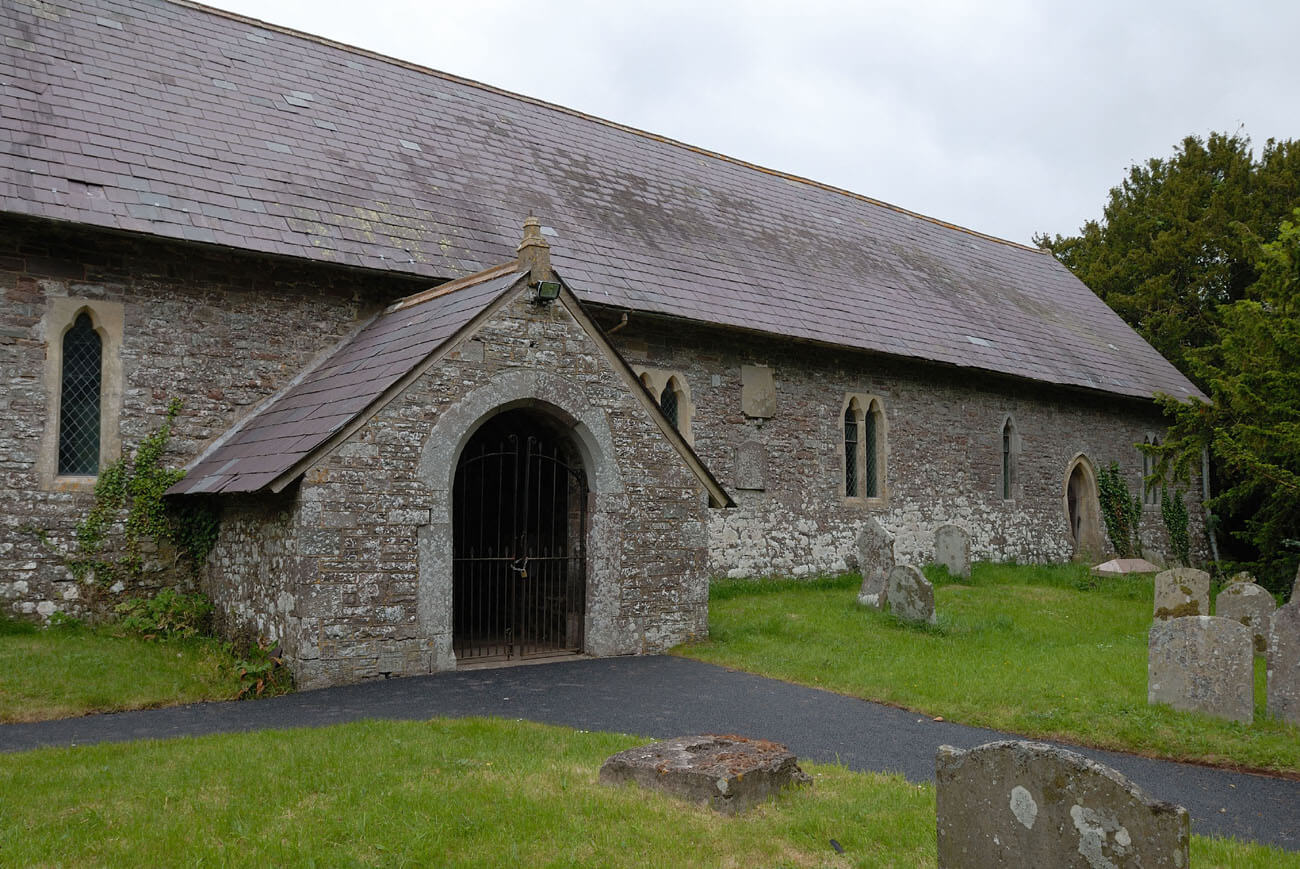
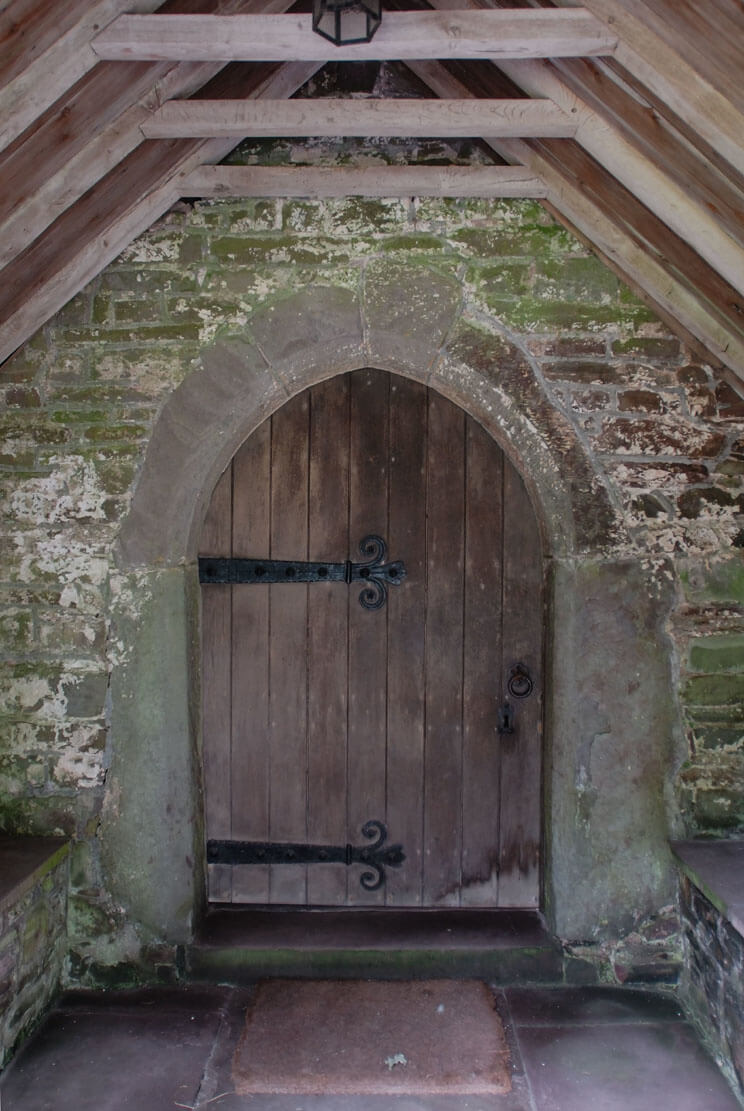
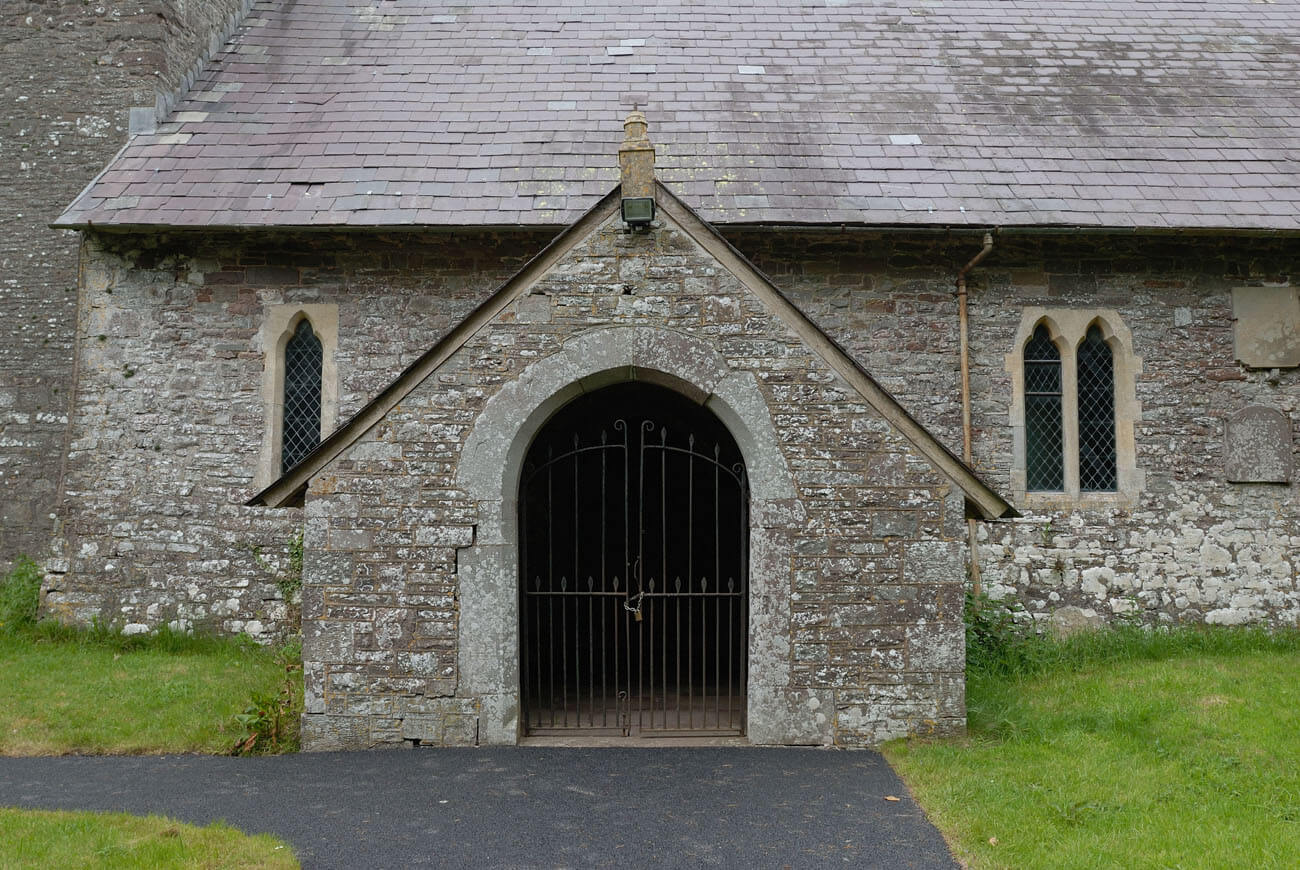
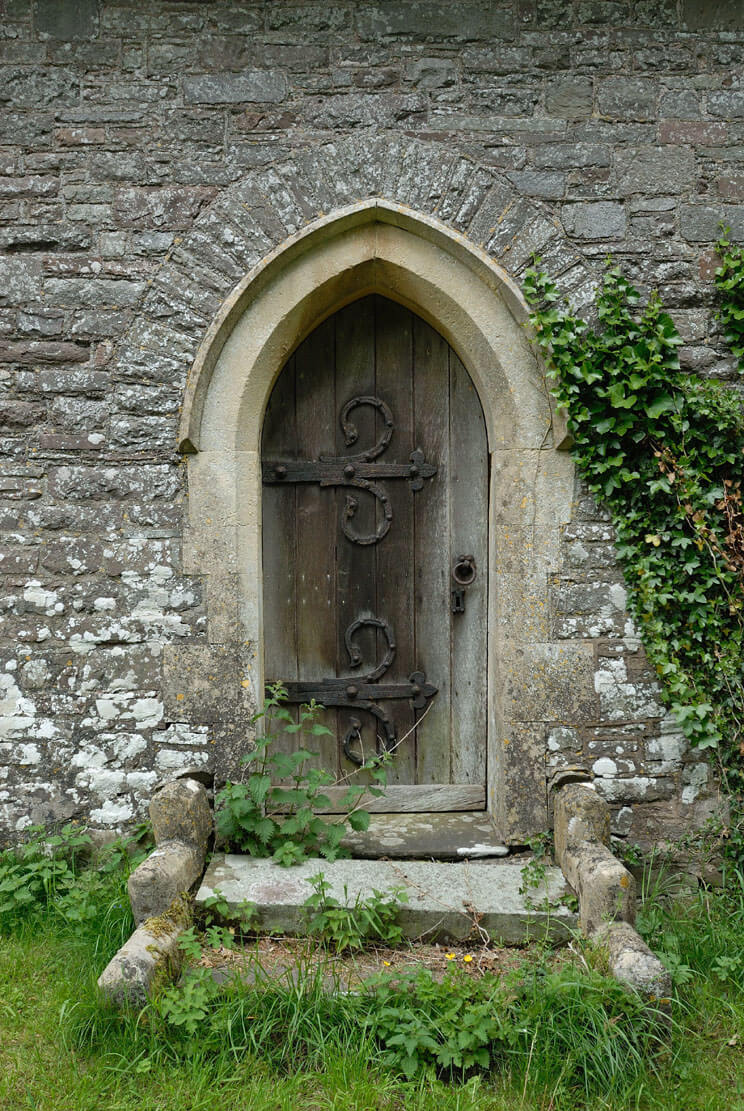
The southern entrance to the nave was preceded in the Middle Ages by a porch, sheltering a wide, pointed and simply chamfered portal. A second portal, intended for the priest, was located on the eastern side of the southern wall. The original windows of the nave were narrow, single or grouped in pairs, probably with trefoils. The tower’s openings were even smaller, quadrangular, and mostly slit-shaped. The church’s interior was not vaulted; it was probably covered by an open roof truss or possibly a timber barrel roof.
Current state
The church impresses with its simple but picturesque silhouette devoid of major early modern transformations. In the 19th century, most of the window jambs were renewed, but they probably imitate the original appearance (original windows can be distinguished by their reddish or grey sandstone, while the Victorian jambs are yellow). The portal in the chancel part of the church was also replaced, while the portal inside the porch is original, dating from the 14th century. Inside the church, a valuable oak rood screen from the 14th century has been preserved, separating the nave from the chancel, and an open roof truss from the 16th century. The font and stoup are believed to date from the 12th or 13th century.

bibliography:
Haslam R., The buildings of Wales. Powys (Montgomeryshire, Radnorshire, Breconshire), London 1979.
Martin C.H., Silvester R.J., Watson S.E., Historic settlements in the Brecon Beacons National Park, [n.p.p.] 2013.
Salter M., The old parish churches of Mid-Wales, Malvern 1997.