History
The first reference to the church in Maudlam appeared in a document from around 1255, and the church was probably built shortly before that date. It was originally associated with the borough of Kenfig, and perhaps with its shelter for the poor or lepers. When Kenfig was abandoned, buried under sand from the dunes, a village developed around the church, which acquired its name from a modification of Magdalene, the church’s patron saint. Probably at the end of the 13th century, the building was enlarged with a tower. Clearly visible from the sea, it served for centuries as a navigational aid for sailors. In 1878, the nave was renovated, and in 1894, the chancel was thoroughly rebuilt, and the rest of the church restored. A modern sacristy was also built than.
Architecture
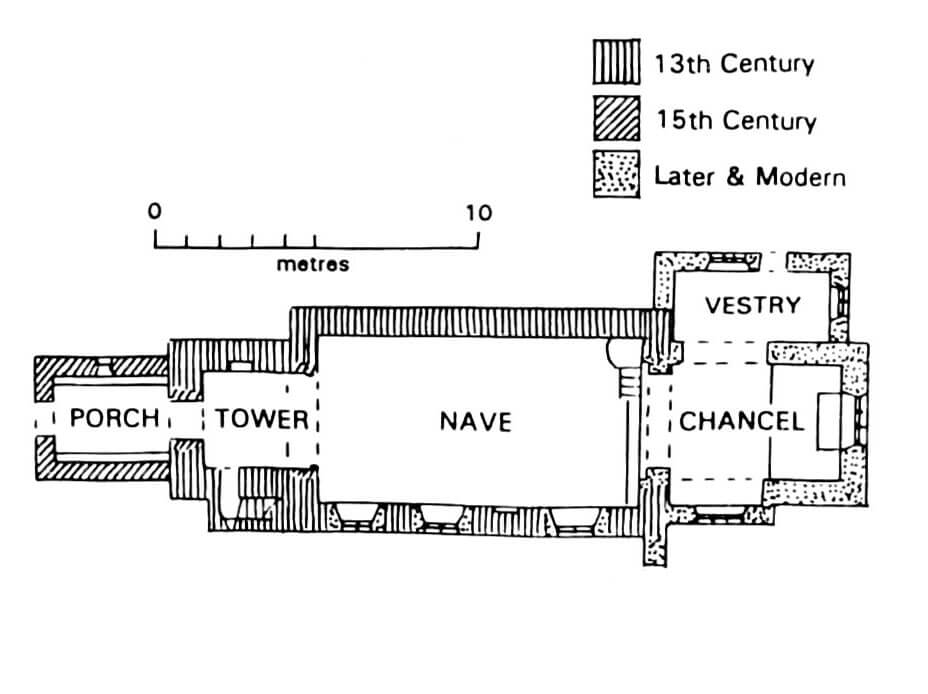
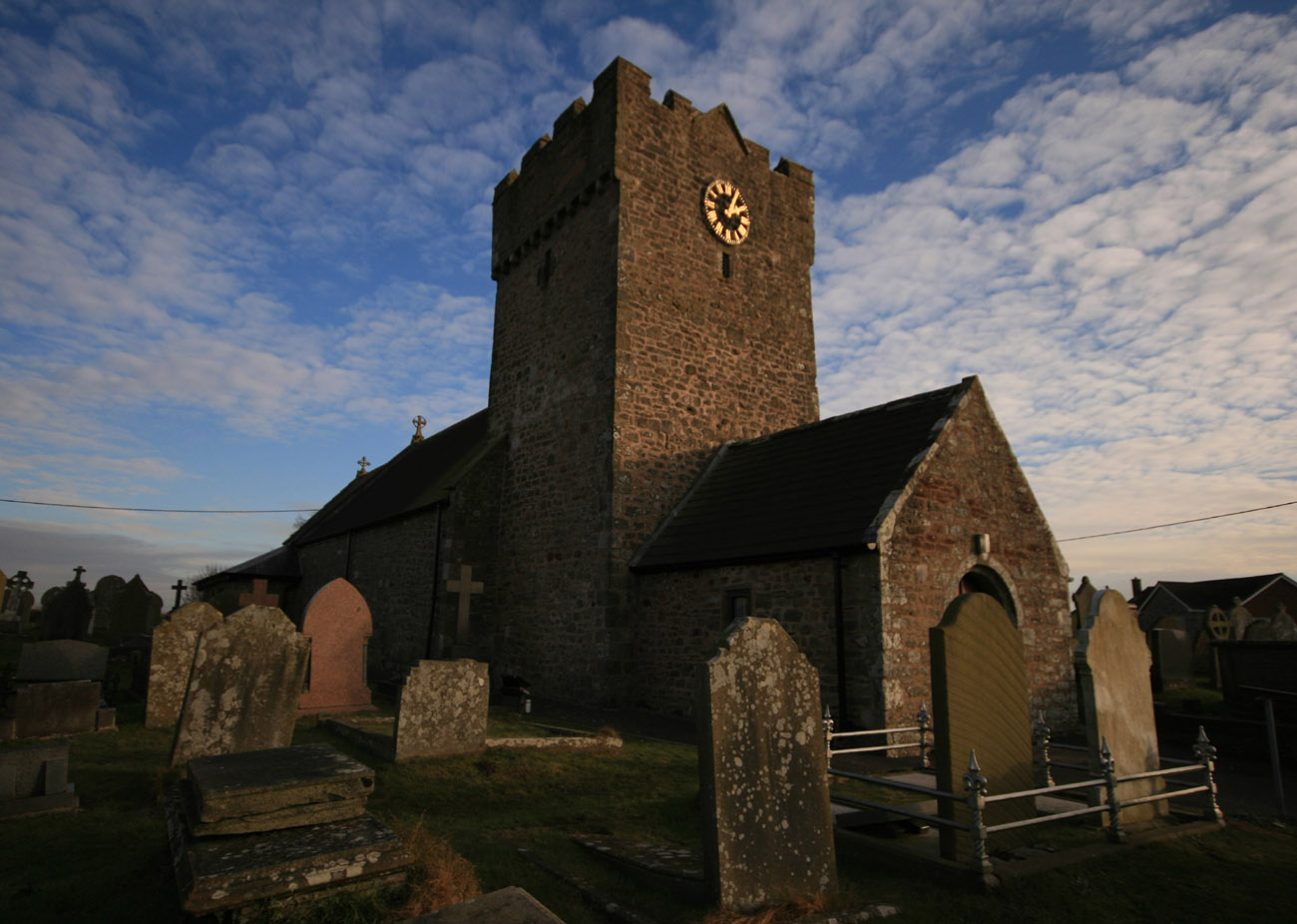
The church of St. Mary Magdalene was built on a slight elevation, as a relatively simple structure, consisting of a long, rectangular nave and a narrower, shorter chancel, ended by a straight wall on the eastern side. A quadrangular tower was added on the western side, probably at the end of the 13th century. A porch preceded the tower on the western side in the 15th century, a very unusual design in south Wales, where vestibules were most often located in front of the southern or possibly northern entrances to the naves.
The tower was topped by a battlemented parapet mounted on corbels projecting from the face of the walls, but only on the north and south sides. On the east and west sides, the parapet was aligned with the tower elevations. A shallow projection housing a staircase was built on the southern side. Small quadrangular windows with ashlar jambs were made in both this projection and the tower itself. Together with the battlements and massive body, it gave the tower a defensive character.
Inside the church, the ground floor of the tower opened onto the nave with a wide but low arcade featuring a nearly semicircular archivolt with simple chamfering. A similar arcade may have originally connected the nave to the chancel. The nave and chancel must have been lit by small, inward-splayed windows, which were not pierced in the northern façade, in keeping with medieval building tradition, still scrupulously observed in the 13th century.
Current state
Among the elements of the medieval church, the most extensive early modern construction works affected the enlarged chancel and the adjacent sacristy. The rood arch separating the chancel from the nave and all the windows in the south wall of the nave were also replaced, thanks to the addition of the organ loft. A valuable element is the 13th-century tower and the late Gothic porch preceding it. Inside the church, a 13th-century Romanesque font has been preserved, likely from the church in Kenfig.
bibliography:
Newman J., The buildings of Wales, Glamorgan, London 1995.
Salter M., The old parish churches of Gwent, Glamorgan & Gower, Malvern 2002.