History
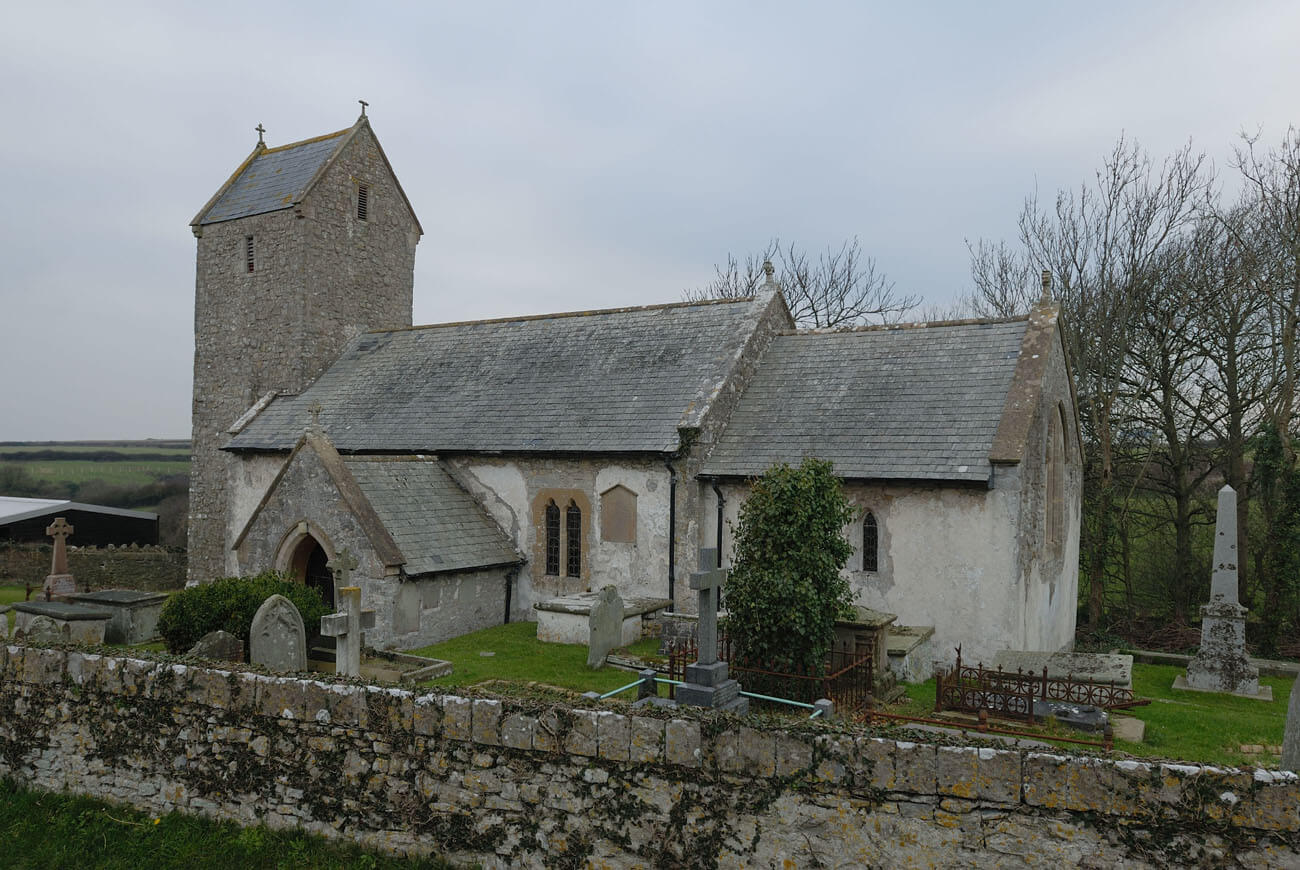
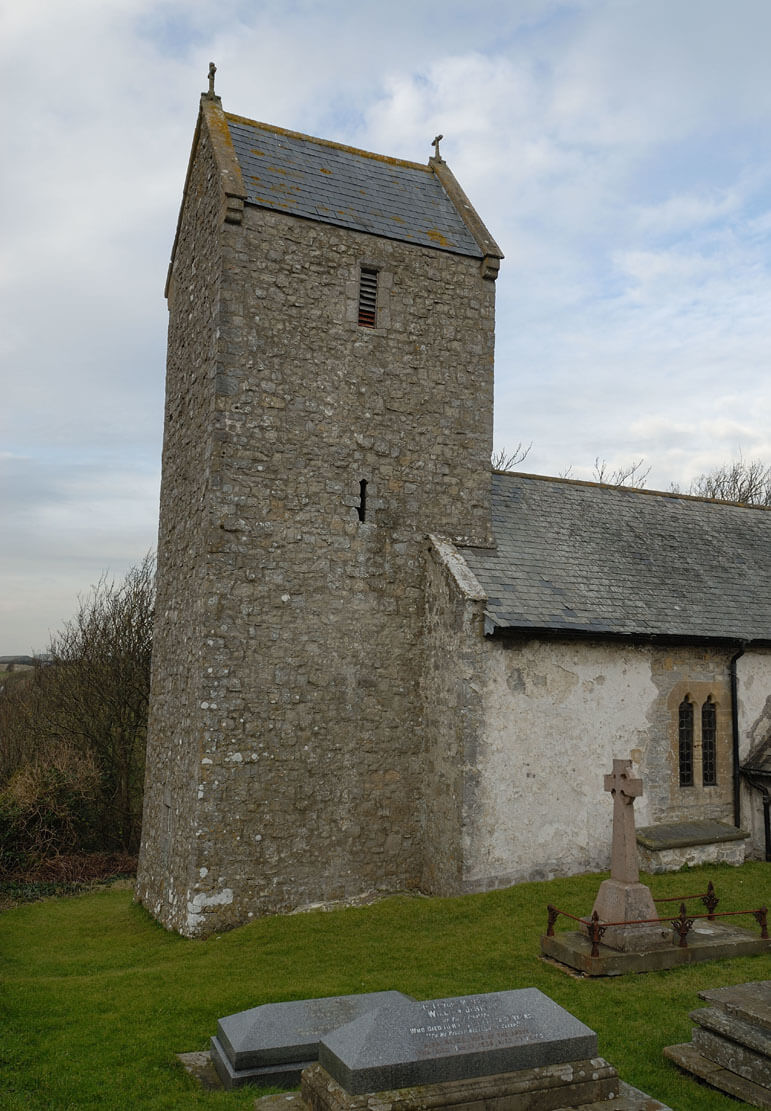
The church of the Holy Trinity in Marcross was built in the 12th century, and in the fourteenth century enlarged by a tower on the west side. Three hundred years later, its upper part was rebuilt. In 1893, the church was renovated during which, among other things, roofs were replaced and a porch was added, although one can also find information that it dates from the 17th/18th centuries.
Architecture
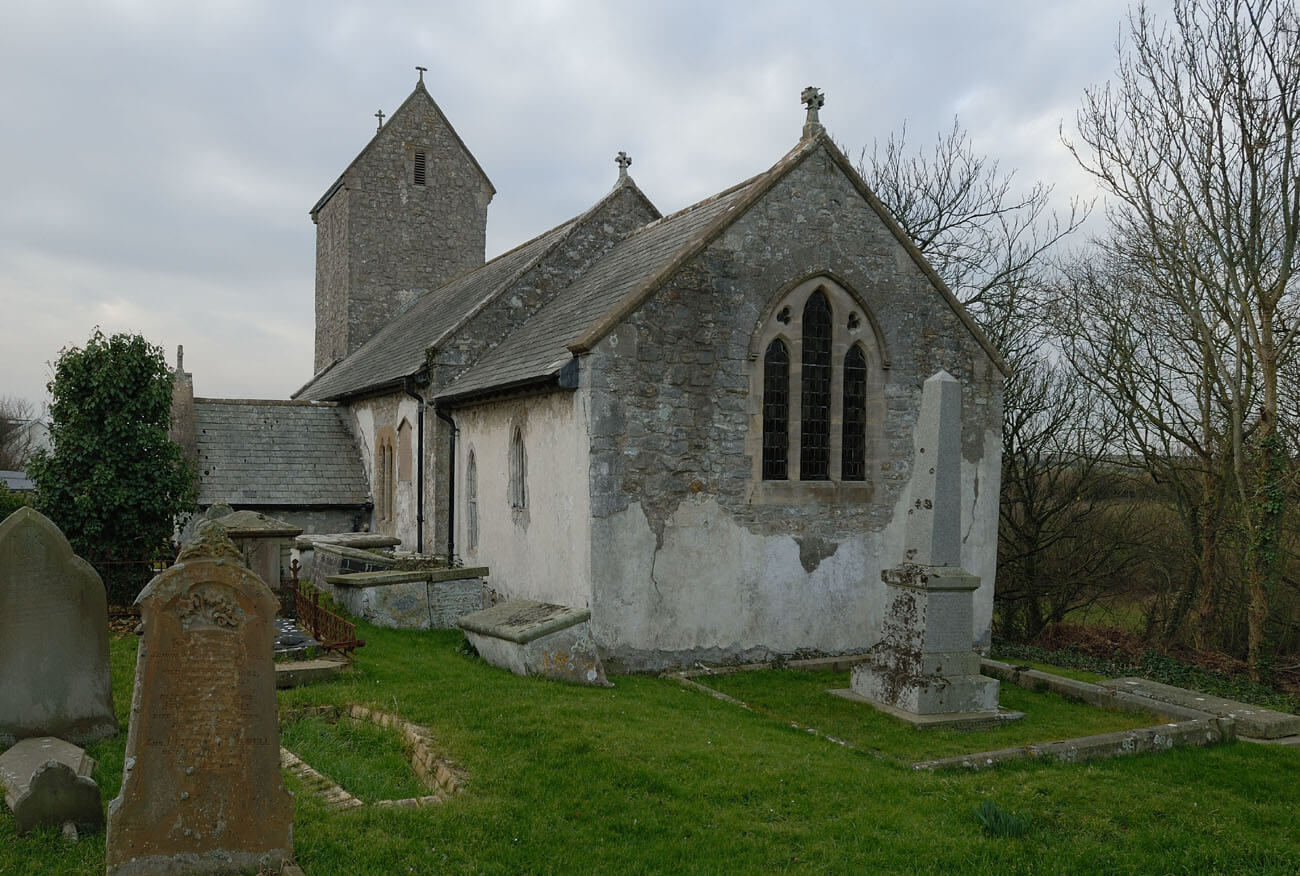
The church was built between the valley of a stream flowing on the northwest side and the road running parallel to it, which is why it was probably not precisely orientated to the cardinal sides of the world. The chancel was tilted to the northeast, while the nave was oriented southwest. The building originally consisted of a rectangular nave and a shorter, narrower chancel, ended on the eastern side by a straight wall. Since the 14th century, the western part consisted of a quadrangular tower of slender proportions, partially integrated into the nave. The overall layout was typical for rural parish churches, with a gradation in height from west to east.
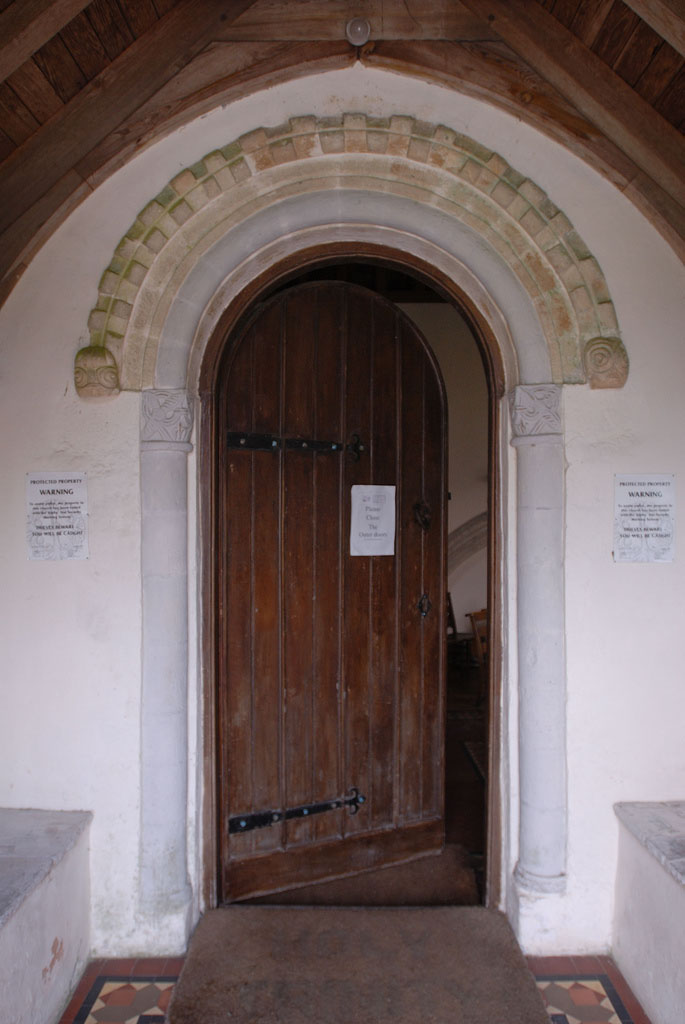
The church was entered by the south wall of the nave, through a Romanesque portal with a semicircular archivolt decorated with a semicircular shaft and a motif of alternating quadrangular billets, which were set on two bas-relief consoles shaped into grotesque heads with large, bulging eyes. The shaft, in turn, was placed on two semi-columns flanking the entrance, with capitals carved with floral motifs. The church’s original windows were small, topped with trefoils, and splayed inward. One of these, on the south side, was the so-called leper window, allowing the sick to view the altar from the outside during services. A larger window or group of windows must have been located in the eastern wall of the chancel, due to the illumination provided to the main altar.
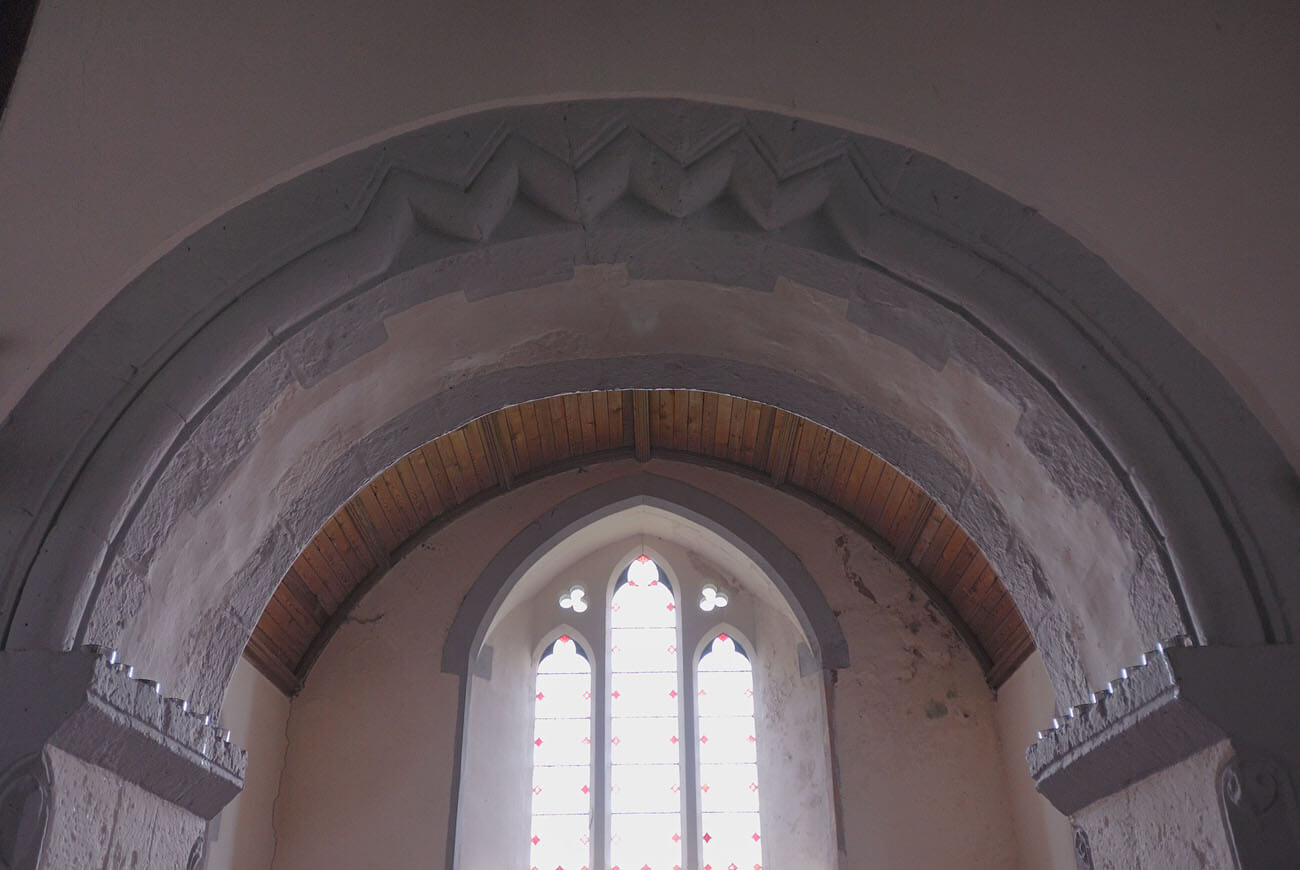
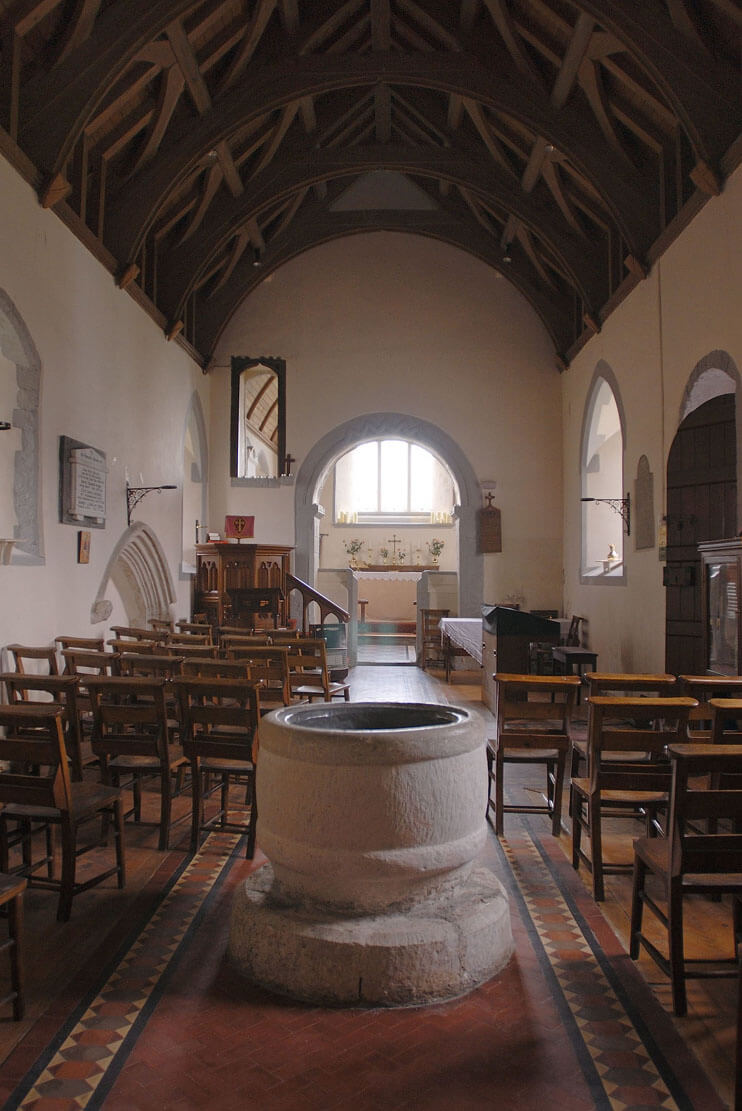
Inside, the nave and chancel were separated by a semicircular arcade, chamfered to the height of the imposts, and framed by a moulded on the sides half-shaft. This shaft was bent several times in its central section, creating a zigzag with a repeated chevron motif. In the late Middle Ages, a rood screen was placed in front of the arcade, to which the entrance was created by piercing the chancel wall several meters above the floor. Furthermore, a burial niche was created in the northern wall of the nave, with a blind, handsomely moulded arcade with a faint pointed arch, and an archivolt set on stone consoles. In the Middle Ages, both the nave and chancel were covered by an open roof truss or a wagon roofs.
Current state
The medieval church, preserved to this day, has the upper part of the tower rebuilt in the early modern period and an early modern porch on the south side. It protects the Romanesque portal from around 1150, at the entrance to the nave. The original 14th-century windows are only in the north and south wall of the chancel. Inside the church, the 12th-century chancel arch separates the nave from the chancel and there is a large Romanesque font from around 1200 and Gothic tomb niche in the nave.
bibliography:
Newman J., The buildings of Wales, Glamorgan, London 1995.
Salter M., The old parish churches of Gwent, Glamorgan & Gower, Malvern 2002.