History
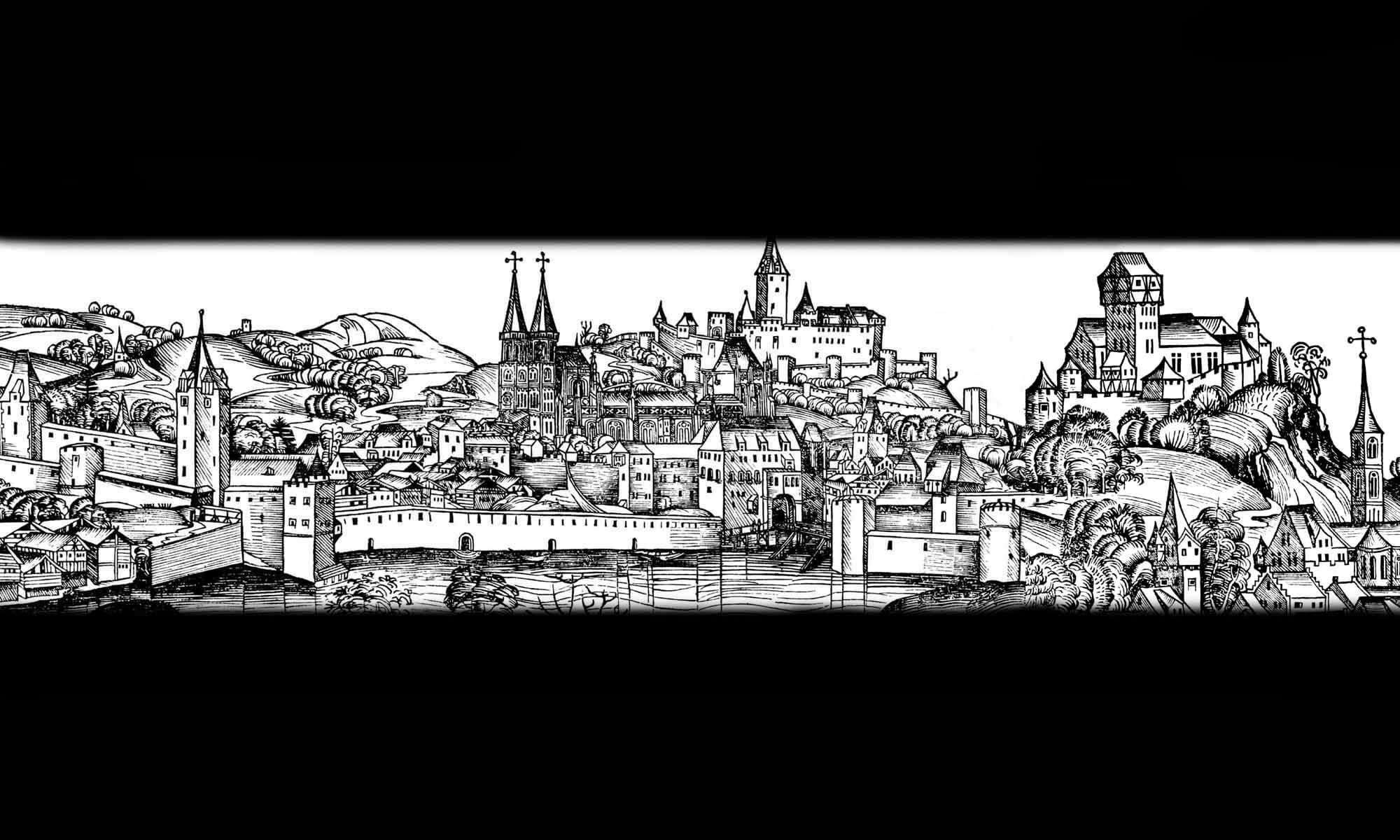
Church of St. Tysilio dates back to the 12th or 13th century, but was extensively rebuilt in the early 15th century. The earliest mention of the settlement dates back to 1234, under the name Llan Tessiliau. The church itself was recorded in taxations from 1254 and 1291. Its annual income at that time was £6, a considerable sum, but not suggestive of a large or important building. In its early years, it was certainly owned by the nearby Cistercian Valle Crucis Abbey. After its suppression, around 1580, some of the church’s windows were altered. In 1718, a north chapel or transept was added to the nave, and in 1869, a thorough Victorian renovation was carried out.
Architecture
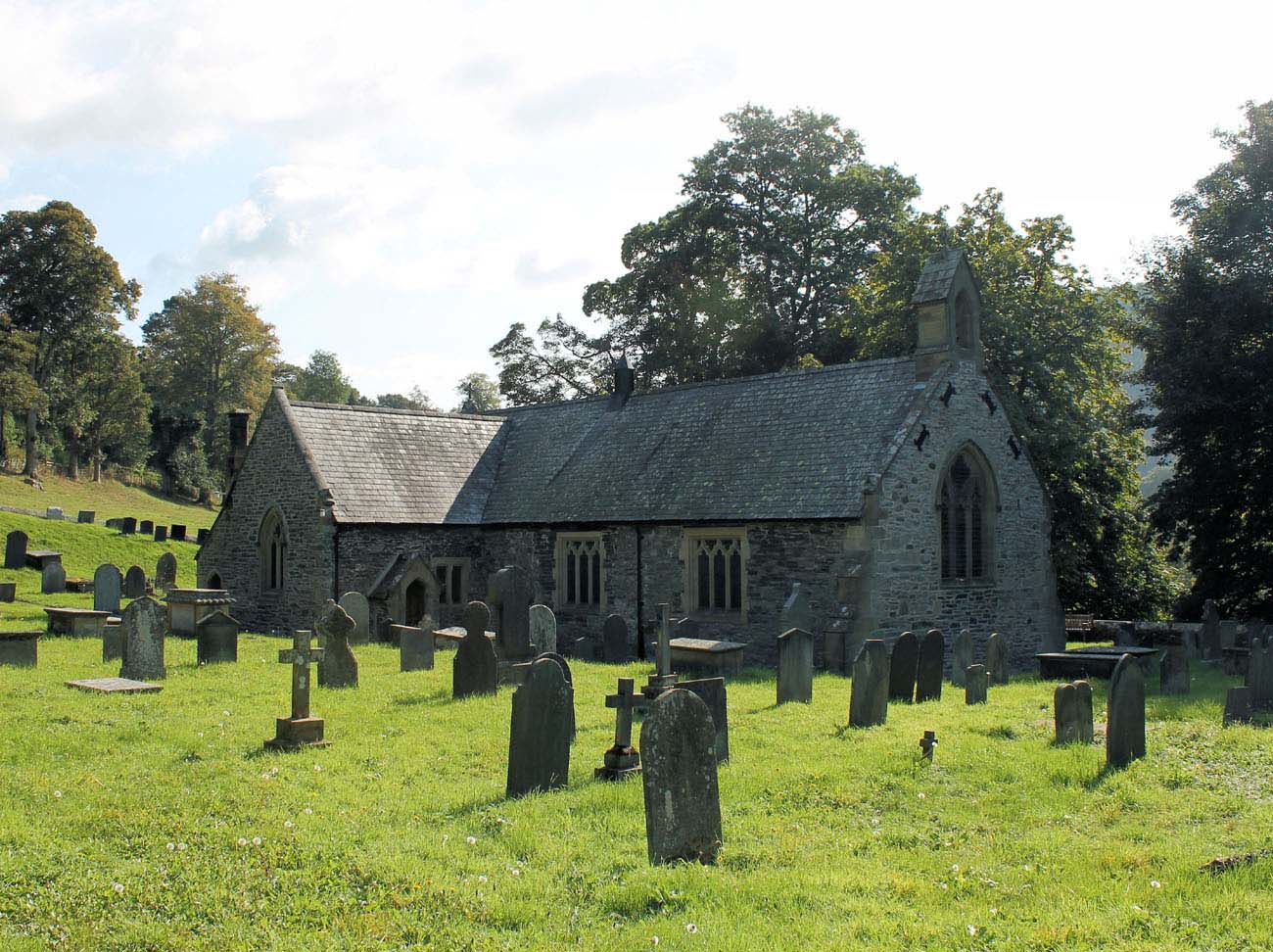
The church was built on the edge of a river terrace, where it was particularly visible, rising several meters above the shallow valley and the bed of the stream flowing through it. It was constructed of rough stone flat slabs, with sandstone ashlars at the corners. The nave and chancel formed a single aisleless structure, covered by one roof supported by unadorned triangular gables. On the south side, the main entrance to the nave could have been preceded by a porch already in the Middle Ages.
The church’s oldest windows were narrow, splayed inward, rounded at the top, and perhaps framed with carved patterns, like the window on the north side (a medieval, decorated tombstone may have been used for this purpose). In the late Gothic period, the windows were replaced with large, pointed openings filled with tracery. Traditionally, the most impressive window was set in the eastern wall of the chancel, due to the main altar behind it. The pointed arch of this window’s archivolt was slightly flattened and framed by an drip hood, while inside it was filled with three-light tracery featuring motifs of trefoils inscribed in ogee arches and so-called daggers or mouchettes.
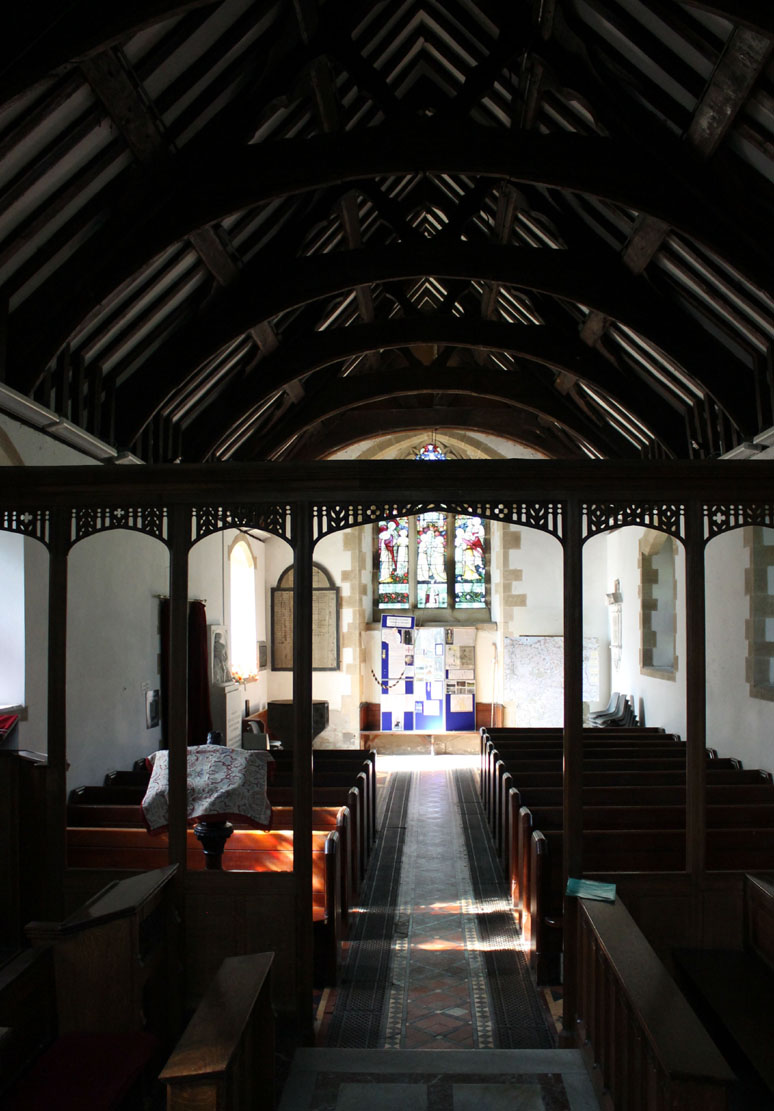
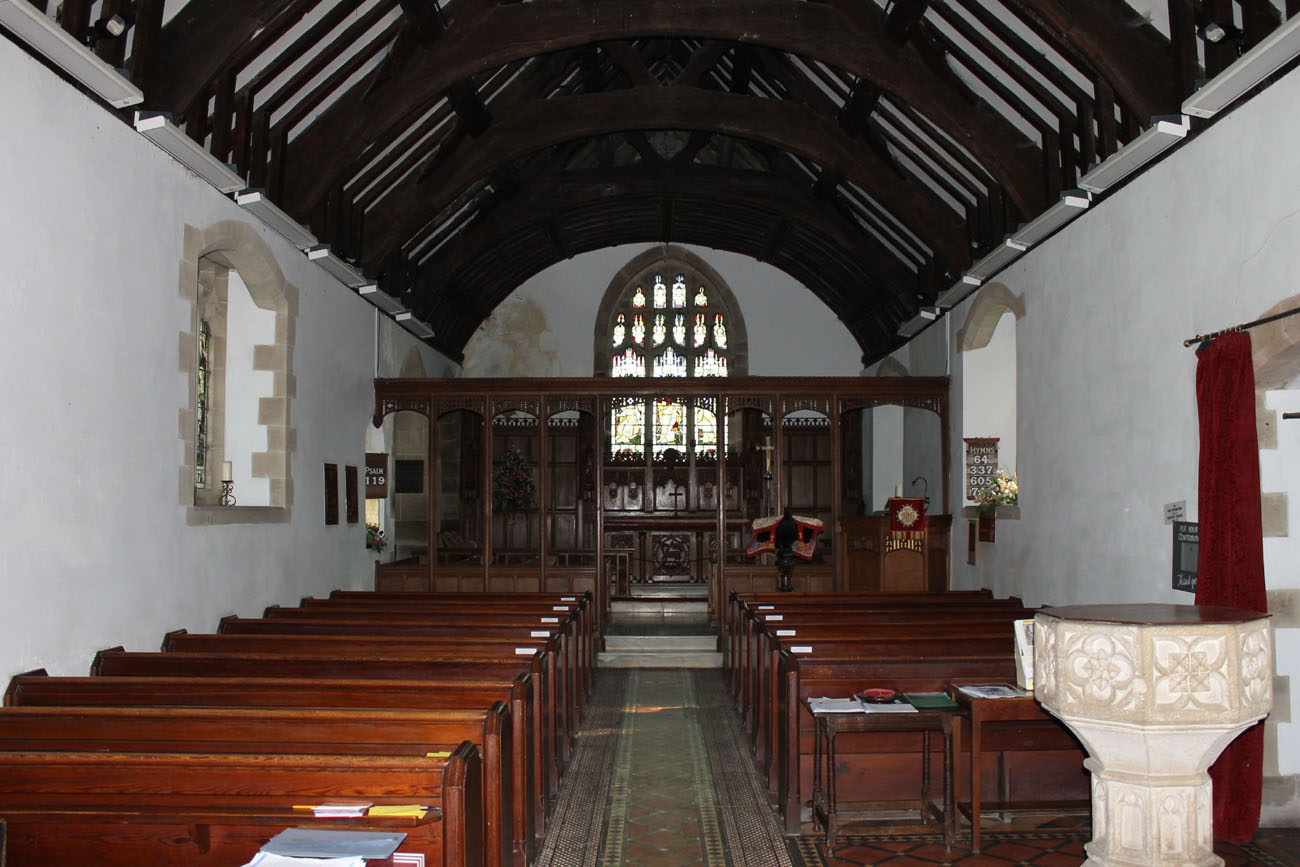
Inside the church, since the chancel was not externally separated, the section of the building intended for lay people had to be separated from the section accessible exclusively to the priest by a wooden rood screen. This was an openwork structure, without an upper loft or staircase. The entire interior of the church was covered by an open wooden roof truss, arch braced with cusped struts above the collars.
Current state
The original building is enlarged from the north by an early modern chapel attached to the chancel. The oldest window from the 13th/14th century has been preserved in the corner of the nave and chapel. The large Gothic window with a tracery in the eastern wall comes from the 15th century, while the currently hidden window in the chapel from the 14th century. Inside the church, there is a medieval roof truss, a 15th-century, topped with an oak eagle rood screen separating the nave from the chancel, and an octagonal baptismal font from the 15th century.


bibliography:
Hubbard E., Clwyd (Denbighshire and Flintshire), Frome-London 1986.
Martin C.H., Silvester R.J., Watson S.E., Historic settlements in Denbighshire, Welshpool 2014.
Salter M., The old parish churches of North Wales, Malvern 1993.