History
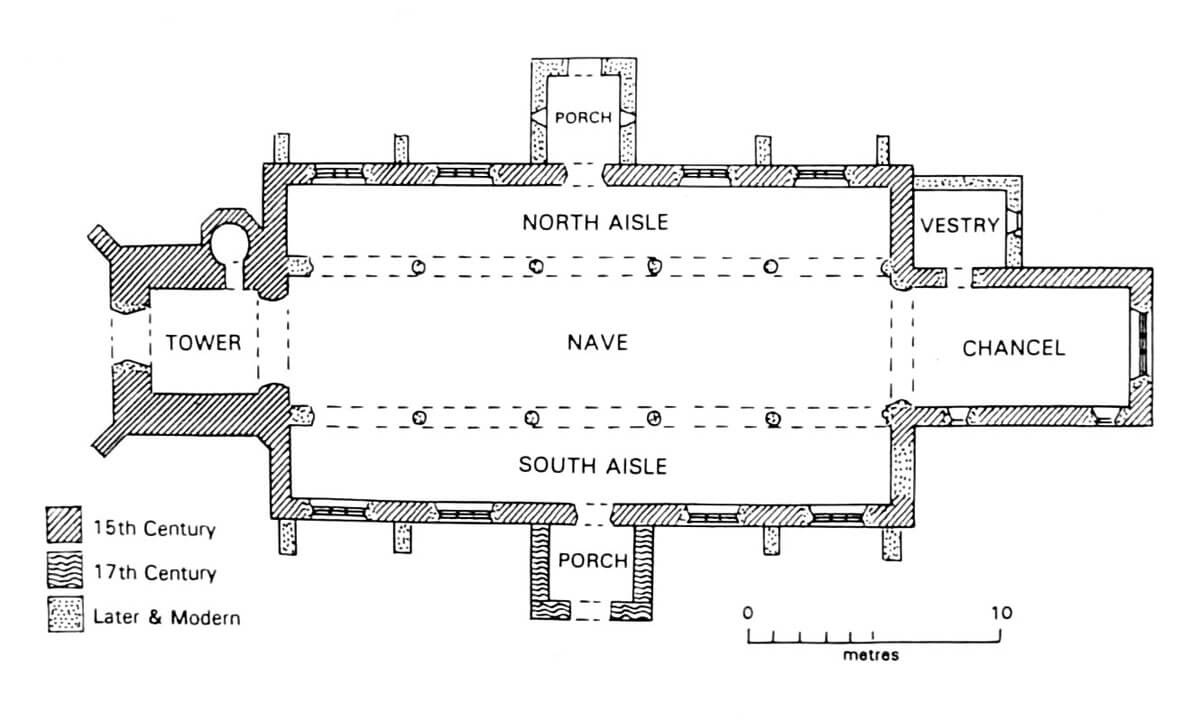
The church of the Three Saints: Illtyd, Gwynno, and Dyfodwg, was built in the 13th century on the site of an earlier church dating from the 7th-9th centuries. The first record of it was made in 1254. In 1262, it was recorded that Gilbert de Clare, the third Earl of Gloucester, held the patronage. In the 15th century, the church was thoroughly rebuilt in the late Gothic style and enlarged with a tower. In the 17th century, the south porch was either built or rebuilt. Between 1872 and 1874, the church underwent a major renovation, including remodeling of the interior. Also the north porch and sacristy were built, and most of the windows were renewed. Further renovation and construction work on the tower took place in 1893-1894.
Architecture
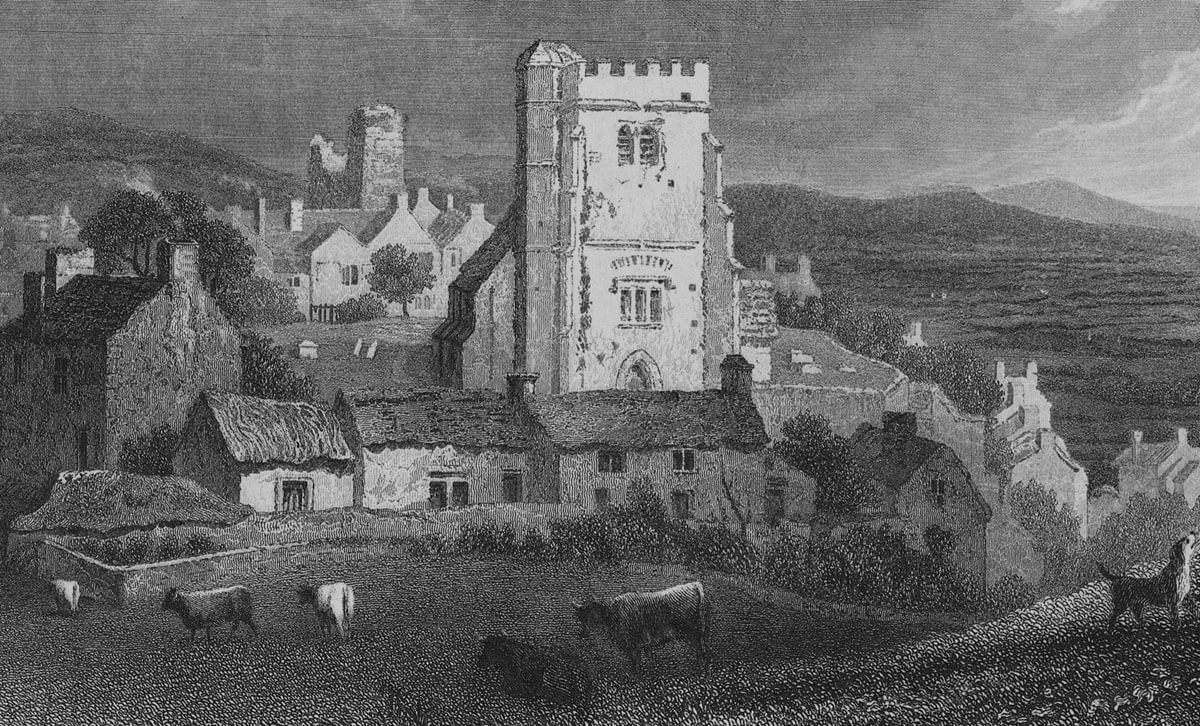
The medieval church was built on the edge of a high escarpment, separating the highland to the north from the lower coastal area of Glamorgan. It was situated on the west side of the castle and its outer bailey. It consisted of a wide nave with two aisles, a chancel on the eastern side, and a quadrangular tower on the western side, with a height of just over 21 meters. The chancel was slightly narrower than the central nave and relatively small in relation to the extensive nave. It was ended in a straight wall to the east.
The nave of the church was originally without buttresses and each aisle was probably covered by a separate gable roof. It were divided in five bays, originally with slender, circular piers and pointed arches. The chancel was separated by an arcade, probably with a pointed arch. During the 15th-century reconstruction, layout problems were likely encountered, as the arcade and the chancel walls were not perfectly aligned with the nave’s axis. The nave opened onto the ground floor of the tower with a pointed arcade with continuous moulding along its entire height.
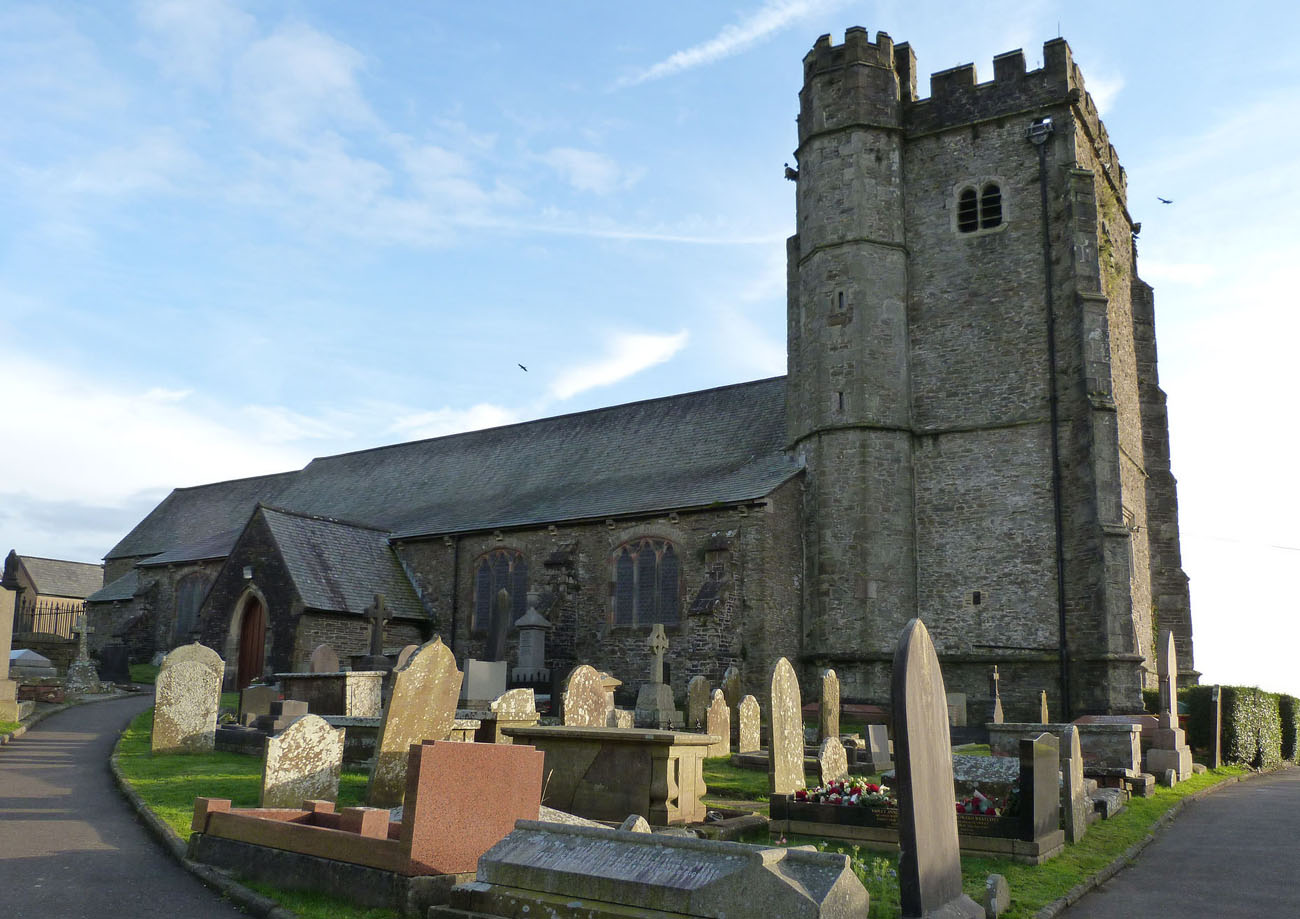
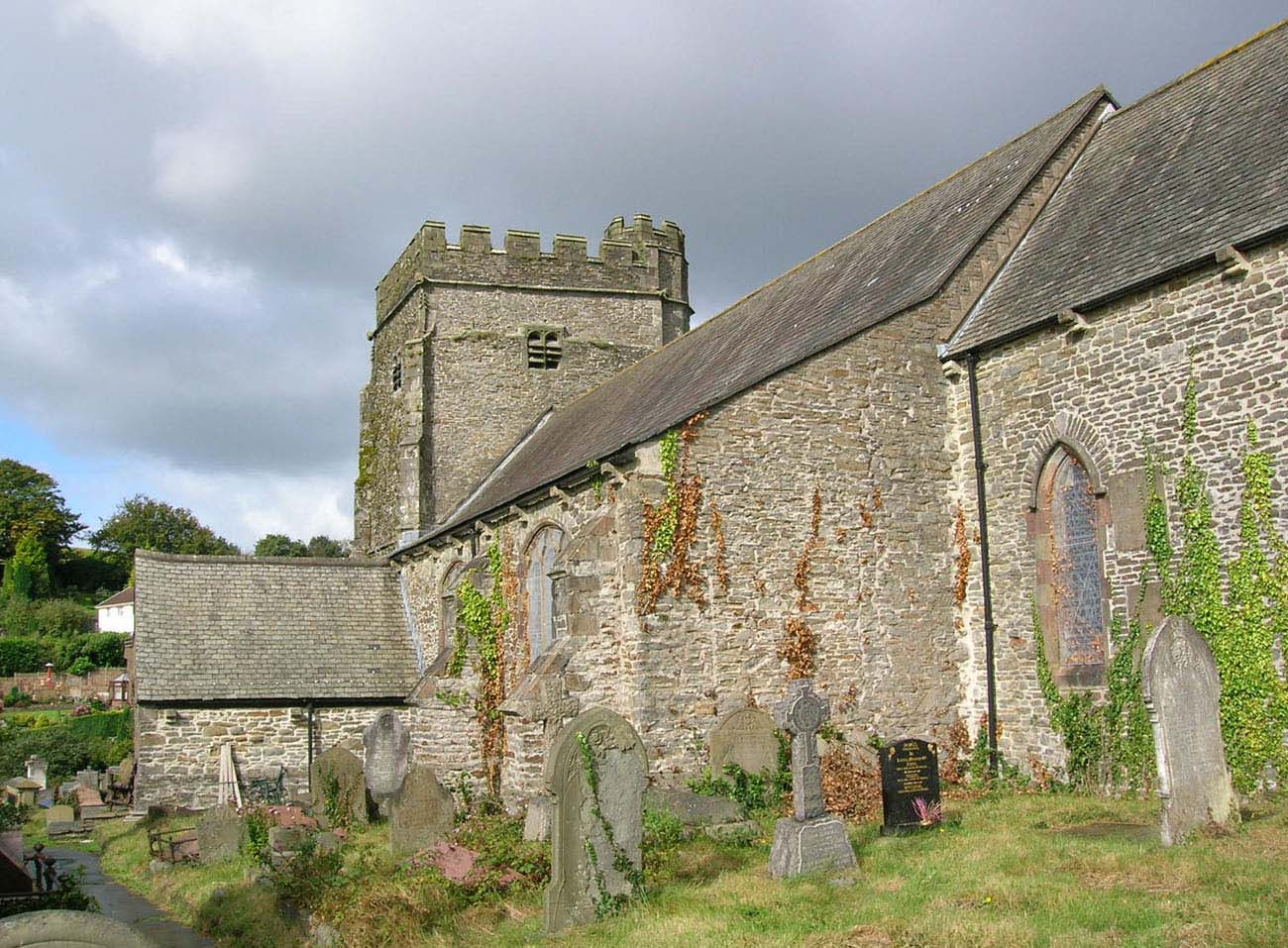
The tower was reinforced by two four-stepped corner buttresses, set diagonally. At the northeast corner, a polygonal turret with a staircase was placed, half of the structure incorporated into the tower and several meters higher. Both parts, the tower and the stair turret, were topped with a battlemented parapet. Both were also separated from the outside by string courses and a moulded base cornice. A pointed entrance portal was placed on the ground floor on the west side, while the bell storey was lit on each side by a two-light window with semicircular heads.
Current state
The church retains its late medieval structure to this day, but has been enlarged with the addition of two early modern porches from the 17th and 19th centuries, as well as a sacristy adjacent to the chancel. Furthermore, the windows, the western portal on the ground floor of the tower, the arcades between the nave and aisles, and the chancel arcade were replaced during the Victorian renovation. Therefore, the most valuable element remains the massive 15th-century tower with its restored parapet. Inside, noteworthy features include the 13th-century tombstone of the knight Cadwgan Fawr of Miskin and the 15th-century octagonal baptismal font.
bibliography:
Morgan T., History of Llantrisant, Glamorganshire, Cardiff 1898.
Newman J., The buildings of Wales, Glamorgan, London 1995.
Salter M., The old parish churches of Gwent, Glamorgan & Gower, Malvern 2002.