History
The church in Llanstephan was erected in the 13th century. It was expanded in the 14th century to include a chancel and tower, and then rebuilt in the 15th century and at the turn of the 16th century. Further work was carried out in the 17th century, including the replacement of the chancel ceiling. Between 1867 and 1868, the church underwent a thorough Victorian renovation, overseen by the architect Thomas Nicholson.
Architecture
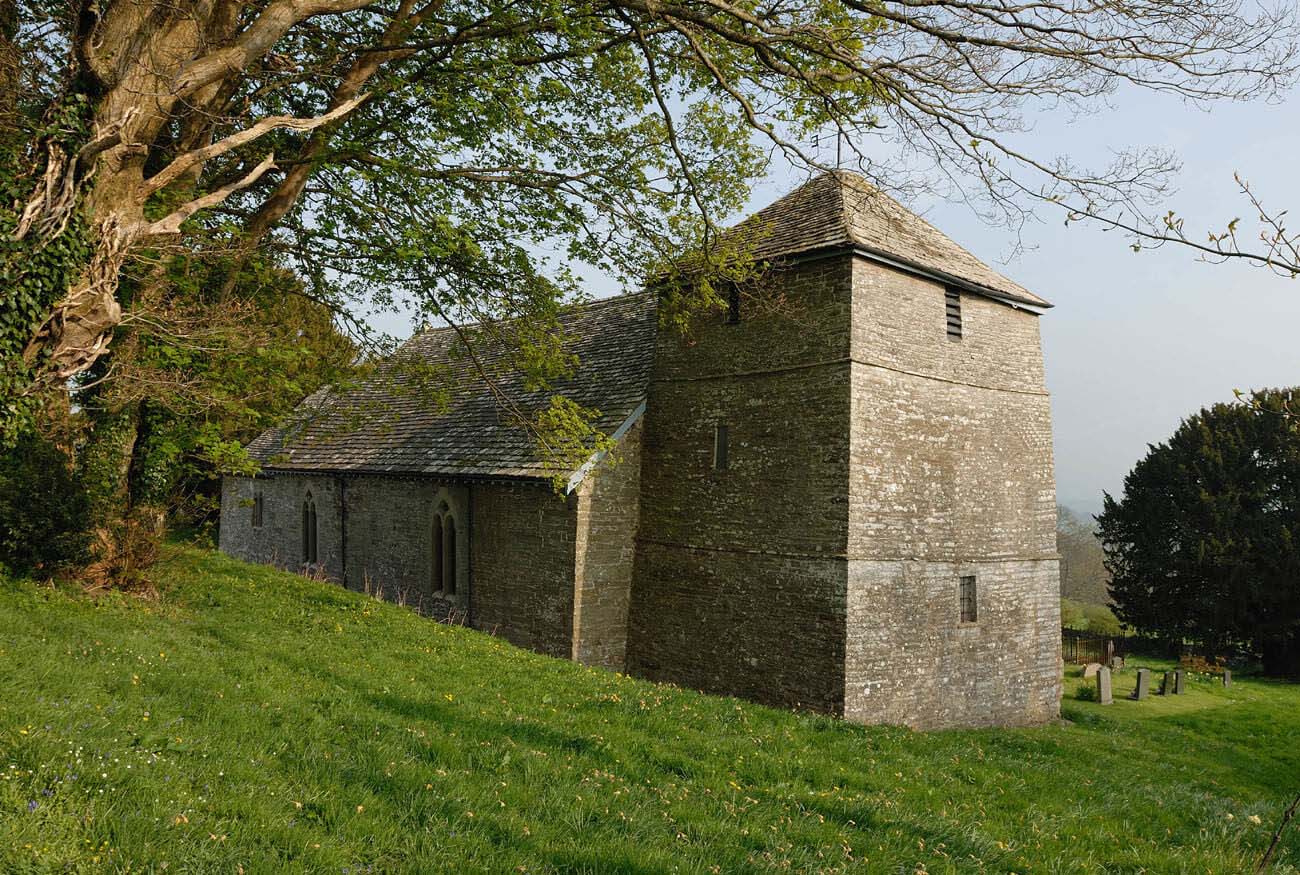
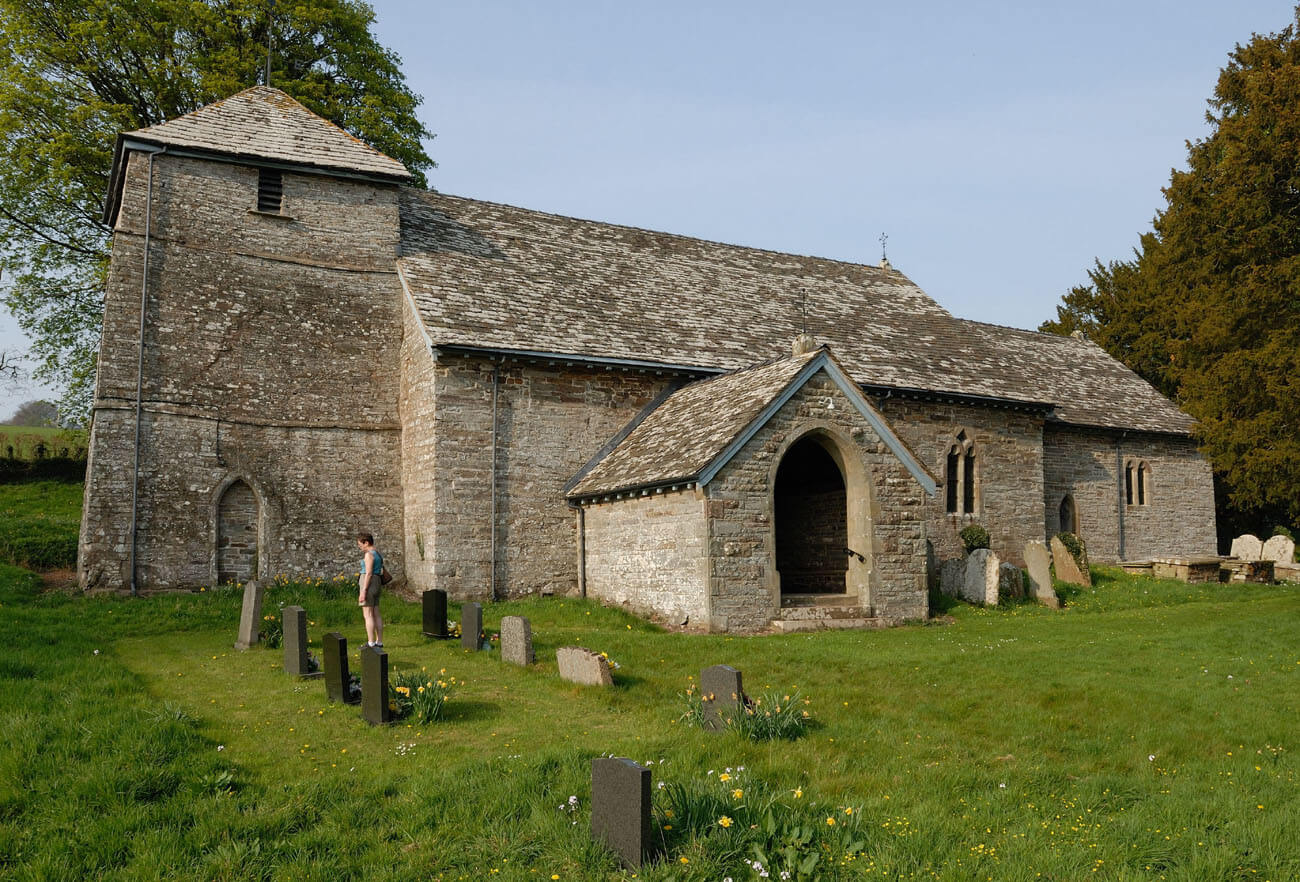
The church was built on a hillside, sloping south and west towards the River Wye. It consisted of a rectangular nave, a narrower and lower chancel built in the 14th century, also rectangular, and a low, squat tower on a square plan, situated since the 14th or 15th century on the axis of the nave on the west side. The entire structure, constructed from narrow slabs of grey sandstone and occasional larger blocks, was precisely oriented to the cardinal sides of the world, creating a layout typical of a rural parish building.
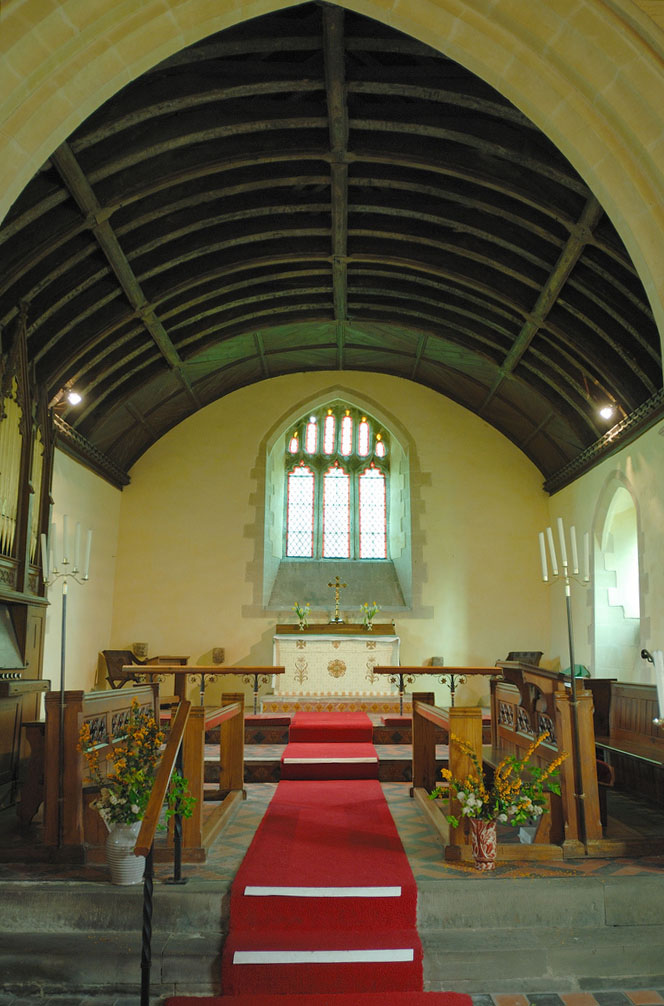
The main entrance to the church was located in the nave on the south, through a pointed portal, decorated only with chamfering. Another pointed and chamfered portal, much narrower than the nave one, led from the south to the chancel. The original windows were likely narrow openings, enlarged in the late Middle Ages to two-light windows with prominent trefoils, above which small rhomboidal openings were added in the nave. The most impressive window was located in the eastern wall of the chancel, where in the first half of the 15th century, in place of the original one, a semicircular window with three-light tracery was installed, with three ogee-shaped heads topped by six small openings.
The tower was built with walls 1.4 meters thick, tapering towards the top. Its external facades were divided horizontally by two string courses. Originally, it had no external entrance, and windows were likely small and sparse, giving the building an austere, defensive character. The ground floor interior of the tower was connected to the nave by a portal with a pointed archivolt, with chamfers integrated into the simple jambs.
Current state
An early modern addition to the medieval body of the church is the porch, adjacent to the nave from the south, and the wooden roof truss was also replaced. From the original architectural detail, two 15th-century windows in the south wall of the nave and a window in the eastern wall of the chancel in the Parpendicular Gothic style, dated 1430-1450. The south portal in the chancel was renewed during Victorian period, while the south portal of the nave remains in its original state. The south portal in the tower, now bricked up, is likely an ealry modern addition.

bibliography:
Haslam R., The buildings of Wales. Powys (Montgomeryshire, Radnorshire, Breconshire), London 1979.
Salter M., The old parish churches of Mid-Wales, Malvern 1997.
The Royal Commission on The Ancient and Historical Monuments and Constructions in Wales and Monmouthshire. An Inventory of the Ancient and Historical Monuments in Wales and Monmouthshire, III County of Radnor, London 1913.