History
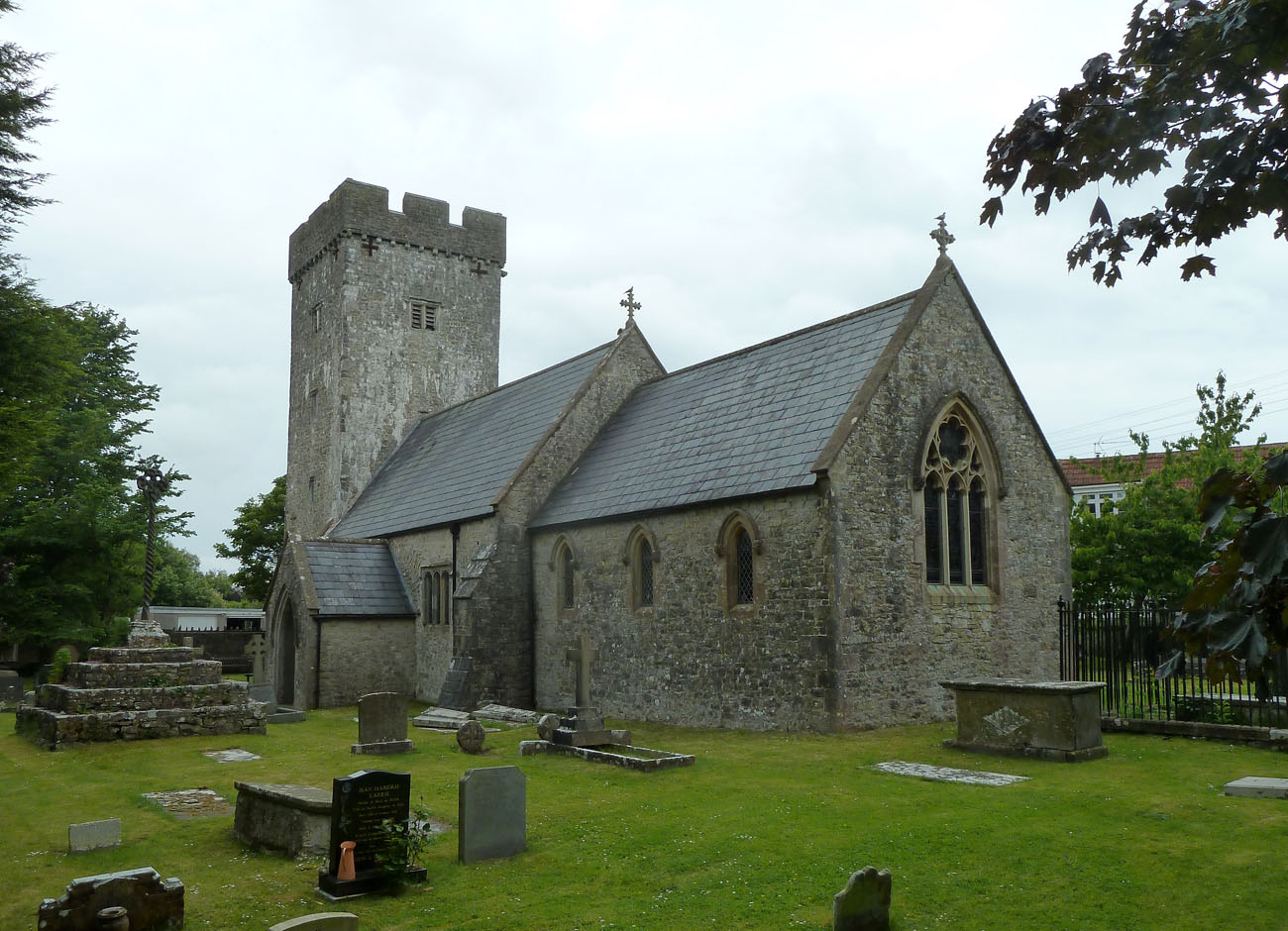
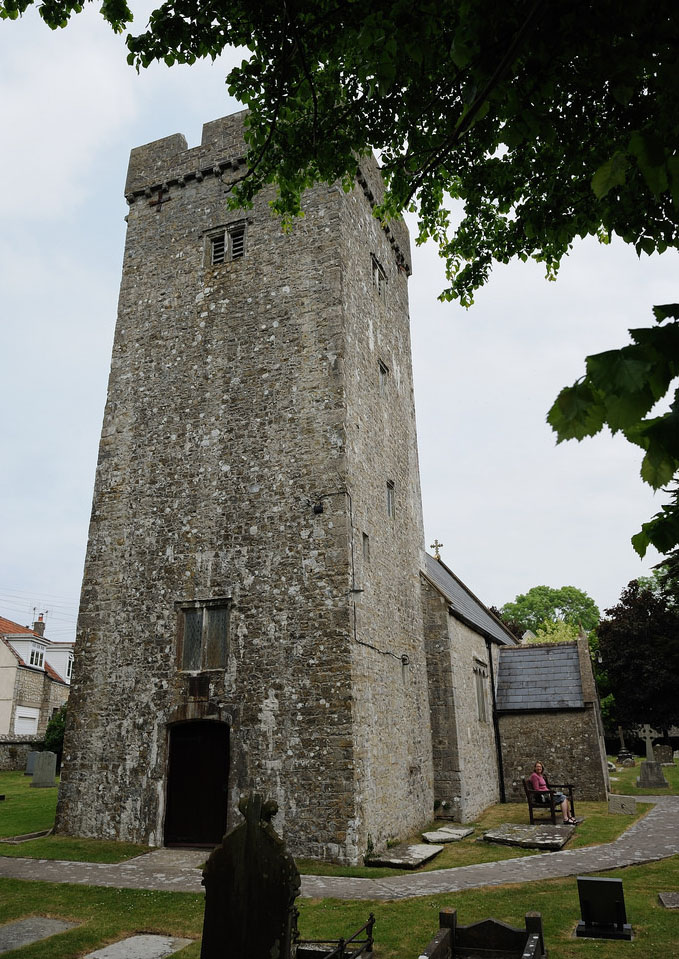
Church of St. Cattwg in Llanmaes was built in the 13th century on the site of an earlier church dating back to the 5th or 6th century. The earliest record of it dates back to 1254. The building underwent several alterations during the 15th and 16th centuries, primarily to adapt its architectural details to changing tastes and the late Gothic style. In 1632, a tower was added or repaired on the west side, and in 1882, a thorough Victorian renovation was carried out under the supervision of the architect John Prichard.
Architecture
The church was built of rubble limestone, on the north side of a small river that flows into the nearby Bristol Channel. Originally, it consisted of a rectangular nave and a narrower, shorter chancel, ended on the eastern side by a straight wall. It thus had a layout typical of many rural parish churches from the late Romanesque and early Gothic periods. A late medieval or early modern tower on a square plan, stylistically reminiscent of the Gothic period, was added to the west.
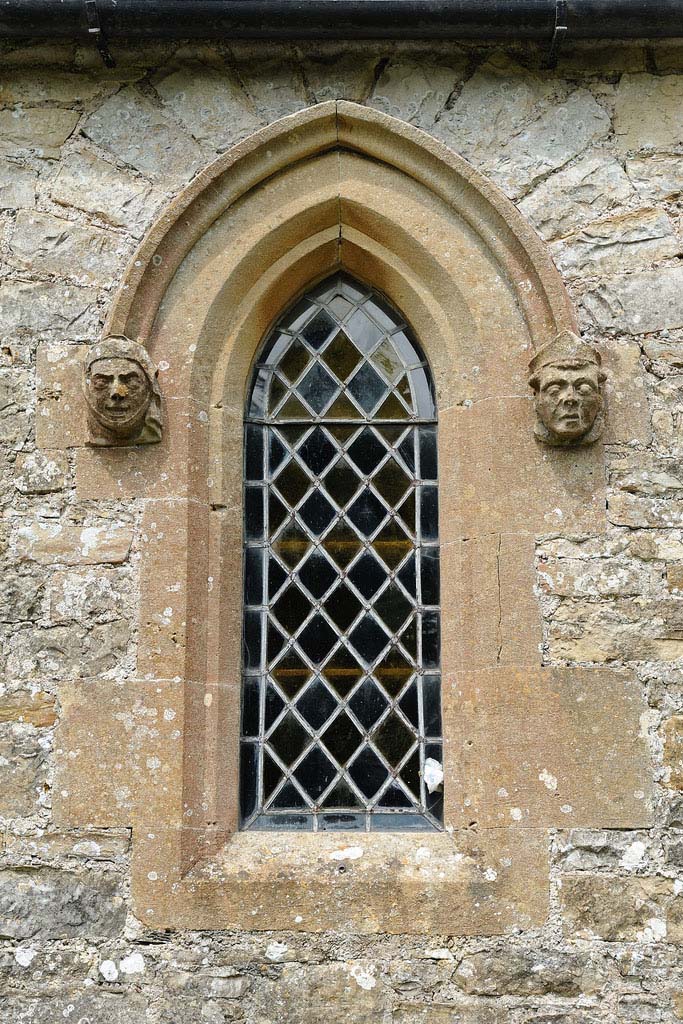
In the 13th century, the church was lit by pointed, relatively narrow windows, likely with stepped jambs in the chancel. These were fitted with moulded drip hoods, repeating the pointed shape of the archivolts, set on carved consoles in the shape of human heads. The church’s northern façade, in keeping with medieval building practice, may originally have been devoid of any openings. In the 15th century, a larger pointed window filled with three-light tracery was inserted in the eastern wall of the chancel. In the 16th century, two of the older windows in the southern wall of the nave were replaced by three-light openings with semicircular tracery set in quadrangular surrounds.
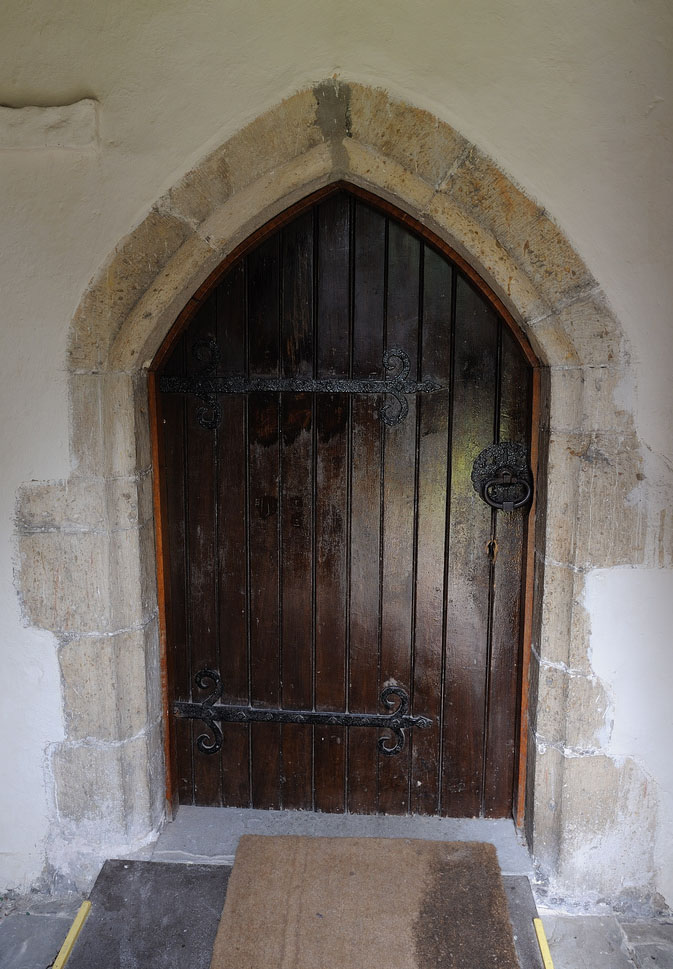
The church was entered from the south, through a portal placed approximately in the center of the nave wall. In the Gothic period, this was replaced with a newer one, pointed, simply moulded with a single step. It is possible that as early as the 13th century, a second entrance to the nave also existed, set on the axis of the western wall. However, a separate entrance for the priest was not created in the southern wall of the chancel, a solution quite common in rural churches in Glamorgan.
The interior of the nave and chancel was covered by an open roof truss. The two parts of the church were divided by a chamfered chancel arcade with a pointed arch and by a timber rood screen since the late Middle Ages. Access to the rood screen loft was via a moulded portal with a strongly flattened pointed arch, set in the northern wall of the nave, where a staircase was set in a shallow projection. In the 14th or 15th century, the church walls were covered with colorful figurative paintings, among other things depicting the popular medieval motif of St. George fighting the dragon.
Current state
The body of the medieval church is enlarged today by an early modern porch on the south side and a sacristy in the north. The west tower may also be post-medieval, seventeenth-century. The traceries and some of the jambs and window frames were renovated in the 19th century. A completely modern addition is the pair of north windows in the nave. Inside, a 12th-century Romanesque font have been preserved and a rood screen separating the nave from the chancel, the upper part of which dates back to the 15th century. Fragments of a polychrome depicting St. George fighting the dragon are visible on the north wall of the nave.
bibliography:
Newman J., The buildings of Wales, Glamorgan, London 1995.
Salter M., The old parish churches of Gwent, Glamorgan & Gower, Malvern 2002.