History
St. Cynog’s church was built in the 11th century, possibly on the site of an earlier church, as suggested by its dedication of the Welsh saint. The first record of the “Ecclesia de Devennoc” was in 1254 and 1291, in tax registers of papal tithes. In the late 15th century, the church was thoroughly rebuilt and significantly enlarged. Early modern renovations and construction works may have been carried out in the 18th century or the early 19th century, when some of the windows were reshaped. In 1888, a major restoration was carried out, and works on a smaller scale again in the early 20th century.
Architecture
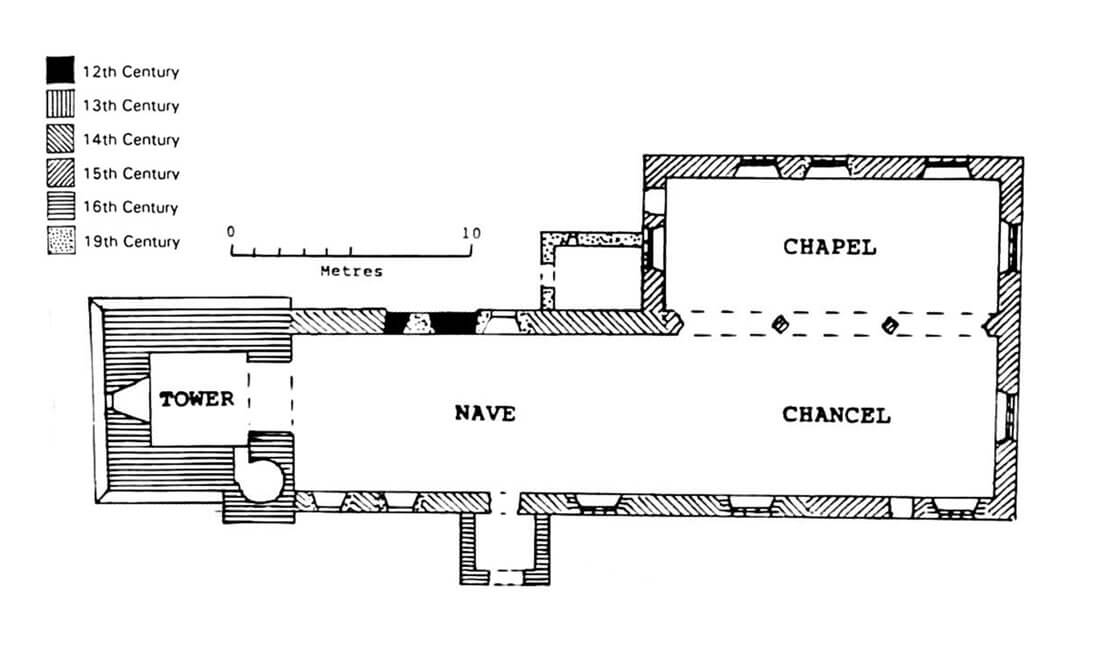
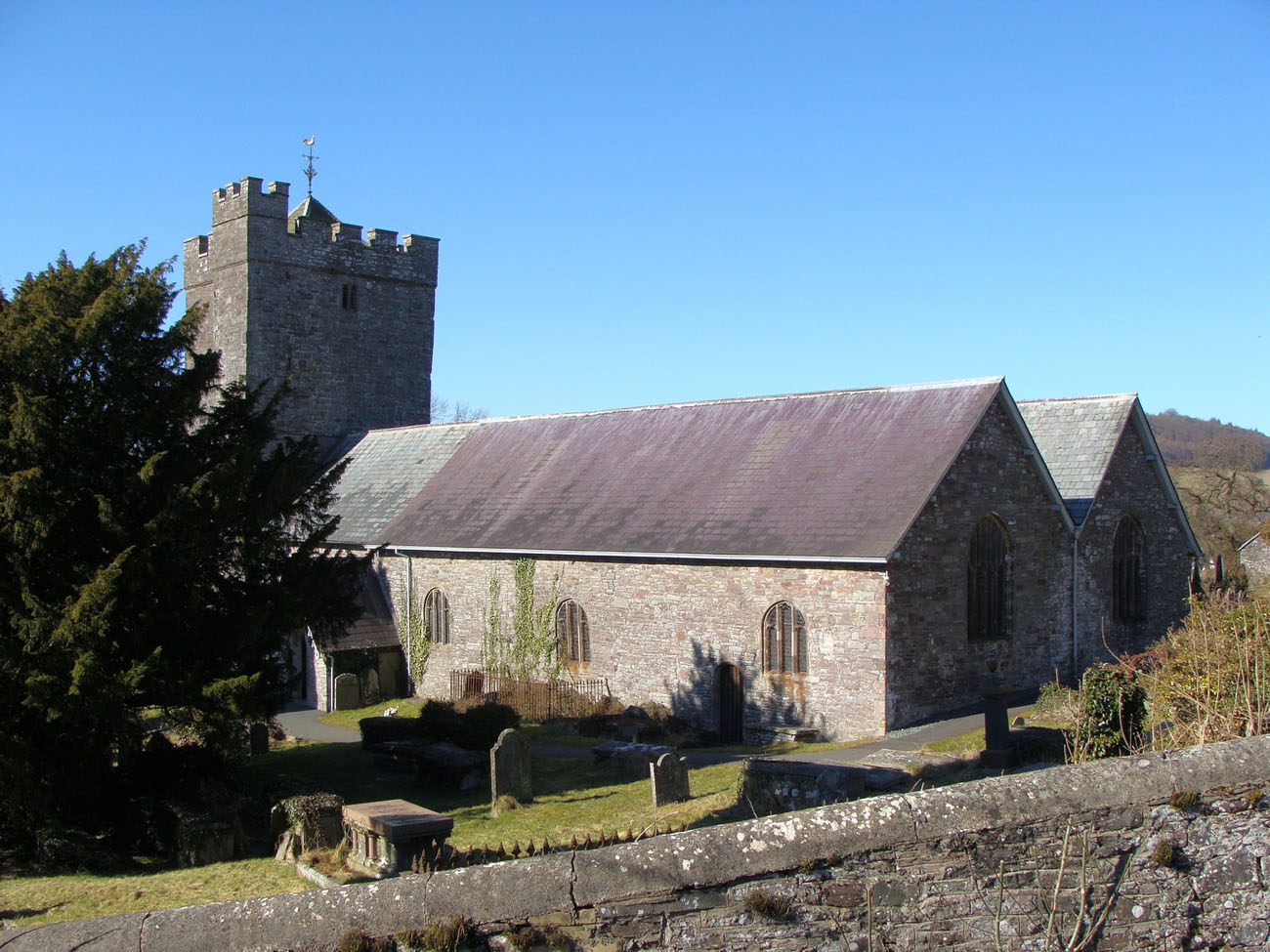
At the end of the 15th century, the church consisted of a rectangular nave without an externally separated chancel, which was extended several meters eastward in the late Middle Ages. A chapel was situated against the eastern section of the northern wall, with longer side parallel to the chancel and sharing a parallel eastern elevation. Both parts had equal height and were covered with separate gable roofs. A quadrangular tower was built on the western side of the nave at the turn of the 15th and 16th centuries, with a turret containing a staircase protruding to the south. A late Gothic porch was also added on the southern side, at the entrance to the nave.
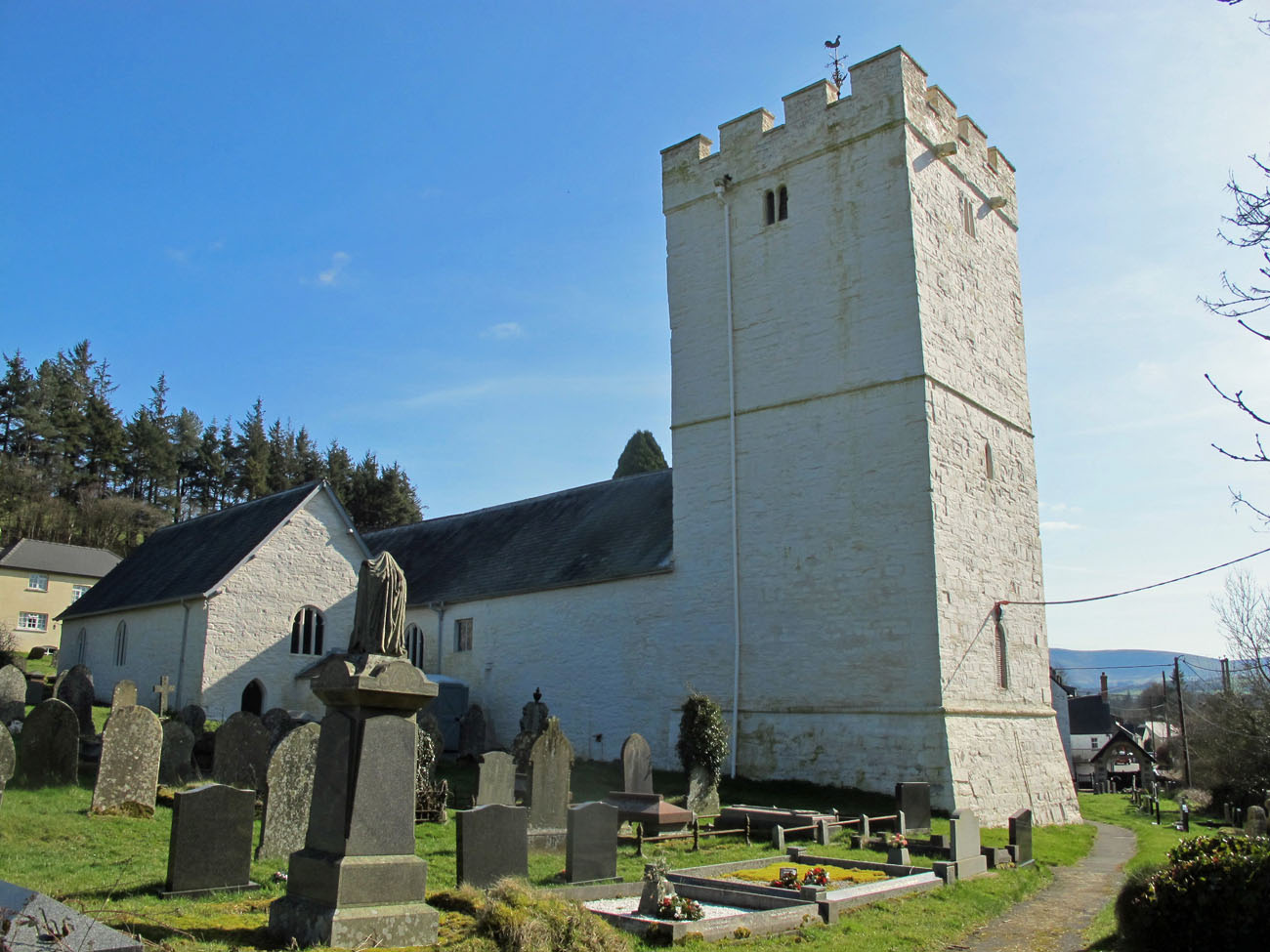
The tower rested on a prominent batter, reinforcing the structure and topped by a semicircular cornice. Another cornice divided the tower’s facades into two sections, while a setback in the wall separated the wall from the battlemented parapet. The southeastern stair turret, also topped with a battlement, was constructed one story higher than the main part of the tower, providing a good observation platform. The tower had an austere appearance reminiscent of defensive structures, achieved by massive form, a small number of small openings, and the absence of an entrance portal on the ground floor. Its interior was connected to the nave by an arcade, originally quite wide.
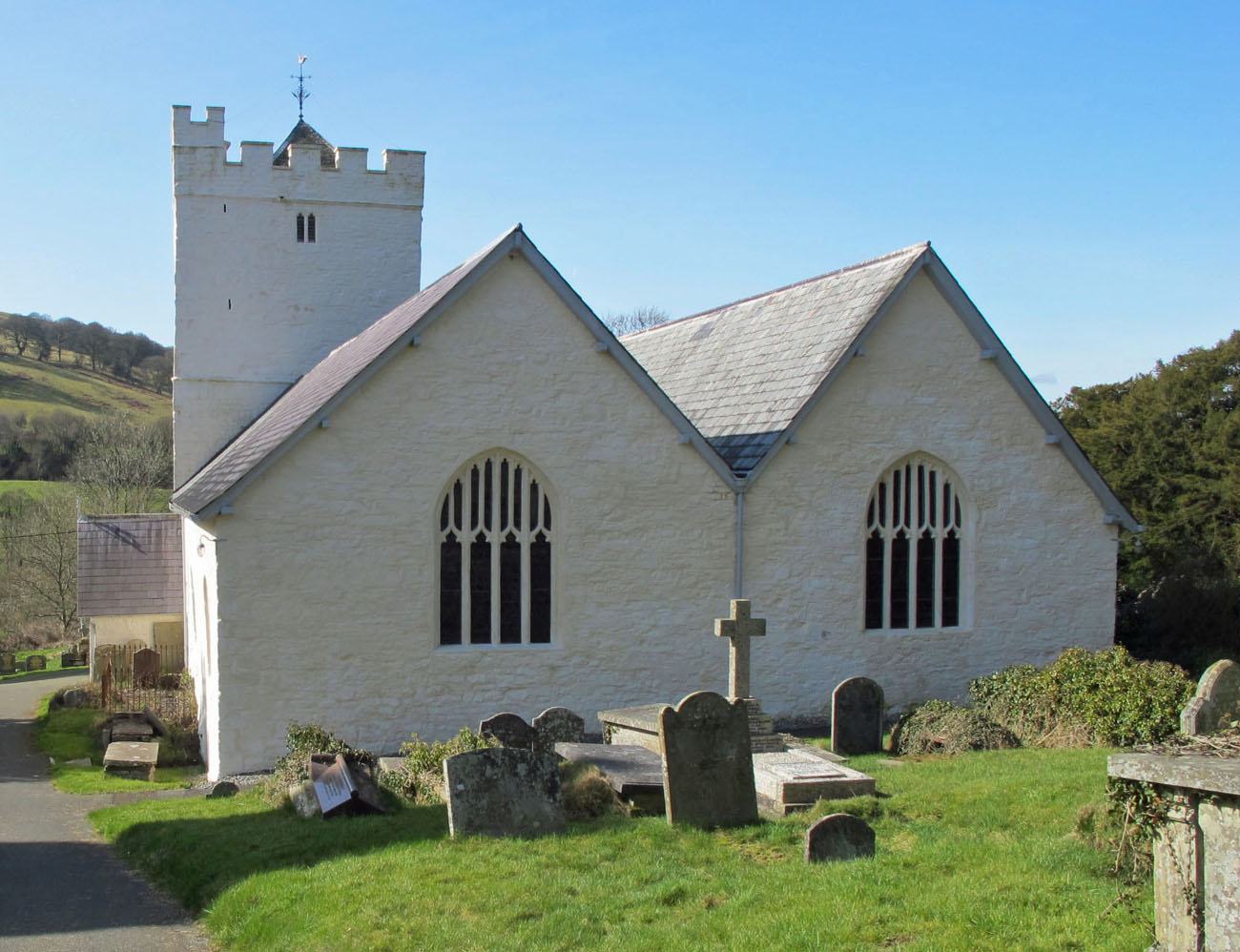
The interior of the eastern part of the church was separated from the chapel by three pointed and chamfered arcades, supported by two octagonal pillars and two wall half-pillars. From the east, both parts were lit by identical large windows, topped with pointed arches and filled with panel tracery with trefoil motifs. Slightly smaller windows were placed in the longitudinal walls, with blunted pointed archivolts, almost semicircular in shape, and simple three-light tracery. In addition to the southern main entrance preceded by a porch, a narrower, chamfered portal for the priest was placed in the eastern part of the southern wall.
Current state
The church, after repairs carried out in recent years and whitewashing of the external facades, today is an excellent example of a rural Welsh late Gothic temple, devoid of major subsequent distortions. An early modern addition to the medieval body of the church is only an annex in the corner between the nave and the chapel. The nearby irregularity of the northern wall of the nave is most likely a remnant of the earliest church from the 11th century. In the southern porch there is a stone with a Latin inscription from the 5th century AD. with an engraved inscription. Inside, a pre-Romanesque stoup and font have been preserved. The latter contains the only example of Viking runic writing in Wales.
bibliography:
Haslam R., The buildings of Wales. Powys (Montgomeryshire, Radnorshire, Breconshire), London 1979.
Salter M., The old parish churches of Mid-Wales, Malvern 1997.
Taxatio ecclesiastica Angliae et Walliae auctoritate P. Nicholai IV circa A.D. 1291, Munich 1802.