History
The original church was built in the 12th century as a chapel of ease of the nearby Benedictine Abbey of St. John. In 1200 it was recorded the donation of 12 pence by the town council for a lighting of a taper to burn, during mass for the souls of donors. In the fourteenth century, the church was thoroughly rebuilt and enlarged by a tower in 1521, founded by Edward Stafford, Duke of Buckingham. At the beginning of the 19th century and then in 1857, the building underwent renovations. Despite its location in the middle of the town, the church only became a parish church in 1923, after the former post-Benedictine church was raised to the rank of a cathedral.
Architecture
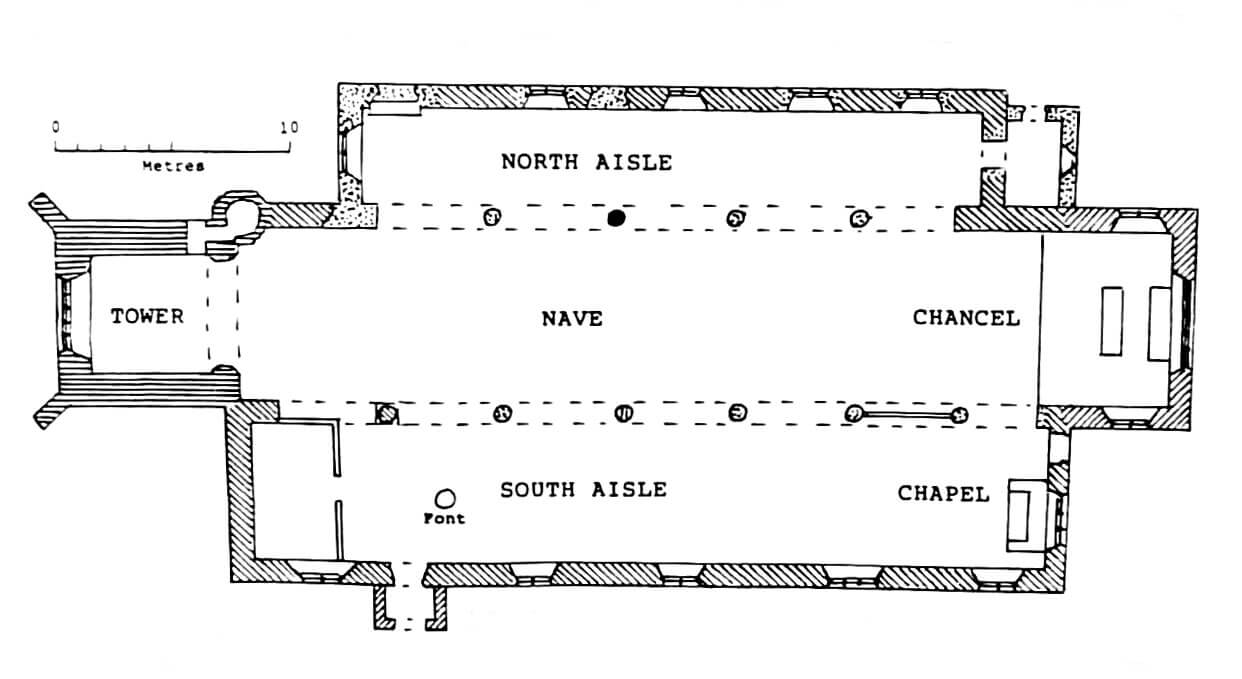
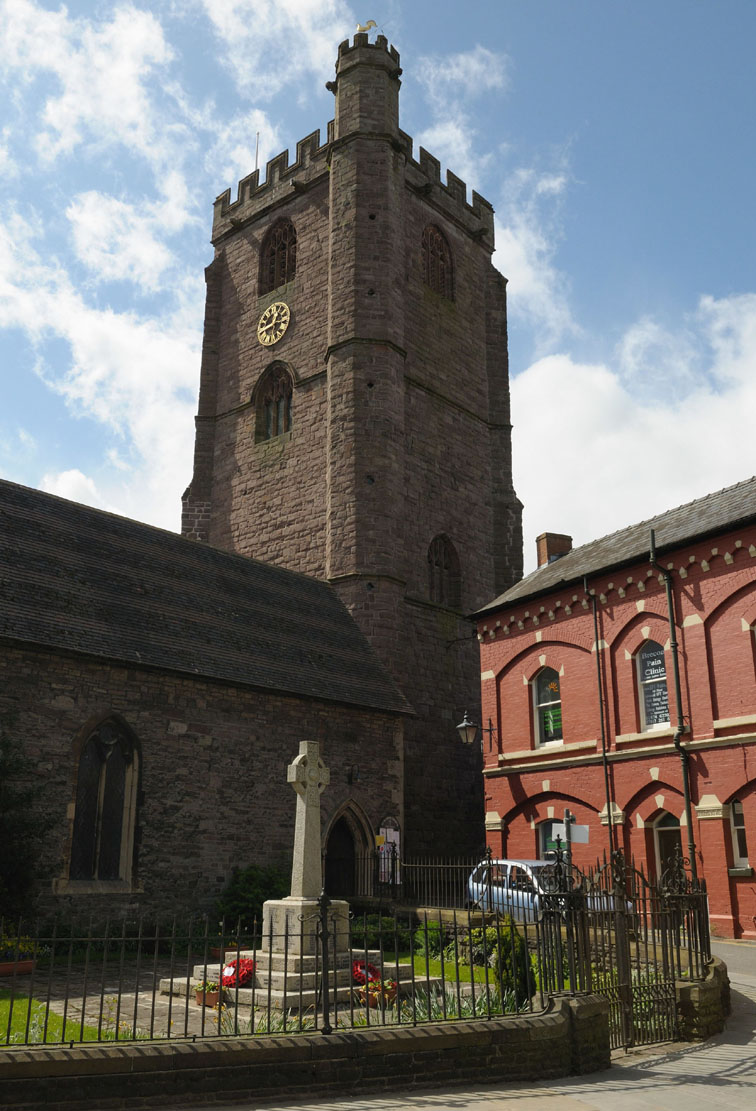
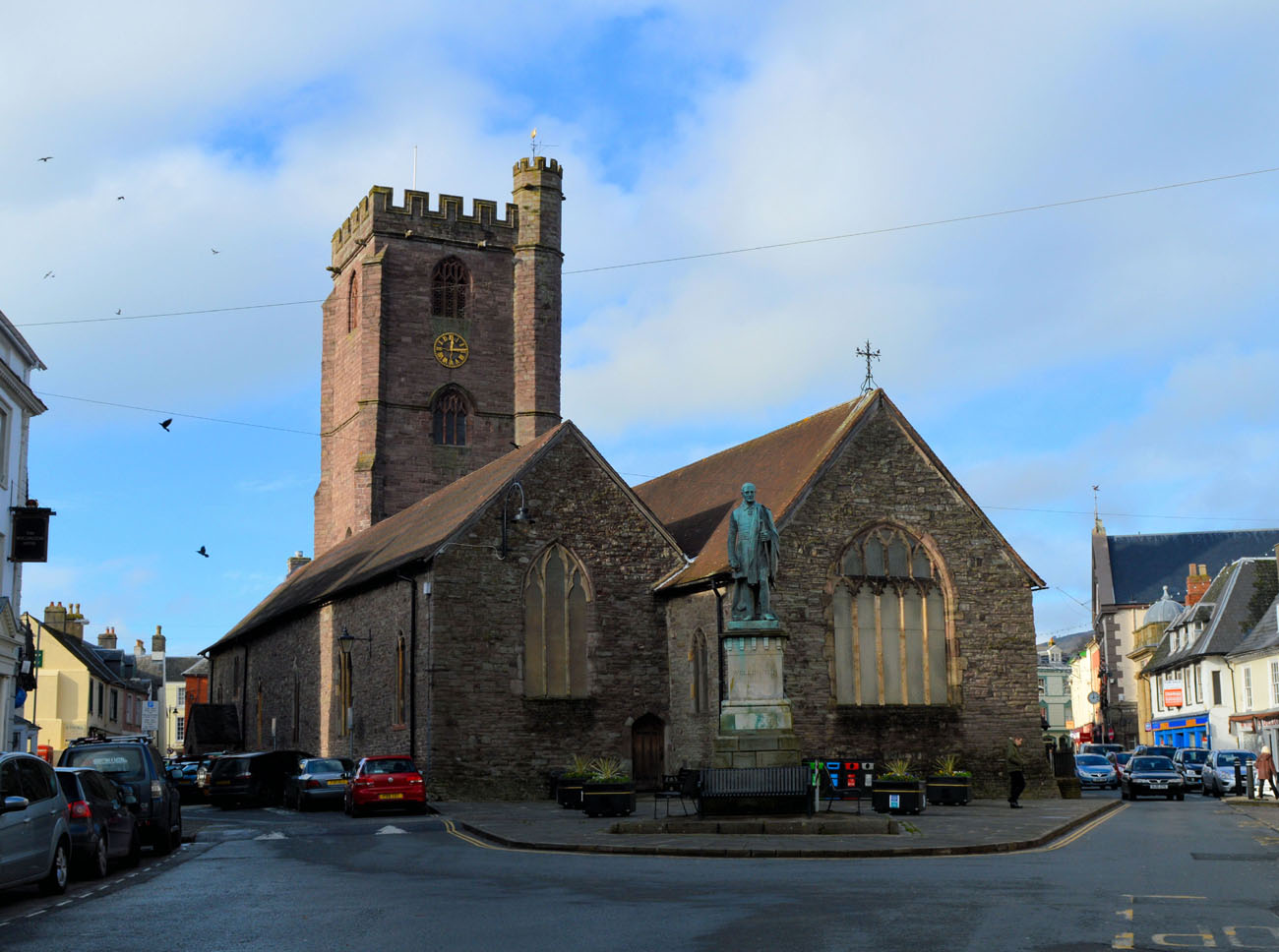
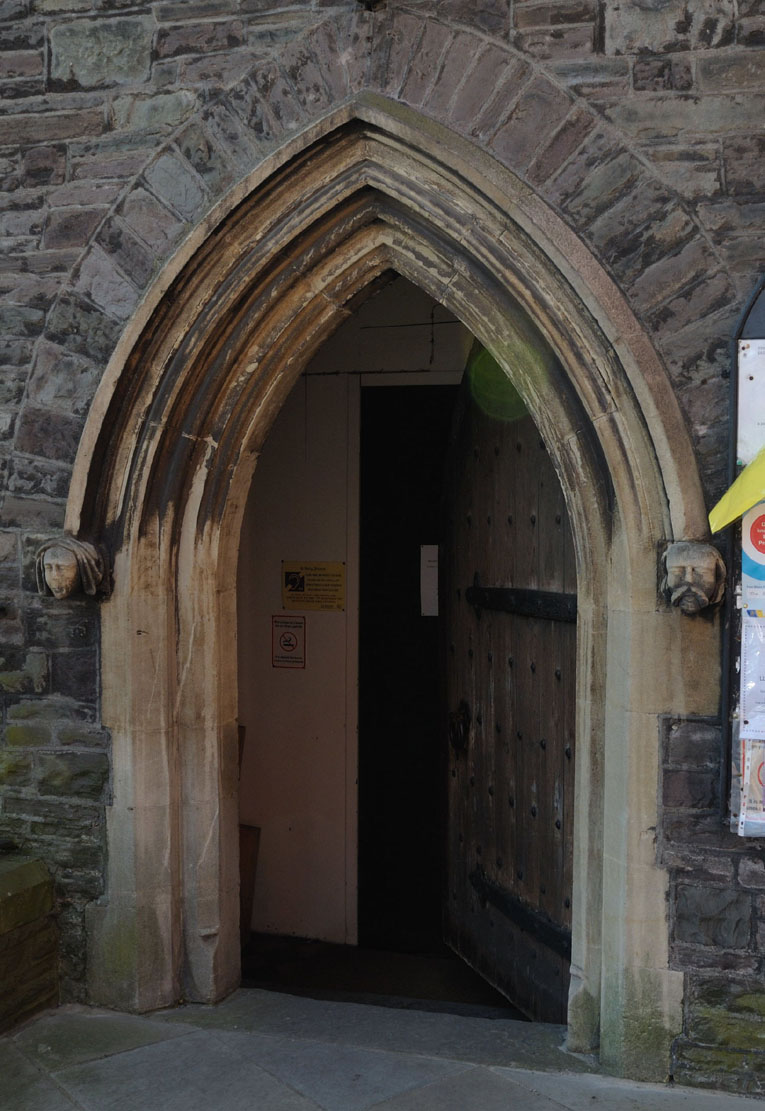
By the end of the Middle Ages, the church consisted of two aisles and the central nave on a plan roughly resembling an elongated rectangle. Despite Gothic alterations, the aisled form had likely been in place continuously since the 12th century. The chancel was not externally separated from the central nave, and the north and south aisles were slightly shorter, following the extension of the central section of the church by one bay in the late 15th century. On the west side, a quadrangular tower, over 27 meters high, was added to the central nave in the second quarter of the 16th century. The entrance to the south aisle was preceded by a small porch in the 15th century.
Most of the church’s windows at the end of the Middle Ages had forms typical of the early 14th century. In the south aisle, these were pointed, two-light windows filled with forking tracery, as well as similar three-light windows. Some of the tracery was topped with trefoils set within lancets, others with simple lancets. The north aisle was rebuilt later in the 14th century, and its walls featured slightly wider pointed windows with two trefoil-shaped tracery caps below single trefoils. The most impressive window was traditionally placed in the eastern wall of the chancel, where, after the walls were lengthened in the 15th century, a large window with a low pointed arch was set, filled with five-light tracery with cinquefoil motifs.
Inside the church, the nave opened onto the aisles with arcades. In the Romanesque period, the arcades between the aisles of an unknown number, were supported by circular columns with quadrangular abacuses and scalloped capitals. In the early 13th century, taller and more slender Early Gothic piers were introduced, while in the 14th century, octagonal piers with flat, moulded capitals were added, although not all the older piers were replaced. Finally, by the end of the Middle Ages, the central nave opened onto the south aisle with seven arcades, and onto the north aisle with five arcades. The nave was connected to the tower’s ground floor by another wide, moulded arcade with a flattened Tudor-style pointed arch. Neither of the church’s aisles or nave was vaulted.
The west tower was supported on the west by two diagonally set buttresses. A polygonal turret housing a staircase was situated in its northeast corner. Horizontally, the tower’s elevations were divided by two moulded string courses. A third cornice separated the tower wall from the parapet that crowned it, with decorative battlement from which projected gargoyles to drain excess rainwater. On each side of the tower’s upper two levels were three-light, pointed-arch windows with ogee-shaped tracery. The lowest part was lit only from the west, but with the most impressive five-light window.
Current state
The oldest surviving architectural element of the church today is a 12th-century Romanesque column, with a quadrangular abacus and a wide scalloped capital. On its south side stands the only original early Gothic column from the early 13th century, while the polygonal western pillar of the southern aisle dates from the 14th century. The remaining piers were replaced during early modern renovations in the 19th century, during which the western part of the northern aisle was also rebuilt and an eastern annex was added to the northern aisle. Fragments of window tracery, which were replaced during the church’s renovations, are distinctive in their color and undamaged stone texture. Despite this, most of the windows retain their original 14th- and 15th-century forms, and those in the tower from the 16th century. The tower is an important example of English Perpendicular Gothic.
bibliography:
Haslam R., The buildings of Wales. Powys (Montgomeryshire, Radnorshire, Breconshire), London 1979.
Salter M., The old parish churches of Mid-Wales, Malvern 1997.