History
Ryczów Castle was built in the 14th century. It may have been founded by King Kazimierz the Great as part of a system of border watchtowers, or it was built closer to the end of the century as part of the activities of Prince Władysław of Opole. The settlement of Ryczów was first noted in records in 1388, but there was no mention of the castle. In 1416, it was reportedly owned by Jan of Kwaśniów, bearing the Stary Koń coat of arms. Even in the 16th century, the castle was inhabited and even expanded within the outer bailey grounds. The end of its existence was not documented in records.
Architecture
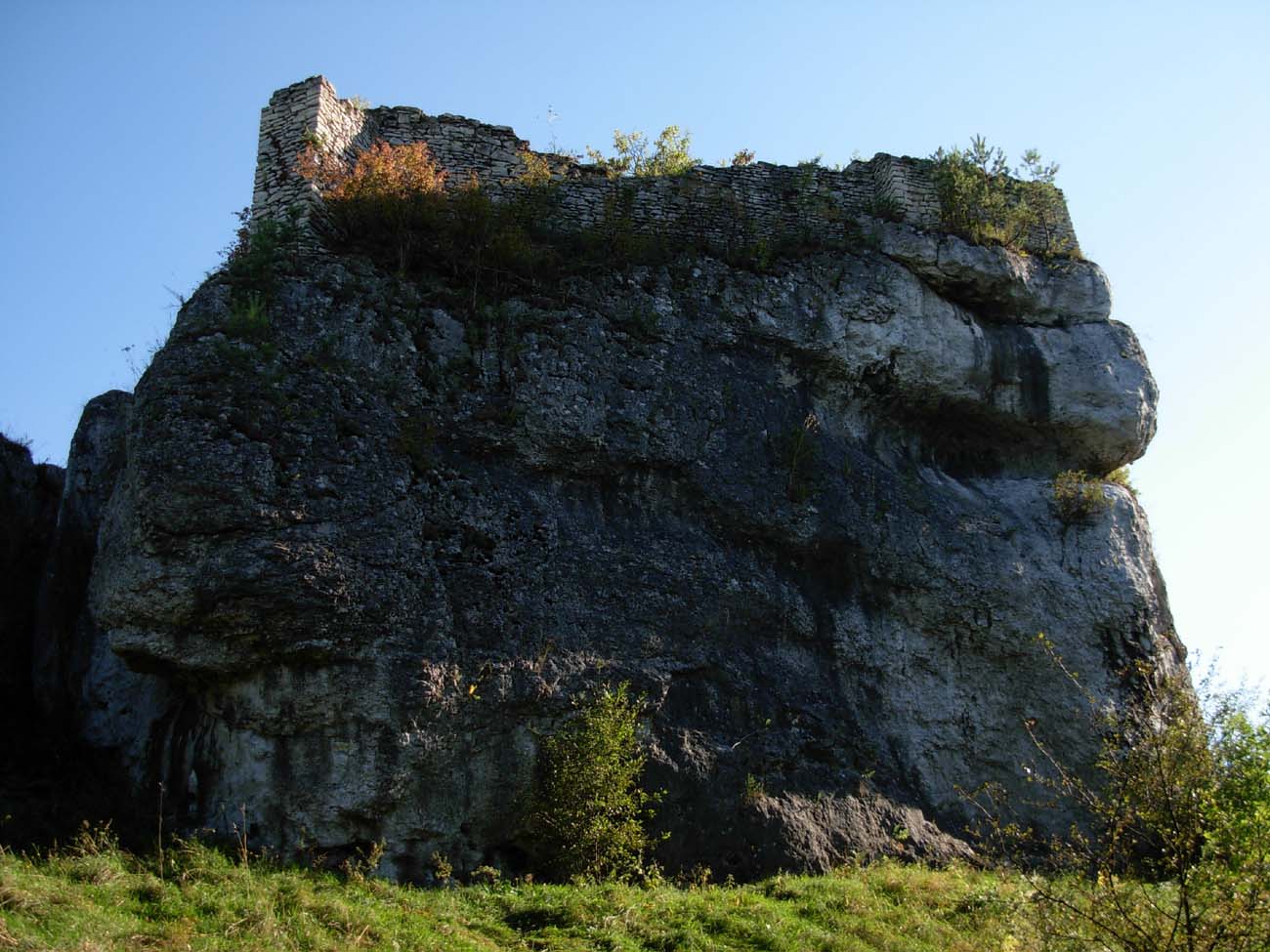
The castle was built within a large limestone outcrop, elongated along the east-west axis. It towered over the surrounding, mostly flat area, providing significant protection thanks to its very steep, practically vertical escarpments. The rock’s drawback was its small size, which prevented the construction of economic and auxiliary buildings, which had to be located on the flat ground at the foot of the outcrop. Supplying the upper part of the castle with water must also have been difficult.
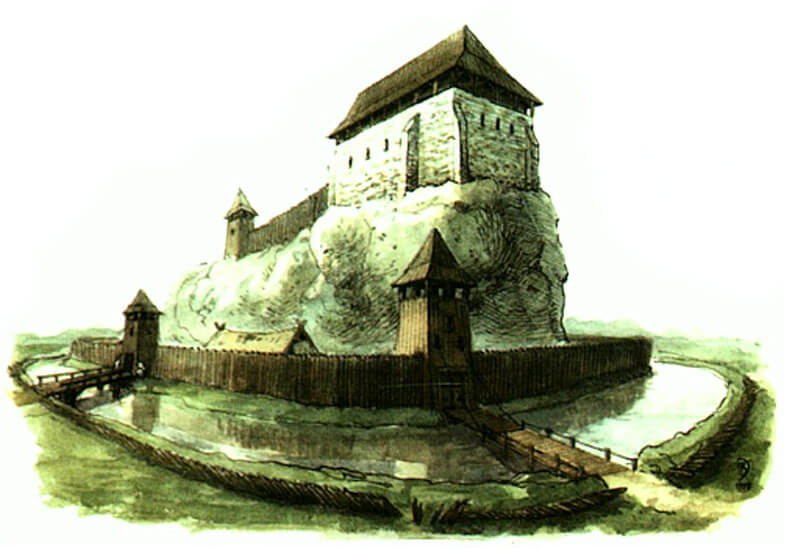
The castle’s main stone structure likely had the form of a tower house, with a quadrangular, trapezoidal plan, measuring 16 x 11 x 12 x 10 meters. It was situated at the highest and most inaccessible, western point of the outcrop, where it was closely integrated into the uneven ground. The building was reinforced with buttresses in at least one corner and in the middle of the two longer facades. Access was from the east via a wooden bridge or stairs resting on the specially cut rock outcrop. The tower house was built of unworked limestone, primarily in flat, narrow slabs joined with mortar, without reinforced corners with ashlars.
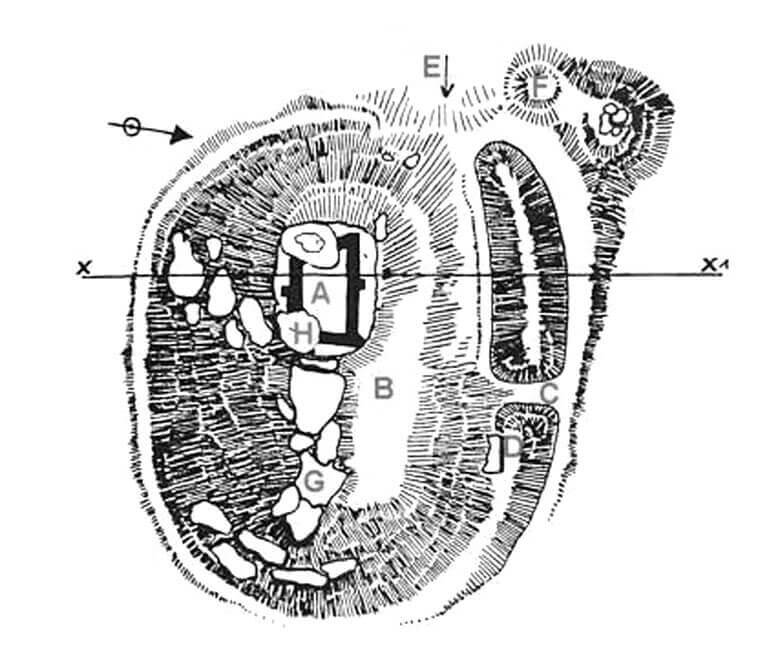
A small courtyard, measuring 15 x 25 meters, adjoined the foot of the rock on the north side. Along with the upper part of the castle, it was surrounded by a moat and an earth rampart with a wooden palisade. The entire structure formed an oval measuring 85 x 60 meters. The rampart had no internal structures, except for the stones that formed the core of its base. It was also faced with stones on both the outer and inner faces, but it consisted primarily of earth excavated during the digging of the moat. Its height was about 1.3-1.4 meters. The ditch was approximately 7-8,5 meters wide and 1,4 meters deep, with a gap in its northeastern section, housing the entrance gate. It was reached by a wooden bridge set on stone pillars, and flanked by a timber tower situated right next to it, set on a carved rock. The buildings of the bailey were of wood, probably attached to the vertical walls of the rock.
Current state
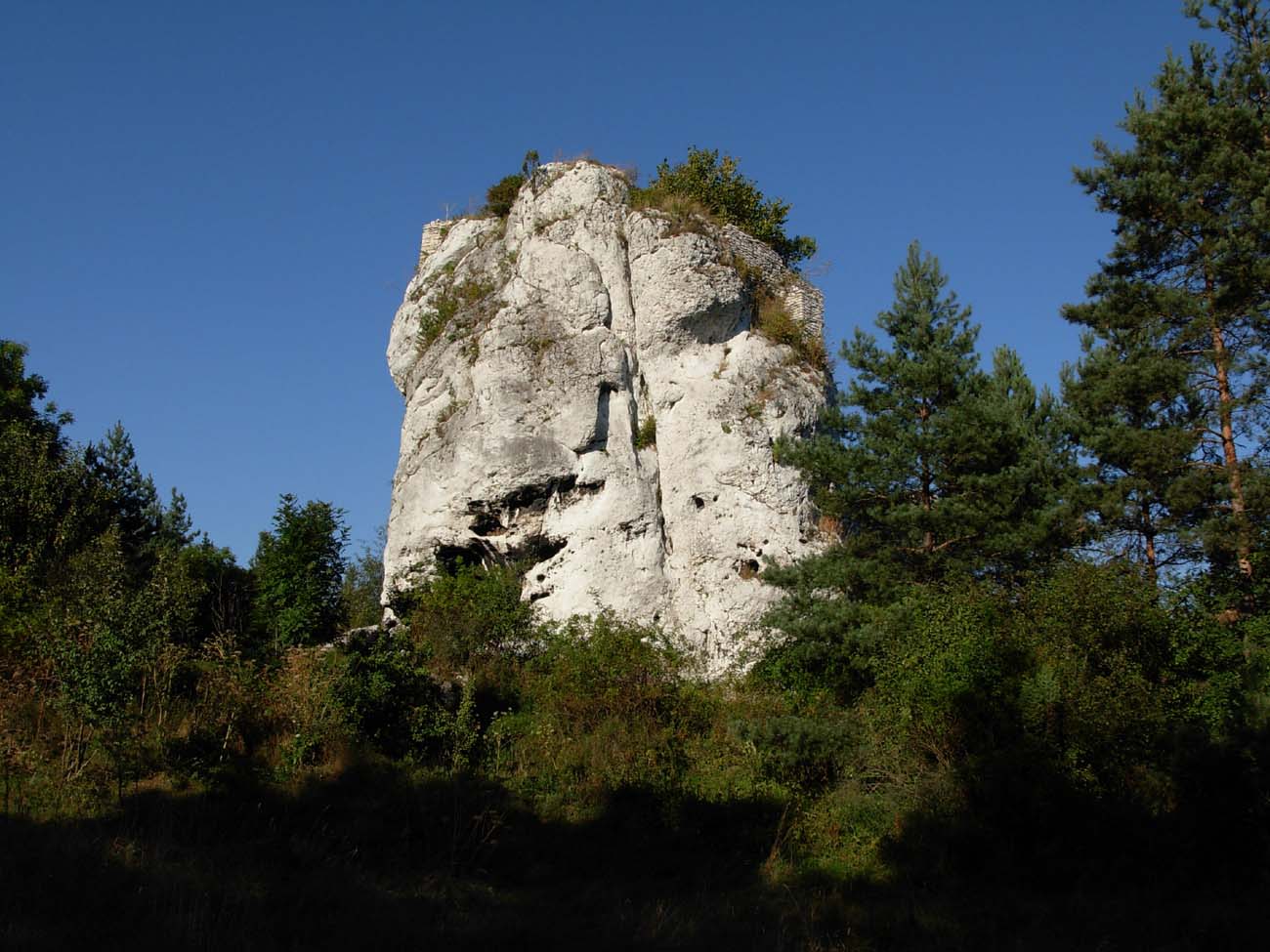
To this day, modest fragments of the walls on a high rock remain, as well as an earth rampart reaching approximately 1.5 meters in its highest part. Due to the location on a high rock, the stone remains of the castle are difficult to access. Unfortunately, they are at risk of even greater deterioration than they are now, due to the ongoing erosion of the outcrop.

bibliography:
Antoniewicz M., Zamki na Wyżynie Krakowsko – Częstochowskiej, Kielce 1998.
Leksykon zamków w Polsce, red. L.Kajzer, Warszawa 2003.
Pierzak J., Rozmus D., Średniowieczny zamek w Ryczowie, gm. Ogrodzieniec, woj. Katowice, “Śląskie prace prahistoryczne”, 3/1994.
Sypek R., Zamki i obiekty warowne Jury Krakowsko-Częstochowskiej, Warszawa 2003.