History
The village of Morsko was first mentioned in records in 1220, in a document of Bishop Iwo Odrowąż, where it was noted as princely property. Next it belonged to the Toporczyk family, from whom it was confiscated in 1327 by King Władysław the Elbow-high due to their involvement in robberies. After confiscation, the ruler handed Morsko over to canons from the monastery in nearby Mstów. The castle on the village grounds may have been built by King Kazimierz the Great or, somewhat later in the 14th century, by Price Władysław of Opole.
The first record of castle in Morsko appeared in 1389, when a castle chaplain was mentioned, a certain Franczek from Bąkowiec. The building was then owned by the knight Mikołaj Strzała, a native of the Duchy of Opole, who therefore likely arrived and settled in Bąkowiec at the behest of Prince Władysław. After the prince was removed from the Wieluń-Małopolska fiefdom, Mikołaj lost the castle, which in 1392 was already in the possession of Piotr of Marcinowice, of the Lis coat of arms, later a land camerarius and deputy judge of the Kraków region. Further records from 1416-1418 mention a burgrave of Bąkowiec, a certain Piotr. In later years, the Bąkowiec estate was held by Jan of Sieciechowice and then Mikołaj Morawiec of Konaszówka, but in 1435, the castellan of Nowy Sącz, Krystyn of Koziegłowy, took possession of the castle by right of proximity.
The Włodek family, the owners of Bąkowiec, may have rebuilt or expanded the castle at the turn of the 15th and 16th centuries. The castle’s use for residential and defensive purposes in the late Middle Ages was confirmed by a document from 1531, according to which the owner was Piotr Zborowski. Bąkowiec subsequently belonged to the Brzescy and Giebułtowscy families. The castle’s abandonment may have been caused by damage sustained during Polish-Swedish wars in the 17th century or in the 18th century at the latest. Around 1927, the hill with the castle ruins was purchased by architect Witold Danielewicz Czeczott, who used the castle walls to build a house for himself.
Architecture
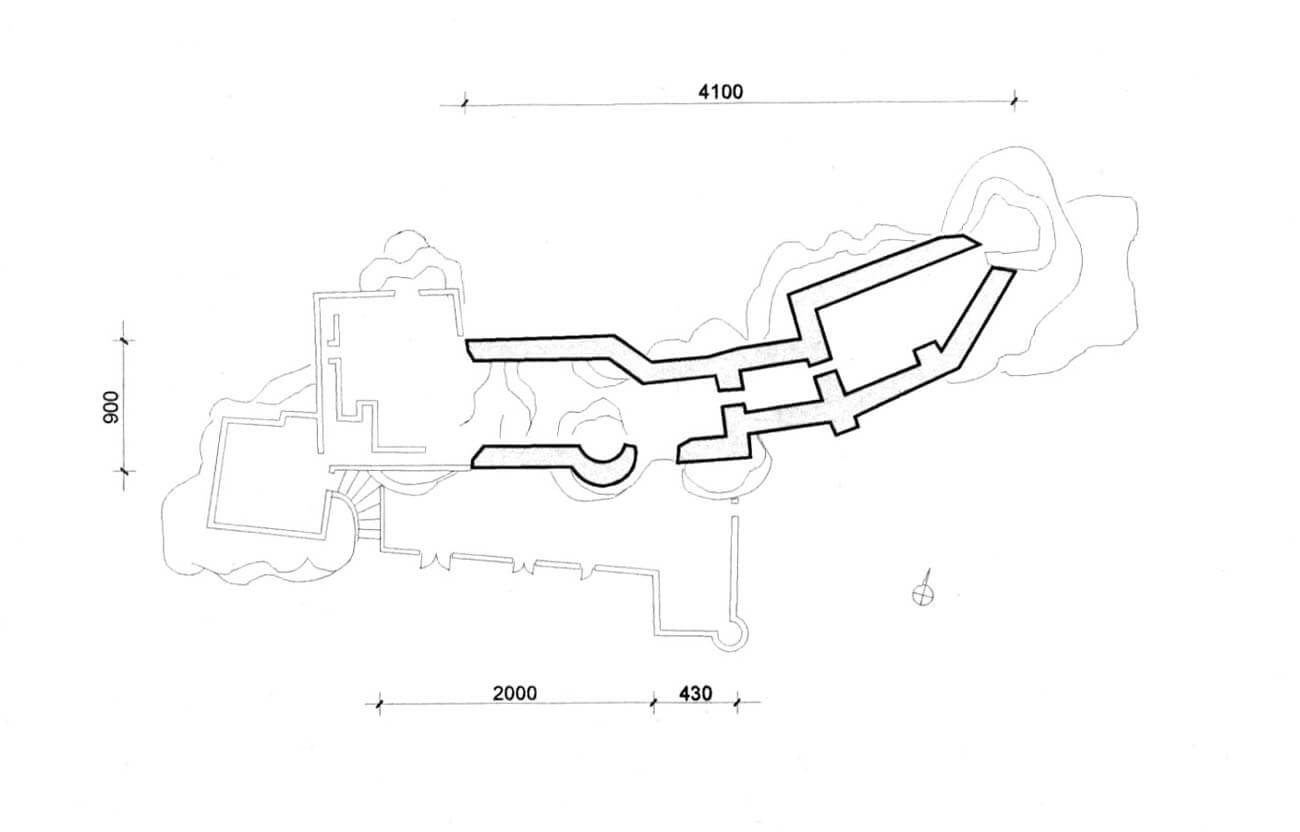
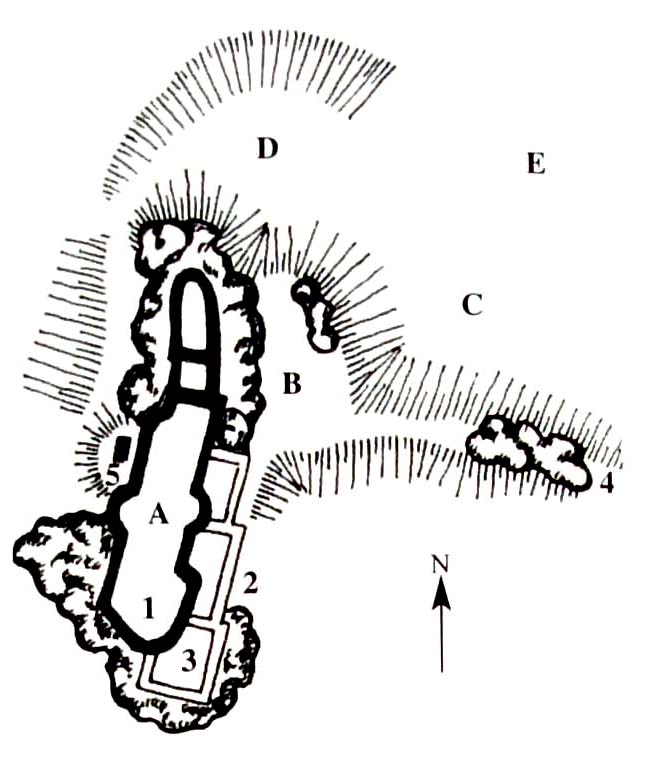
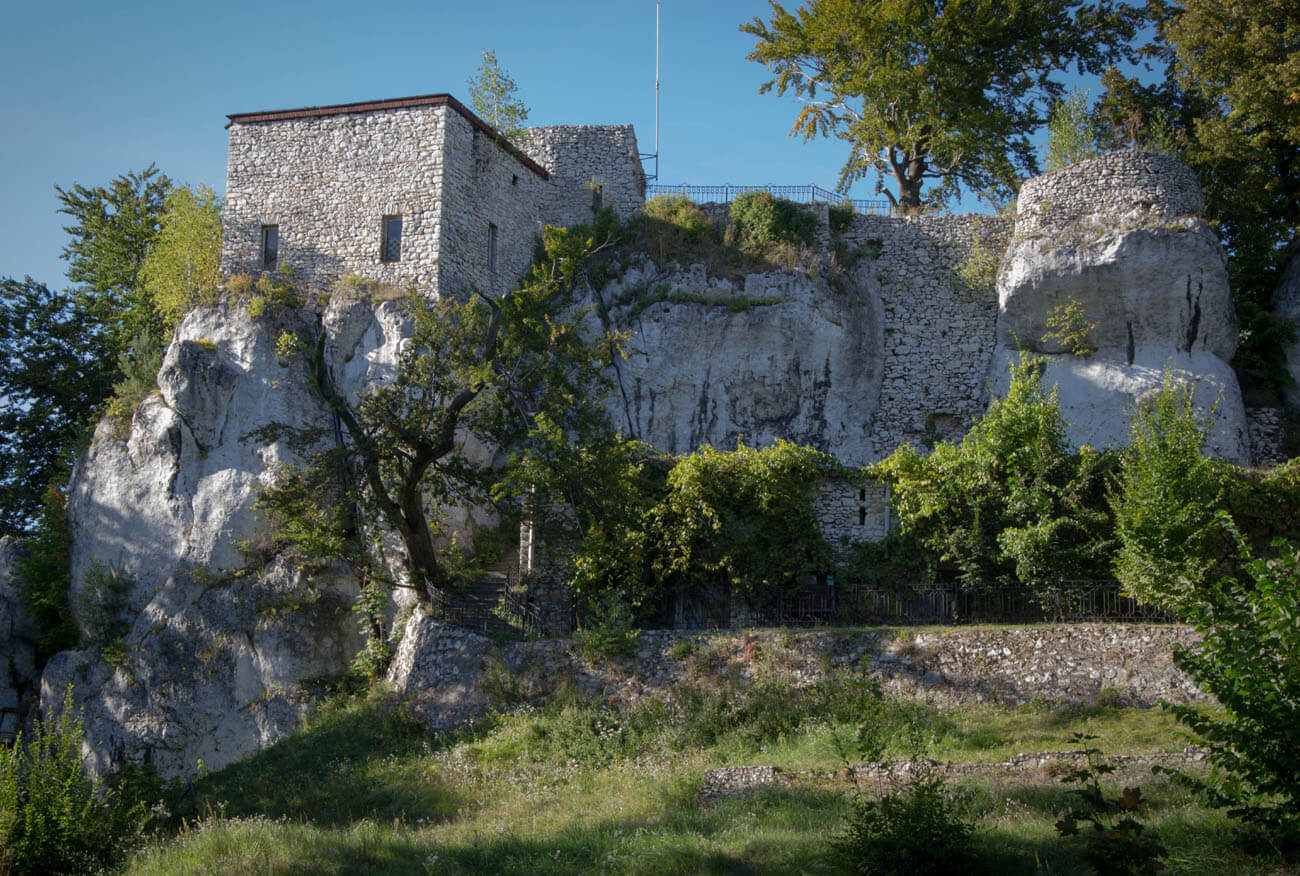
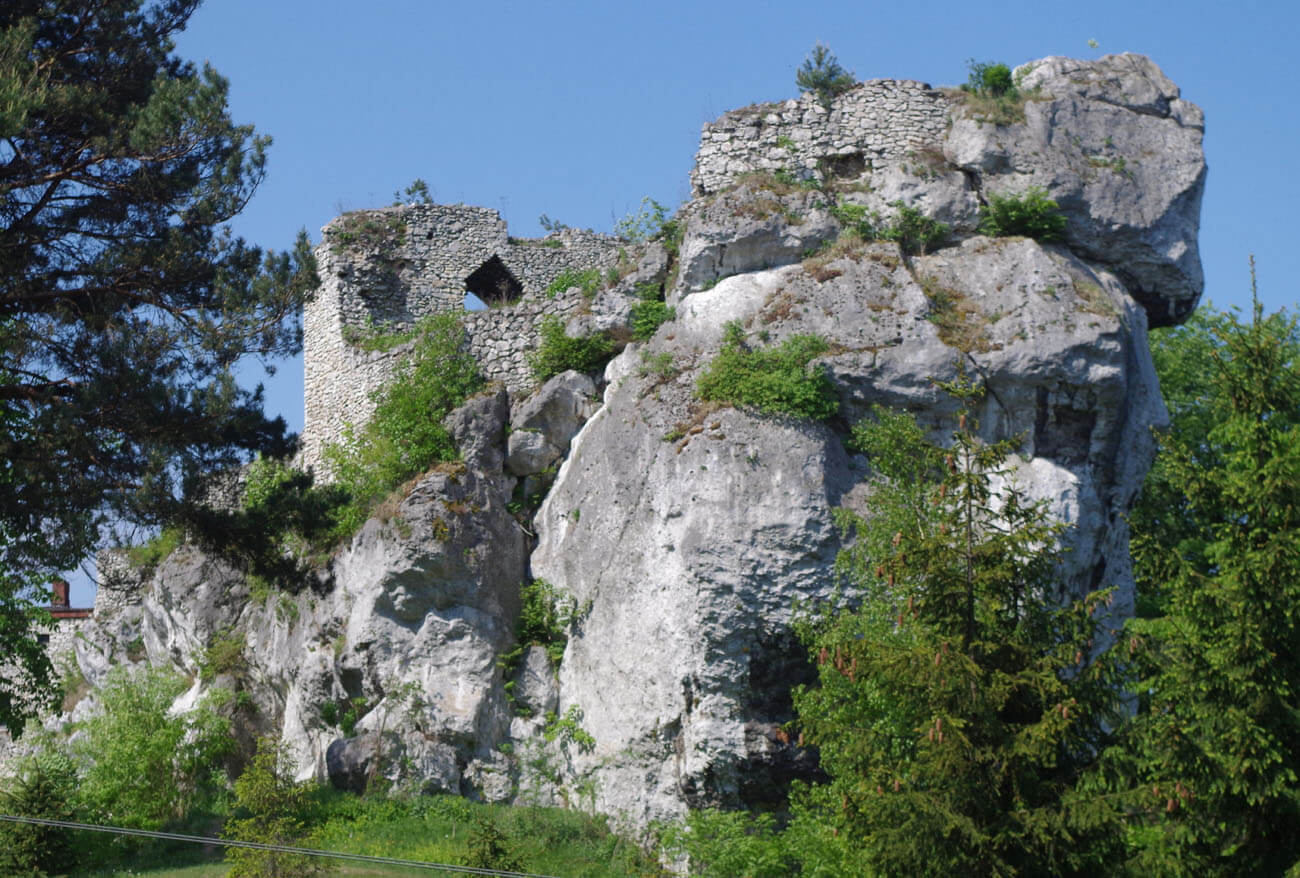
The castle was built of local unworked limestone bound with mortar, on the summit of an elongated limestone outcrop, covering approximately 500 square meters. It consisted of several buildings connected by sections of a defensive wall, approximately 1.6-1.8 meters thick, running irregularly along the rock’s edges. The wall was likely not very high, as high and very steep, practically vertical escarpments in most sections provided significant protection. The entrance may have been in the western part, which was steep but lower.
The largest and arguably most important building of the castle occupied the highest, eastern part of the outcrop. It had the shape of an irregular quadrangle, with the northeast corner adjacent to the rock. Entrance led from the west, through a small, possibly roofed vestibule. The central part of the outcrop was occupied by a large building or an uncovered courtyard, distinguished from the south by a rounded projection resembling a small tower. Further buildings may have occupied the lower western part of the outcrop.
On the southern and eastern sides, an outer bailey bordered by a ditch and an earthen rampart adjoined the outcrop. Access to the water source in the castle may have been somewhat problematic, as the well was located on the opposite side of the bailey, at the foot of the rock. It was protected by an earth rampart, likely topped with a palisade. Water was probably drawn using a bucket suspended from a rope and pulled directly to the upper ward.
Current state
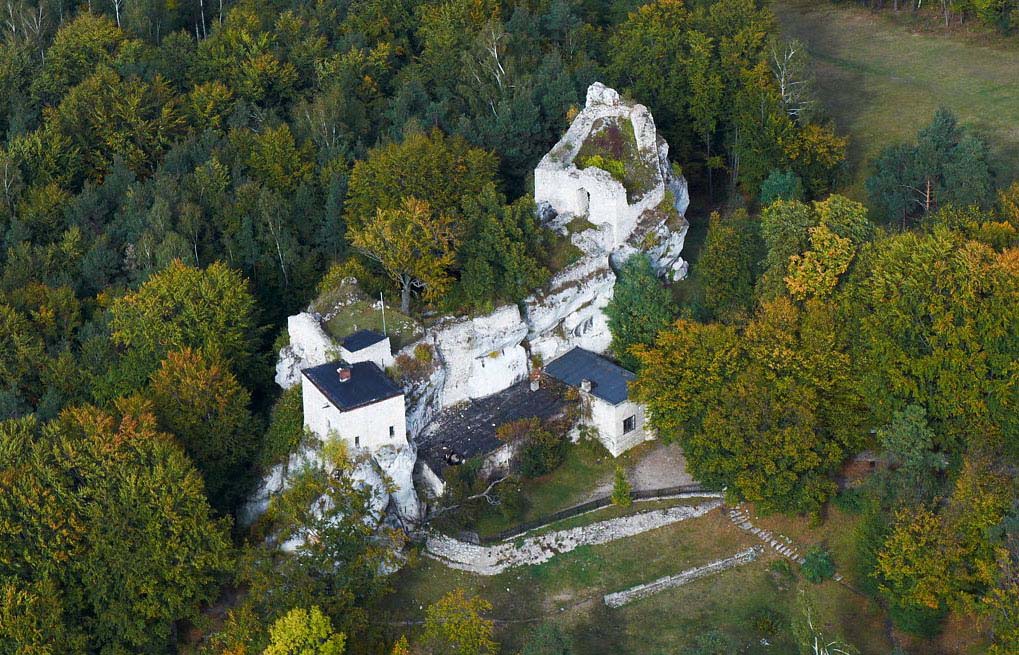
The castle is currently in ruin, with original fragments preserved in the upper central and eastern parts of the outcrop, while the western section and the walls at the base of the rock are the result of modern reconstruction from the interwar period. Since 2015, the castle ruins have been cared for by the Society of Friends of the Zawiercie Land.
bibliography:
Antoniewicz M., Zamki na Wyżynie Krakowsko – Częstochowskiej, Kielce 1998.
Kołodziejski S., Średniowieczne rezydencje obronne możnowładztwa na terenie województwa krakowskiego, Warszawa 1994.
Leksykon zamków w Polsce, red. L.Kajzer, Warszawa 2003.
Sypek R., Zamki i obiekty warowne Jury Krakowsko-Częstochowskiej, Warszawa 2003.